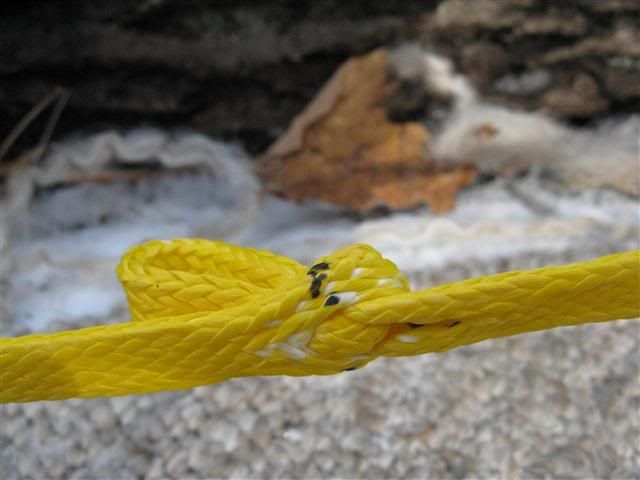
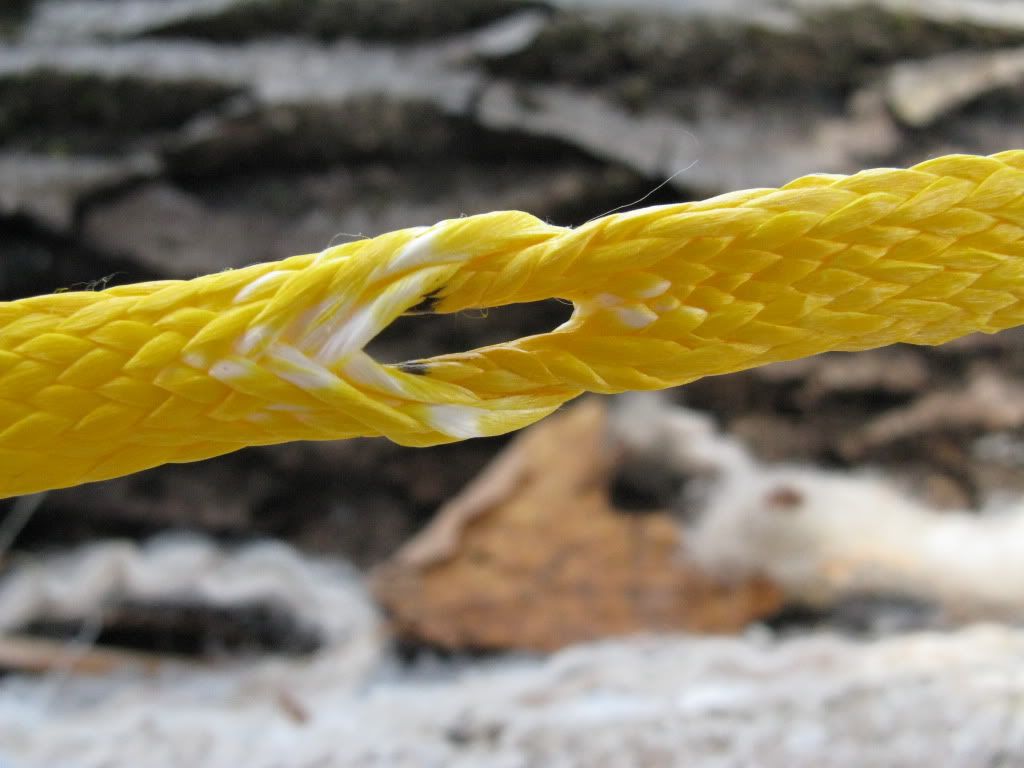
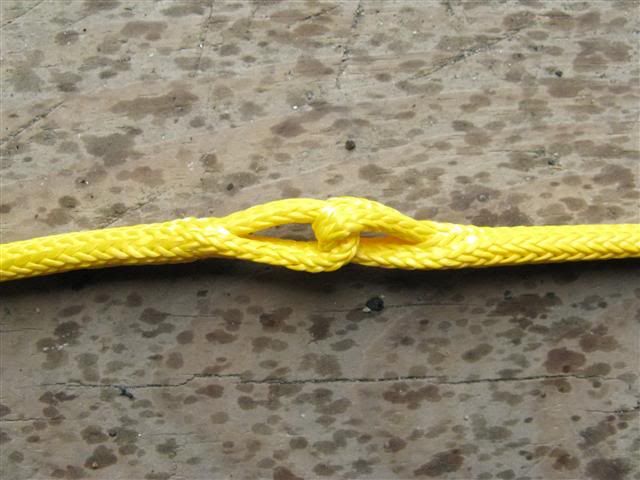
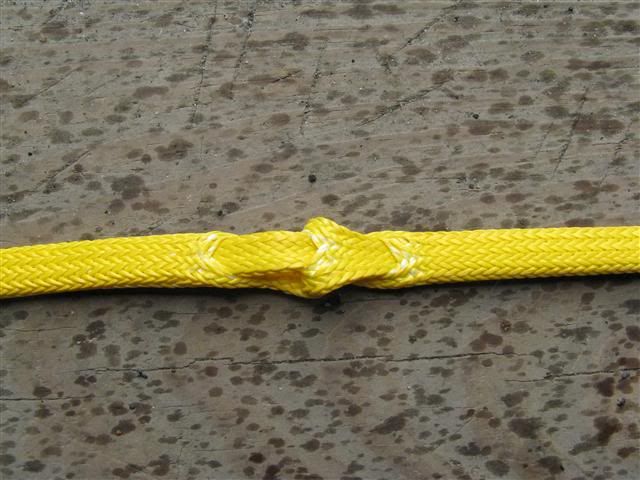
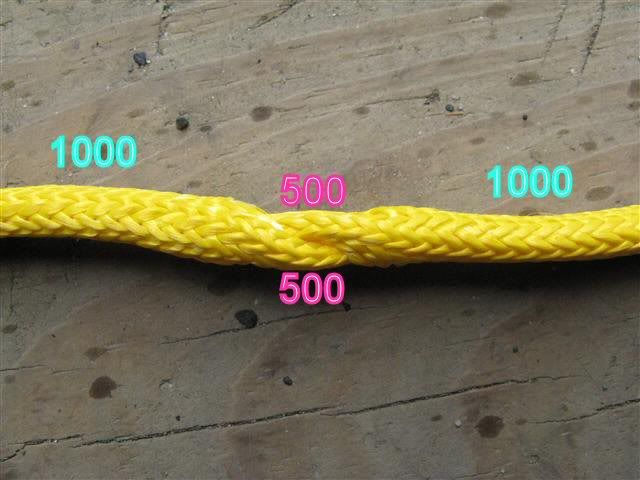
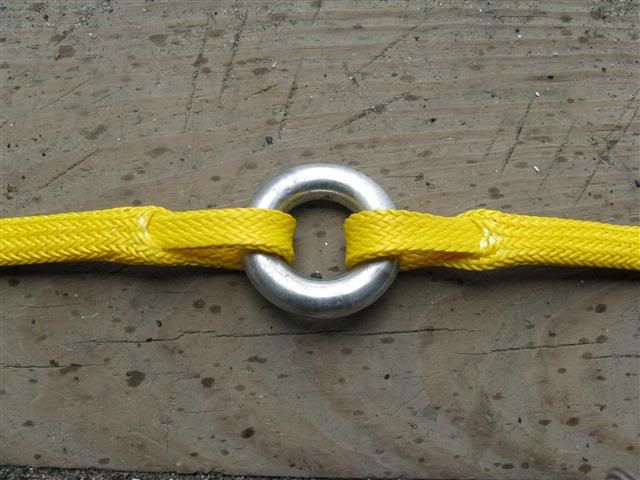
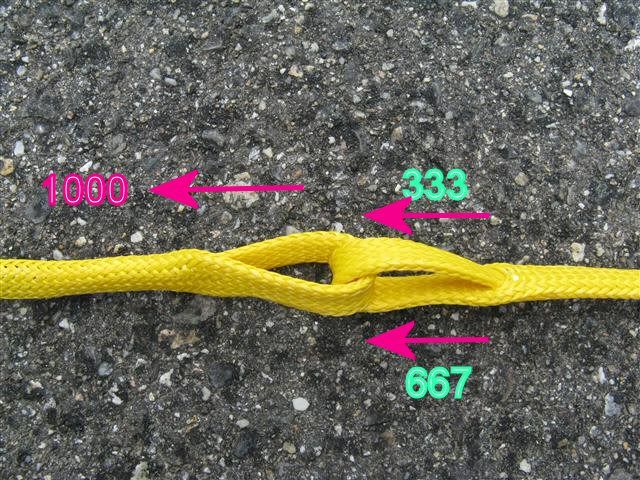
When the recent thread appeared describing Allgear H.T. Loop Line, I was instantly intrigued. It is something of a hybrid between webbing and hollow-braid rope, but really quite distinct from either. For one thing, there is far more hollow space inside than in any hollow braid. This makes it really easy to splice. The 32 individual strands are much bigger than the threads in webbing, so if feels more like rope than webbing. Interesting stuff.
The easiest way for me to test a hollow-braid rope is to splice one very good eye with a long bury and plenty of stitching at one end, and place the experimental eye at the other end. That was the procedure I used with the H.T.
Here are the first two experiments:
#1 Straight bury splice, no stitching, 3.8in bury length, slipped apart at 336 pounds.
#2 Straight bury splice, no stitching, 8.4in bury length, slipped apart at 3532 pounds.
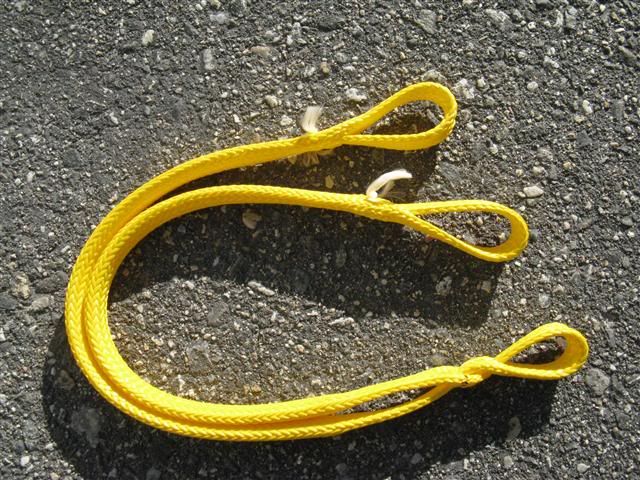
The photo was taken after the second test and shows the good eye and a few inches of the buried tip that pulled out. One can see from the tight weave and reduced diameter that the bury had experienced a lot of pressure. When I examined the rope with a hand lens, the bury seemed completely undamaged, but there was a small amount of fraying at the entrance wound in the cover.

The easiest way for me to test a hollow-braid rope is to splice one very good eye with a long bury and plenty of stitching at one end, and place the experimental eye at the other end. That was the procedure I used with the H.T.
Here are the first two experiments:
#1 Straight bury splice, no stitching, 3.8in bury length, slipped apart at 336 pounds.
#2 Straight bury splice, no stitching, 8.4in bury length, slipped apart at 3532 pounds.
The photo was taken after the second test and shows the good eye and a few inches of the buried tip that pulled out. One can see from the tight weave and reduced diameter that the bury had experienced a lot of pressure. When I examined the rope with a hand lens, the bury seemed completely undamaged, but there was a small amount of fraying at the entrance wound in the cover.