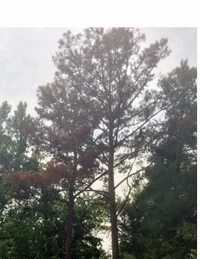
Southern Pine Bark Beetles

Location
USA
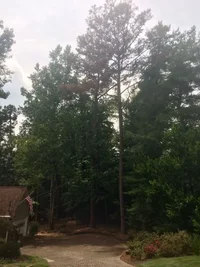
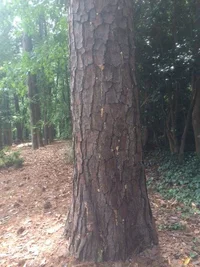
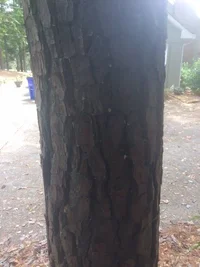
Hello, we have a home in Atlanta that's on approximately an acre of land with LOTS of pine trees and noticed that several of them have been infested with southern pine bark beetle which I realize is "not good". We are arranging for these trees to be removed but would like to insure that infestation does not spread and would appreciate your help as what to do / what to not do to limit the disease to the (currently) affected trees?
Thank you for your help
Bob
 

Attachments

  • tree.webp
    tree.webp
    51.9 KB · Views: 9
  • tree bark2.webp
    tree bark2.webp
    73 KB · Views: 11
  • tree bark.webp
    tree bark.webp
    40.3 KB · Views: 9
Thank you for your quick response Oak man, I could not find information for "Prestige Tree and Oak" nor am I sure why I should contact them being that I HAVE already made arrangements for the infected trees to be removed but I obviously don't know what I am doing so I want to learn as much as I can and am ALL EARS.
Thanks Oak man
Bob
 
Welcome Boblink to the Buzz.

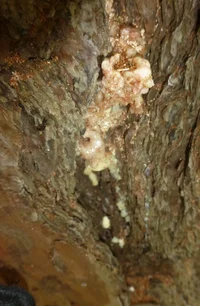
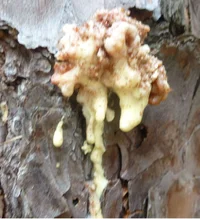
Can I assume that you have a firm and correct identification of the beetle? I'm not a bug guy but a fungus guy, but I do know that there are at least five distinct beetles in Georgia that could be legitimately called "pine bark beetles": Three species of Ips engravers (which can be safely lumped as "Ips", the black turpentine beetle, and the southern pine beetle (SPB). Declining trees can be infested with more than one. My question is prompted by your use of the term "southern pine bark beetle"...that's a term that I haven't seen. So if you mean SPB, OK. If you mean Ips or black turpentine beetles, that could make for a difference in approach. The photos are too fuzzy for me to identify, but like I say, I'm not a bug guy.

The Georgia Forestry Commission differentiates those three groups of five beetles in: http://www.gatrees.org/forest-manag...beetles/PineBarkBeetlesinUrbanAreas121808.pdf

Some useful Q&A on SPB from Florida:
http://www.entnemdept.ufl.edu/foltz/eny3541/pbb/FAQs.htm

Somewhat more technical guide is linked to the online USDA handbook on SPB:
http://www.spbinfodirect.ento.vt.edu/Hndbk575/575.html

For traditional chemical control, check out the article at:
https://www.srs.fs.usda.gov/pubs/39086

One reason to seek professional help as suggested by OldOak is that permissible chemicals, formulations, and methods of treatment continue to develop, sometimes on a year-to-year basis.
Also, I expect that one or more of the systemic chemical injection treatments are available, but I'm likely out-of-touch there.
Good luck!

 
Treatment will depend on what critters as Kevin mentioned as well as where they are in their life cycle. It very well may be that the trees are too far gone or that the insects may not be susceptible to treatment right now.

Treatment options include STRONG bark beetle rates of pyrethroid insecticides sprayed to the trunk and limbs (messy and pretty nasty at that strength), injectable insecticides such as emmamectin benzoate, insect traps, and cultural care. Cultural care such as deep watering when needed is really quite necessary as these beetles are very much attracted to drought stressed trees.

Good luck.
 
Thank you guys, I knew that I did not know much about pine beetles and you guys have shown me just how little I know, THANK YOU. I believe that the pine trees that were identified are goners but I would like (my objective is) to save the other pine trees on our property before they become infected and took some (hopefully) better pictures of the infected trees. BTW, we had the wettest July and August that I can remember although the last week to 10 days have been relatively dry so I would be surprised if the trees were drought stressed, if anything I would expect the opposite but then again, I am far from an expert on trees, I am not even an amatuer.
Thank you again for the education and help Kevin and JD
Bob
 

Attachments

  • beetle.webp
    beetle.webp
    591 KB · Views: 9
  • beetle closeup2.webp
    beetle closeup2.webp
    311.6 KB · Views: 6
  • beetle closeup.webp
    beetle closeup.webp
    370.2 KB · Views: 6
  • beetle saw dust.webp
    beetle saw dust.webp
    1 MB · Views: 7
  • beetle saw dust closeUP.webp
    beetle saw dust closeUP.webp
    453.3 KB · Views: 7
You may also want to contact the local (county) office of your states Forestry Division and ask the local forestry officer to visit your site. They could give you a positive ID and advice on what to do to inhibit further spread among your remaining pines.
 
I searched "pitch moth (Synanthedon pini)" and you may be on to something PC, THANK YOU but we live in Atlanta and almost all the articles (descriptions) that I read were from western states (universities) so I wonder if pitch moths are unique to western states? I haven't seen flying moths and will try to "capture" a grub and compare it to the photos but it may take awhile since the weather forecast is for rain, rain, rain the next few days but I certainly hope that you are right PC since 2 of the pine trees are right by the power (electrical) wires so the tree cutters will need a Crane to take them them
Thank you PC
Bob
 
One more thing PC, another reason why it may not be pitch moth is that the crown on the infested trees has turned brown which id a sure sign that the tree is dying and I don't remember reading that happening to trees with pitch moth
Bob
 

Attachments

  • tree2.webp
    tree2.webp
    22.3 KB · Views: 5
Good morning guys, it hasn't started raining so I went out to uncover and then take a picture of a grub and noticed that infested areas on the trees were much smaller and looked drier than they did yesterday. I did pry (uncover) 4 or 5 spots but I could not find a grub or anything that moved.
Thanks guys
Bob
 
You may also wish to post to this page on fb, where some University of Florida researchers and ag government types hang out:

https://m.facebook.com/groups/230558757413787

You definitely would have a leg up by identifying the responsible culprit/s.

A lot of the time, it's simply a matter of removing the trees, removing more trees that look healthy but are nearby the infested ones, and removing all the debris off site.

I occassionally inject pines with emamectin benzoate. It's too expensive for multiple pines like you have. I'm not aware of a cost-effective broad-spectrum treatment.
 
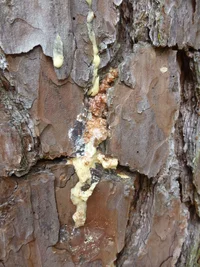
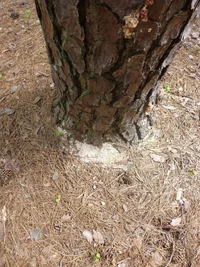
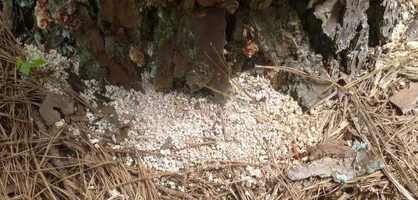
Hi guys, a local tree care expert diagnosed the invaders as Black Turpentine Beetles that apparently do not inflict as much damage as pine bark beetles.
And fyi Colb, Patrick Mawhinney advised me that he does “not spray the large trees anymore”
Thanks
Bob
 
An update / new news on my saga, the beetles are not southern pine bark beetles but have been identified as probably a combination of IPS Beetles, that caused the trees to stress and Turpentine Beetles that came afterward and are there now. So my dilema (question) is, I have to take down 2 pine trees that with brown crowns since they are either dead or dying but what do I with (so far) 3 pines that have pitch tubes on the bark but the crown (at least for now) looks healthy?
Bob
 

New threads New posts

Back
Top Bottom