












Navigation
Install the app
How to install the app on iOS
Follow along with the video below to see how to install our site as a web app on your home screen.
Note: This feature may not be available in some browsers.
More options
You are using an out of date browser. It may not display this or other websites correctly.
You should upgrade or use an alternative browser.
You should upgrade or use an alternative browser.
Retrenchment and Mistletoe
- Thread starter Tree_Frog
- Start date

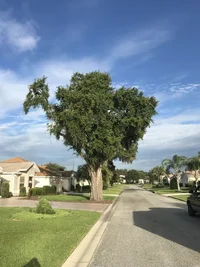
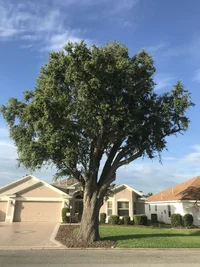
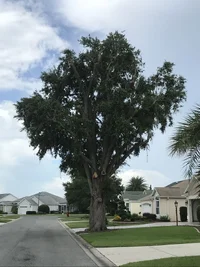
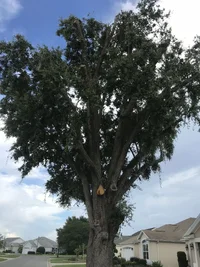
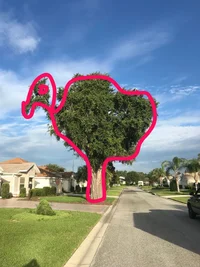
lol. Actually after working on Live Oaks almost exclusively over the past 8 years here in Florida I have learned a few things. They are hands down one of the strongest trees that I have ever worked on. Damn sure the heaviest. They have three common leaf drops. Fall 30-50%, Spring (80-100%) and drought conditions during summer if applicable (drop varies). Extremely resistant to disease and trunk rotting organisms. Extremely well rooted but will fall over due to excessive canopy weight, moss, and/or over reaching. Generally the oaks will fall apart at the connections which are generally catastrophic. Most of the time very predictable. They are not a good candidate for dynamic cables due to weight load, aggressive failure, and wildlife.
This tree, hands down has been my toughest yet. it was from a hammock of Live Oaks that was cleared for housing and was set to fall over. The pruning cycles keep the tree in play with only small branch breakage during the hurricane. Homeowner states only a few 2 inch branches and some minor clean-up.
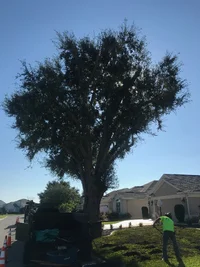
The mistle toe infection has subsided with only a few minor infections in the canopy during this pruning cycle. The pruning was timed just at the start of the spring flush The inner canopy released first thus we have a very bare tree in the final pictures. The outer canopy still retained the old leaves that had yet to fall.
This pruning cycle was finally time to reduce the weight load to the West and balance the tree. One of the biggest problems with this tree is that it is always off on one side of the canopy. 3 of the 4 directions of viewing the tree looks great. The last gives us the turkey look.
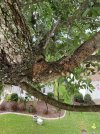
If you are wondering why I left that horrible branch, here's why. The reduction of that branch at that time was a all or nothing event. The particular limb did not have enough branching to cut back too, if I did then I would have had a massive epicormic response and defeated the balance of that limb. See picture below:
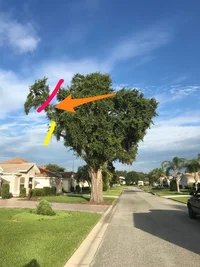
The green above the red line is the energy factory for the new growth of the bare limb. This provides exactly what has happened as of June 12th from the original pruning of Feb. At the end of summer I will reduce the limb to the red line. If I were to make a cut on this limb at the time of the Feb pruning then I would have to have cut on the yellow line.
The remaining large cuts in the upper canopy ranged from a healthy 12" to smaller. The reductions were on laterals that would support the canopy growth even though it does not follow the ANSI 1/3 rule. This is something that I have learned with these live oaks, the 1/3 rule does not apply. The wounds should stay sound and continue to close at a rate of about 1 inch per year of faster. Decay should hold. Heading cuts with epicormic response initiates decay.
Over the years I have noticed that this particular live oak has been extremely organized in growth response. I have also noticed that Squirrels have played a major roll in pruning branches that are undesirable in the canopy. I have seen squirrel damage in this tree were pruning cuts should have been made. I do not think this a coincidence. It happens too often.
Can this happen with any tree. No I do not believe so. I think that only trees that can contain decay and have the vigor to rebuild can handle such a pruning. To this point there is no decay in the limbs or trunk. There is no natural weight reduction on exterior branches through hollowing.
Hope this helps.
This tree, hands down has been my toughest yet. it was from a hammock of Live Oaks that was cleared for housing and was set to fall over. The pruning cycles keep the tree in play with only small branch breakage during the hurricane. Homeowner states only a few 2 inch branches and some minor clean-up.
The mistle toe infection has subsided with only a few minor infections in the canopy during this pruning cycle. The pruning was timed just at the start of the spring flush The inner canopy released first thus we have a very bare tree in the final pictures. The outer canopy still retained the old leaves that had yet to fall.
This pruning cycle was finally time to reduce the weight load to the West and balance the tree. One of the biggest problems with this tree is that it is always off on one side of the canopy. 3 of the 4 directions of viewing the tree looks great. The last gives us the turkey look.
If you are wondering why I left that horrible branch, here's why. The reduction of that branch at that time was a all or nothing event. The particular limb did not have enough branching to cut back too, if I did then I would have had a massive epicormic response and defeated the balance of that limb. See picture below:
The green above the red line is the energy factory for the new growth of the bare limb. This provides exactly what has happened as of June 12th from the original pruning of Feb. At the end of summer I will reduce the limb to the red line. If I were to make a cut on this limb at the time of the Feb pruning then I would have to have cut on the yellow line.
The remaining large cuts in the upper canopy ranged from a healthy 12" to smaller. The reductions were on laterals that would support the canopy growth even though it does not follow the ANSI 1/3 rule. This is something that I have learned with these live oaks, the 1/3 rule does not apply. The wounds should stay sound and continue to close at a rate of about 1 inch per year of faster. Decay should hold. Heading cuts with epicormic response initiates decay.
Over the years I have noticed that this particular live oak has been extremely organized in growth response. I have also noticed that Squirrels have played a major roll in pruning branches that are undesirable in the canopy. I have seen squirrel damage in this tree were pruning cuts should have been made. I do not think this a coincidence. It happens too often.
Can this happen with any tree. No I do not believe so. I think that only trees that can contain decay and have the vigor to rebuild can handle such a pruning. To this point there is no decay in the limbs or trunk. There is no natural weight reduction on exterior branches through hollowing.
Hope this helps.
Santiago Casanova
Branched out member
- Location
- Sink Hole
Live oaks are by far my favorite tree with the cypress a close second. The strength and grain structure of the live oak was known to ship builders around the world. That is why, in the days of wooden ships, countries like France and Spain wanted large tracts of the north american south east.
This is video is about milling live oak for ship building. I have spoken with Steve Cross and he is an extremely smart individual. His home made saw is remarkable to say the least.
This is video is about milling live oak for ship building. I have spoken with Steve Cross and he is an extremely smart individual. His home made saw is remarkable to say the least.

guymayor
Branched out member
- Location
- East US, Earth
Thanks; totally agree the 1/3 guideline is not relevant here (or with any mature tree).
But I got my doubts about that 12" cut ever closing, and still don't understand the need or usefulness of taking so much off. The response should be interesting.
But I got my doubts about that 12" cut ever closing, and still don't understand the need or usefulness of taking so much off. The response should be interesting.
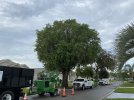
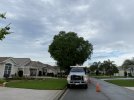
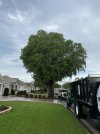
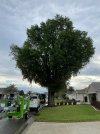
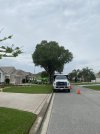
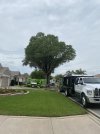
With the hurricane work starting on Monday I decided to trim the thanksgiving turkey early this year. Took the horrible turkey head off on Friday. It was like taking the cast off and saying finally that is done.
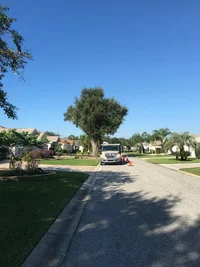
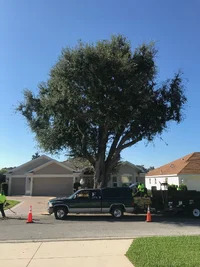
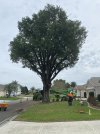
We added 2 Yards of Topsoil to the front yard to set up the nutrition for fall. Tree is looking great. We had a large number of sprouts develop in the canopy to replace what was taken off. We will let the tree rest for at least 3 years with maybe a small bit of clearance pruning on the lower sprouts that hang in the road and driveway.
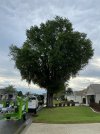
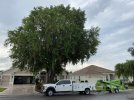
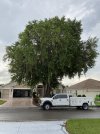
The tree is finally having symmetry.
We added 2 Yards of Topsoil to the front yard to set up the nutrition for fall. Tree is looking great. We had a large number of sprouts develop in the canopy to replace what was taken off. We will let the tree rest for at least 3 years with maybe a small bit of clearance pruning on the lower sprouts that hang in the road and driveway.
The tree is finally having symmetry.


I've got in depth questions, but in short:
@Tree_Frog Is symmetry a value in trees, and especially in southern live oaks?
@guymayor Guy, you've advocated for larger cuts than the Gilman 3". In a species that compartmentalized so well, what is the limit?
Overall, I'm saying there is little to lose on this project - mistletoe in a SLO with acute junctions and leaders extended towards the house. Not my idea of an easy prune. This all looks crazy, but the circumstance is pretty unique.
@Tree_Frog Is symmetry a value in trees, and especially in southern live oaks?
@guymayor Guy, you've advocated for larger cuts than the Gilman 3". In a species that compartmentalized so well, what is the limit?
Overall, I'm saying there is little to lose on this project - mistletoe in a SLO with acute junctions and leaders extended towards the house. Not my idea of an easy prune. This all looks crazy, but the circumstance is pretty unique.
guymayor
Branched out member
- Location
- East US, Earth
"Guy, you've advocated for larger cuts than the Gilman 3". "
????? I think you've got that reversed.
????? I think you've got that reversed.
This tree is out of the norm. It has been a challenge keeping this guy from falling over or apart. The overall goal was to balance the tree within the homeowners lifetime (retirement community). This tree is the reason they bought the lot. If we wanted to achieve symmetry with the over extending west side then we could have made smaller cuts and waited for the east and north sides to catch up. Instead over the duration of rhis thread we balanced the tree and now we will allow it to grow back out.
Question: does symmetry matter in live oaks? Yes, if not in hammocks where it is protected by the wind. They are strong and well rooted but will shed limbs if need be.
Sent from my iPhone using Tapatalk
Question: does symmetry matter in live oaks? Yes, if not in hammocks where it is protected by the wind. They are strong and well rooted but will shed limbs if need be.
Sent from my iPhone using Tapatalk


"Guy, you've advocated for larger cuts than the Gilman 3". "
????? I think you've got that reversed.
Okay, I thought you'd made some comments on retrenchment and the capacity of trees to deal with those larger cuts. I may still be mistaken and apologize if that's the case. Also realize that this is not a retrenchment thread, except for the fact that the tree is retrenched, lol...
I have seen what appears to be complete wound wood covering of large flush cuts to live oaks. I feel like @Tree_Frog has game - he's patient and the tree was arguably a loss with a large load of mistletoe and those acute branch junctions.
@Tree_Frog I still question the idea that the tree needs to be balanced above ground. As long as the tension wood is healthy, the root crown on the tension side is in good shape, and there are no recent site changes (flooding, scraping, etc.), it ought to be good to lean, in my view. I hear what you're saying about wind protection in a forest, but that tree was exposed 14 years ago and *has* shown it has no need of wind protection from other trees. More important to me is to increase branch taper and keep those acute junctions from pointing at the house without some form of risk mitigation - in this case some very heavy pruning.
With the taper you're developing, the branches emanating from epicormic sprouts will not be firmly attached for several years/decades. Does that negate the purpose of developing taper and how are you going to deal with that over the long term?


guymayor
Branched out member
- Location
- East US, Earth
Thanks for the update. It'll be interesting to see how all that sprouting is managed. Looks like that soil improvement had a great effect!
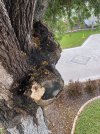
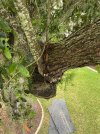
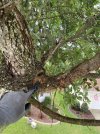
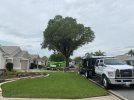
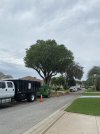
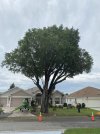
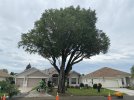


LordFarkwad
Branched out member
- Location
- Chatham Co.
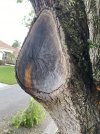
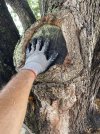
I know jack about tree biology, but can anyone talk about what's going on with this cut? It doesn't appear to have the response growth (wound closure?) found on proper pruning cuts executed at a branch collar. Why not? It seems obvious from the appearance of the exposed wood that a defensive mechanism has walled-off this area, but what's the deal with the lack of growth at the periphery of the wound?


Reach
Been here much more than a while
- Location
- Atglen, PA
I can’t give you the scientific answer, but the short, simple version is that a cut like that will never seal over nor is it likely to seal because it is too big, and due to its location on the trunk of a mature tree, I don’t believe there is any wound wood to grow over the cut.I know jack about tree biology, but can anyone talk about what's going on with this cut? It doesn't appear to have the response growth (wound closure?) found on proper pruning cuts executed at a branch collar. Why not? It seems obvious from the appearance of the exposed wood that a defensive mechanism has walled-off this area, but what's the deal with the lack of growth at the periphery of the wound?
That is exactly why we do everything we can to avoid making cuts like that, especially on Oaks.












New threads New posts
-
test
-

-
-
-
-
 Light 14 or 16" narrow kerf bar for 200t or 201t
- Started by southsoundtree
- Replies: 9
-








