Some of the replies surprise me --inserting a toggle?
Beware, if the rope parts, that might become a projectile!
Use
"Ashley's Bend" (#1452), shown here by Grog's
Animated Knots site :
https://www.animatedknots.com/ashley-bend-knot
This knot can be dressed to different purposes :: what
Grog shows is a dressing that should render the knot
easily untied; but there's a different way to dress & set
it so that it quite securely stays tied when slack (but can
be a bear to loosen) --it's a matter of some parts getting
purely opposite the main line and pinching it (one might
want this security in some light-duty tying of PP rope of
a dog leash or something).
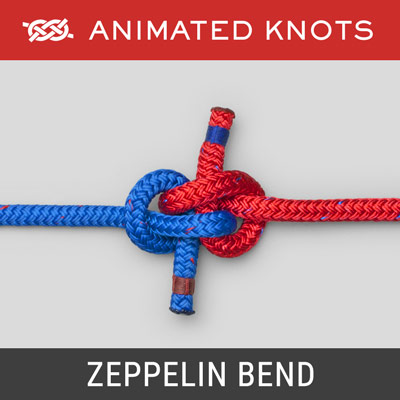
The
HowNotTo site has some amazing videos of
Thrun's Joint**
aka "ZeppelinK." losing structural integrity in some 7mm
"cordelette" nylon kernmantle rope --which rope, I must note,
seemed to do some remarkable things, and the Butterfly
Joint also distorted, as did one mis-tied-for-that =>
Ashley's
#1408 (essentially, a
symmetric Butterfly) !!
WTF?! --back to the drawing board!
(IIRC, Mr.HowNotTo Ryan Jenks asserted that he's NEVER had
the Butterfly break --it's always spilled! Well, certainly this is
a quite uncommon result, with others breaking the knot. !?)
The
carrick bend is usually recommended as good for heavy
ropes and loosenable after hard loading (and an easy seed
to see sprouting #1452, 1408, and "Shakehands"). This
knot is used by Alaskan crab fishers in their 5/8"? pot lines
(I think usually tied by two men, with one forming what one
might know as a "Munter's hitch" and the other reeving the
joining line appropriately into this; not sure if the tails get
taped together.)
(** After the late Bob Thrun, who introduced his discovery in a
small, D.C.-area local caving newsletter in 1966?) aka "Zeppelin"
(what Boating? ed.s named it in the infamous article claiming
at-the-cited-time airship Cmdr. Charles Rosendahl
insisted upon
its use, only then in reply to that article the Ret'd RAdmr Rosendahl
denied (even) knowledge of the knot! And also quite strange to
this Boating legend is why if so there is no record of the knot
in Naval & other literature!)
That
Twin bowlines joint can be (
should better be?!) tied with
closer knots & longer tails such that these long tails can be
taken through their own bowline's nipping loop --giving a
3rd diameter for the main lines to compress around.
A point to make about joining lines is that it might well be
that the two distinct lines (where they are distinct, so not
in making a round sling) might well have different qualities
of size, stiffness, elasticity, ... , and a symmetric knot will in
effect meet asymmetric cordage (though minor differences
at least are likely not an issue).
*kN*
postscript ::
I should remark about Grog's (
Animated Knots) statements
here ::
David M. Delaney tested these bends and the
Carrick Bend for their tendency to jam. He heavily loaded the knots tied in
1/16 inch braided nylon.
Tied the way he employed for the testing, the Ashley Bend and the Hunter’s consistently jammed tight and would have had to be cut to release them.
[end quote]
David mis-tied #1452, and got the jamming form thus.
I pointed this out to him (directly or otherwise?) and he
subsequently agreed that there is non-jamming dressing.
As for SmitHunter's Bend, this too has a not-so-jamming
version (more than mere dressing, here) in which the tails
cross each other in their exit --this puts some material
to impede the tight constriction of the "collars" around
the main lines.