









Question on Oak Wilt:

Hi all,

I’ve got an appointment to look at tree that the client thinks died from oak wilt. There’s never been any oak wilt reported in my county so I’m not very familair with it, but this client is from a neighboring county that does have oak wilt. I operate in NW Pennsylvania. My question is this: is it safe to cut the tree down in October without cutting the roots? Penn State said that October through the end of April is a good time to remove infected trees, but I’m not sure if I'm suppose to cut the roots if its during that time. I heard somewhere that you need to cut the roots if removing the in fall but if you waited until winter you could remove without cutting the roots. But I’m not sure if thats right, or what date/temperature fall ends and winter begins.

And iff root cutting is required, whats the best way to do that? I’ve got a MT100 mini skid that I could put a plow attachment on if I could find one that worked, or I have acess to an excavator. Open to other ideas too. Thanks for you help.
 
I’ve been dealing with Oak Wilt. Here’s the standards that we’ve developed that are also followed by two local townships.

Remove immediately upon a positive sample. Time of year doesn’t matter. The longer these trees stand the more likely the disease will spread. There is no cure or treatment. Once the tree shows symptoms, if it tests positive, it’s already dead. Ideally all roots will be cut at a decent radius from the tree (12’-15’), if possible and feasible. The easiest way would be to cut a trench with a stump grinder. I have also airspace’s these trenches where there were other things to consider like not completely destroying another trees root system. These townships also treat every Red Oak within 200’ and every White Oak within 100’. The treatment is stem injection macro injection with Alamo, a fungicide. The only other thing is to make sure all material (ie: brush, chips and wood) leave the property and are composted. Don’t leave wood behind for firewood. The inoculate must be removed. The stump must be ground as well.

In this area we will only prune Oaks between Nov 1 - April 1. to reduce chances of live wood tissue attracting vectors. Any pruning cuts that can’t be avoided (ie: storm damage), must be sprayed with a pruning sealer.

Hope this helps!
 
Thats very helpful, thanks! Thats interesting that you recommend hauling away all the logs. Other sources have said to leave it there under a tarp so that the disease isn't moved to a new place. What do you mean when you say to compost the material? And I've used a latex based paint for a pruning sealer but I wasn't sure what the best practice was. Does it matter much what product is used to seal pruning cuts?
 
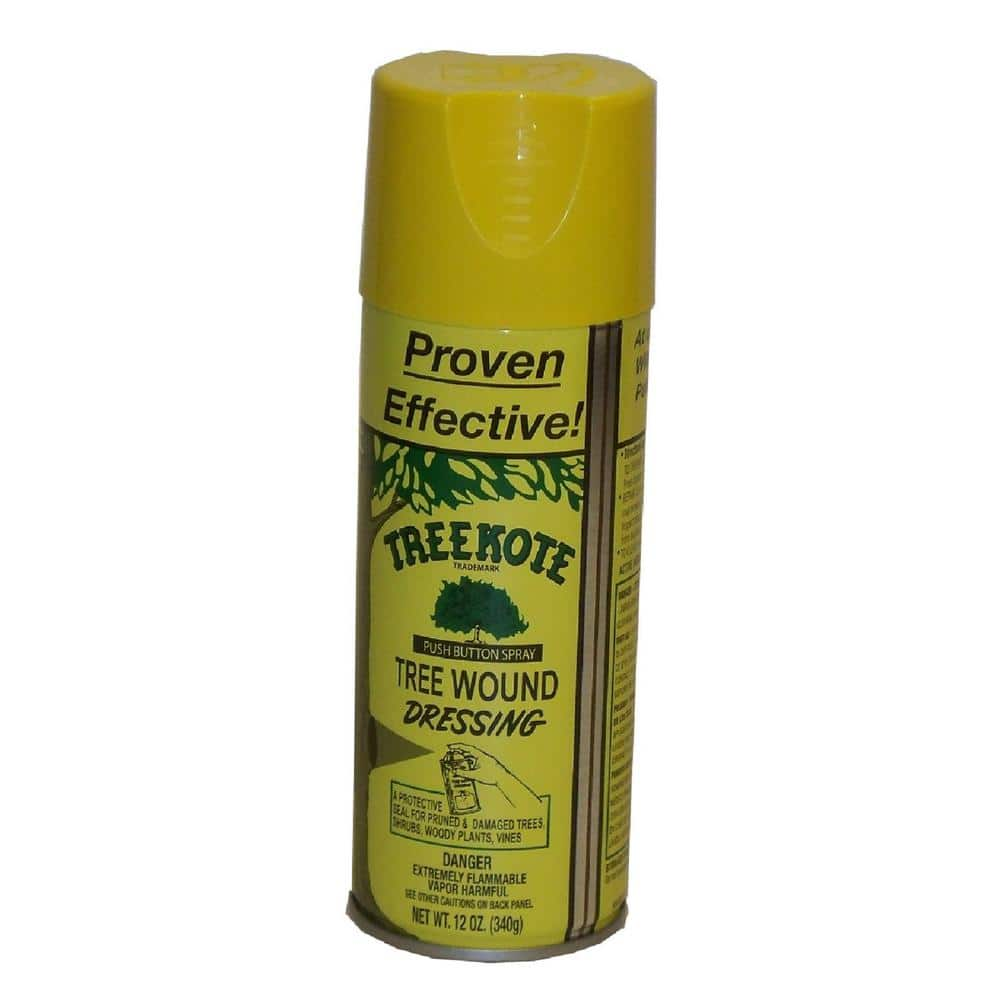
As part of the stipulations with both local townships, the debris and wood should be hauled to a facility where everything is ground and made into mulch. The heat in the mulch pile will kill the fungus. I’ve heard about forest lands piling and burying debris, but I’ve never heard of the tarp idea. The following year that fungus will put out fruiting bodies. I’m not sure I would want it on my property under a tarp or not. As far as pruning sealer I use Tree Kote. It’s available at Home Depot and made for Oaks and Elms. It’s pretty nice to work with too.

One other thing. I have removed Oaks in the summer and sprayed the stumps with Tree Kote to protect against vectors if I didn’t know if or when the stump was going tot be removed.

 
In this area we will only prune Oaks between Nov 1 - April 1. to reduce chances of live wood tissue attracting vectors. Any pruning cuts that can’t be avoided (ie: storm damage), must be sprayed with a pruning sealer.
What area do you speak of??

Also, does anyone know if taking dead branches out exposes the tree?
 
What area do you speak of??

Also, does anyone know if taking dead branches out exposes the tree?
Anything smaller than 6" diameter is supposed to be safe

Edit for clarification - removing small branches from the site is supposed to be safe. Not pruning smaller branches.
 
Last edited:
I’m in Central PA. And any exposed live wood tissue during the growing season opens the tree up to disease. Diameter of dead limbs doesn’t matter. It’s about whether the cut made exposes live tissue. The reason is that when live wood is exposed it puts out a Phermone that attracts the bark beetle that vectors disease. The whole idea is to limit exposure as much as possible.
 
I’m in Central PA. And any exposed live wood tissue during the growing season opens the tree up to disease. Diameter of dead limbs doesn’t matter. It’s about whether the cut made exposes live tissue. The reason is that when live wood is exposed it puts out a Phermone that attracts the bark beetle that vectors disease. The whole idea is to limit exposure as much as possible.
Agreed...any pruning should be avoided. I misread that as whether taking smaller branches off site was safe. That is what I meant by under 6" was OK. Sorry for the confusion.

(but technically deadwood doesn't matter because if you aren't cutting into live tissue the tree will not release volatiles. but we still won't deadwood oaks during the growing season because there still risk of damaging bark...and how often do you prune only dead and NO live branches)
 

New threads New posts

Kask Stihl NORTHEASTERN Arborists Wesspur TreeStuff.com Teufelberger Westminster X-Rigging Teufelberger
Back
Top Bottom












