Pollarding Bradfords

guymayor

Branched out member
Location
East US, Earth
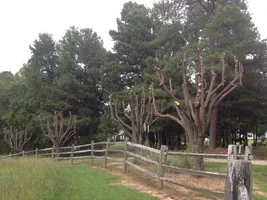
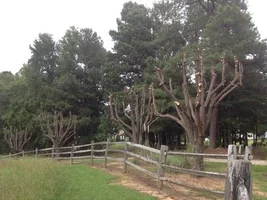
These Bradford pears just got their second pruning at the same nodes (well close anyway). I specced pollarding for these and the crews have done ok. We'll see if there's resprouting before fall, and what happens then.

After you have attached the photo click on the attachment, once the picture is up go to the address bar at the top of the page that the picture is in and copy the address of the picture.

Now edit your post that the same picture was in. Scroll down the page till you see where is says 'Instant UBB Code" click on "image" now past the address of the picture that you copied and it will embed into your post. Scroll down to the bottom of the page and click continue.
333672-pollardingpears120823.jpg
 

Attachments

  • 333672-pollardingpears120823.webp
    333672-pollardingpears120823.webp
    90 KB · Views: 41
[ QUOTE ]
Why did you spec Pollarding?

[/ QUOTE ]

Because the objective of uniformity overrode size and other contributions, to the owner.

The client got the choice of cabling with swages and minimal pruning, or pollarding. They chose the higher-maintenance, smaller tree option. Given the location, it may have been the best call; no room for big trees there.
frown.gif


I like the look in leaf; a touch of Europe in backwoods NC.
 
[ QUOTE ]
Why did you spec Pollarding?

[/ QUOTE ]

Look at those crotches, they're all a whisper of wind away from peeling like a banana without pruning. Aside from spring time, pear trees look great being fed through a chipper!
 
Would not controlled reduction at intervals be a better management practice? Like 3-5' and a yearly pruning regime to manage water sprouts? That looks a little heavy handed in my opinion.
 
[ QUOTE ]
Would not controlled reduction at intervals be a better management practice? Like 3-5' and a yearly pruning regime to manage water sprouts? That looks a little heavy handed in my opinion.

[/ QUOTE ]

Lol, those poor pears!

SZ
 
Given the option I always wanted to try that type of pruning. I've pollarded crape myrtle before and seen good results. I've also seen london plane trees pollarded in virgin in colonial Williamsburg (maybe sycamores? I think they have been there a while but I'm not sure).

The only thing that makes me hesitant with suggesting this type of pruning is the maintenance schedule. The homeowners have to keep up on the maintenance or it can have potential to become a hazard.

And one final thing. I dislike that tree very much. I see no point other than the white flowers in spring. It doesn't even produce fruit for so much effort. Pollard it and feel good.
grin.gif
grin.gif
grin.gif
grin.gif
 
[ QUOTE ]
The only thing that makes me hesitant with suggesting this type of pruning is the maintenance schedule. The homeowners have to keep up on the maintenance or it can have potential to become a hazard.

[/ QUOTE ]I hear that repeated so much that it has taken on mythic proportions. It's hard to imagine that a lapsed pollard Bradford will be more likely to break than another Bradford, isn't it?
confused.gif


We don't want to "myth" anything quoth Codit hahaha

marlin, 3-5' off a year might work, but crews with um uncertain abilities would have a harder time following that. "Cut here every August" is fairly idiotproof, though I see I will have to reemphasize the collar cut concept...

There's a row of young sycamores with wicked anthracnose coming on nearby; more good candidates for pollarding imo.
 
Why do the pruning every August. Why not in February or March? Are you trying to limit the energy reserves of the trees? Is it to avoid the infectious period of fireblight? ( If that's an issue there ). Just curios.

I'm all for pollarding when appropriate. I grew up next to a pollarded catalpa. The tree was there before I was born and still going, still the same size.
 
You guys need to use photobucket so you can resize your pics and not create such small script for readers of your posts.

Unless of course the pics are so fantastic their clarity and detail mean more to yu than whatever you're writing about?

Tom pestered me bout not resizing my pics to the point I no longer post any pics over the optimum size of 640x480.


DSCN1479.jpg


jomoco
 
"Why do the pruning every August. Why not in February or March? Are you trying to limit the energy reserves of the trees?"

Yes the goal is to deplete those reserves to limit vigor of regrowth

"Is it to avoid the infectious period of fireblight?...

Good point; fireblight is here and this pruning (and cleanup) would take care of them bacteria too.
 
[ QUOTE ]
"Why do the pruning every August. Why not in February or March? Are you trying to limit the energy reserves of the trees?"

Yes the goal is to deplete those reserves to limit vigor of regrowth

"Is it to avoid the infectious period of fireblight?...

Good point; fireblight is here and this pruning (and cleanup) would take care of them bacteria too.

[/ QUOTE ]
True BRADFORD pears do not get fireblight, but all or most of the other varieties do, which has gotten bad here these last 5 years. The wild callery pear and redspire seem to get it the worst.

I like the discussion on the pollarding.
 
look into it.

If it has fire blight and looks like a bradford, then it's going to be aristocrat instead of a bradford, or one of the other varieties.

the problem is most people call them all Bradford pears. If you have a street with some original bradford pears, plus other callery pear varieties and many plantings have fire blight, you'll find that the original bradford pears will NOT have any fireblight what so ever.
 
I've seen fireblight on bradfords.

Not seeing it is not proof it doesn't happen. Seeing it is.

I'd just as well see fire blight though than the visual blight of those ugly pollarded pears every fall.

Guy, fix your photo. The width is messing with the thread!

Here, take this one.

333773-Visualblightedpears.jpg
 

Attachments

  • 333773-Visualblightedpears.webp
    333773-Visualblightedpears.webp
    90 KB · Views: 19
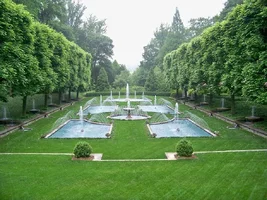
I think with time they will look pretty good. They are a little rough right now just because of the cuts that had to be made. I think I would pollard them imediatly after the flowers fall though, giving the tree a chance to recuperate before winter. And allow for the flower buds to set and bloom. We pollard 14 Linden trees every feb or march and they have a very formal look in the summer and a neat look just after we finish them. But it takes time to make it look good.
333778-100_0473.JPG
 

Attachments

  • 333778-100_0473.webp
    333778-100_0473.webp
    225.7 KB · Views: 20
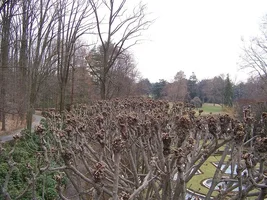
Looks like a sloppy job the last time it was pruned. The sprouts should be cut just outside of the collar leaving nice round pollardheads (not looking like its 5 days since it shaved.) This will make pruning easier later and less decay.
 

New threads New posts

Back
Top Bottom