












Navigation
Install the app
How to install the app on iOS
Follow along with the video below to see how to install our site as a web app on your home screen.
Note: This feature may not be available in some browsers.
More options
You are using an out of date browser. It may not display this or other websites correctly.
You should upgrade or use an alternative browser.
You should upgrade or use an alternative browser.
New HitchHikerXF
- Thread starter Richard Mumford-yoyoman
- Start date


Acerxharlowii
Branched out member
- Location
- Greensboro
I like using the “Brocky” hitch

Richard Mumford-yoyoman
Been here a while
- Location
- Atlanta GA
Thanks for a practical question. Not at this time. I'll see how things go but I don't have the stock to offer both.I have a practical question. Is there an opportunity to purchase just a swingarm so that a person can have both versions of the swimgarm if they want?
Richard Mumford-yoyoman
Been here a while
- Location
- Atlanta GA
Thanks for that blast from the past. Again, post #23 above I think there is confusion. And with total appreciation to @Brocky and Jesse at the Charlotte AR training, this knot does not have the Knut attribute. The bight lays flat against the climbing line and then is modified by going directly to the eye of the Dogbone.The hitch you have pictured I think is something you referred to as the Knut H in the following video, you start tying it at about the 39:00 mark.
Again, who did what and gets to name something is not a discussion I'm going to have. I do believe the name demonstrates what it is and there is no Knut in it so call it whatever we want, IT WORKS GREAT on the HHxf.
Richard Mumford-yoyoman
Been here a while
- Location
- Atlanta GA
I can only speak to the HHxf but it probably applies to other HH's as well but one of the beauties is that it IS a hitch based system, your life support is on the hitch you choose to use. The HHxf will add function and a connection to it.
Recognize that the form factor is different then say a HitchClimber pulley etc so a hitch you really like there may not give you the same outcome here. Low and slow, fully test your hitch. If you are going to do some rescue and remotely tend someone else's hitch, make sure it will not drop that climber to the ground.
Hybrid systems are a beautiful thing in their function, versatility and reliability. Infinite adjustability, low top exposure and minimal configuration exposure.
Recognize that the form factor is different then say a HitchClimber pulley etc so a hitch you really like there may not give you the same outcome here. Low and slow, fully test your hitch. If you are going to do some rescue and remotely tend someone else's hitch, make sure it will not drop that climber to the ground.
Hybrid systems are a beautiful thing in their function, versatility and reliability. Infinite adjustability, low top exposure and minimal configuration exposure.

That may seem like a small thing to many but not to me! Good job Richard.This is one of the small safety related improvements of the Swing Arm.
This Link with time stamp should take you right to the spot in the video.
Richard Mumford-yoyoman
Been here a while
- Location
- Atlanta GA
@Brocky, you are an awesome artist and hitch creator. But IMO neither of the above drawings represent a Knut. Would you please draw a Knut. I have linked a video and there are many others on how it is tied.View attachment 80736The feature I found unique about the Knut is the inactive aspect of the eye and leg that comes directly from the top. It becomes slightly active when it crosses sides, but still does basically nothing to form the rest of the hitch. The A-H and other variations have this same feature with the other eye doing all the work.
Following alphabet labeling above shows the difference between the two hitches.
How I remember and tie the Knut
And this is the way I see a Catalan and by coincidence remember it. The "C" is laying flat against the climbing line. Excuse my art.
Attachments

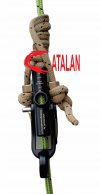
Maybe I am confused but you yourself called this a Knut H in the video I linked. I don't care who calls what who or why or when, but for the sake of consistency and clarity, you called this a Knut H. Was that a verbal typo or have you changed your personal nomenclature for some technical reasons? I've been calling it the Knut H because I learned the hitch and name from your video. I don't want to beat a dead horse but this one is still whinnying a little hahaha
Richard Mumford-yoyoman
Been here a while
- Location
- Atlanta GA
Just added/edited #34 above.Maybe I am confused but you yourself called this a Knut H in the video I linked. I don't care who calls what who or why or when, but for the sake of consistency and clarity, you called this a Knut H. Was that a verbal typo or have you changed your personal nomenclature for some technical reasons? I've been calling it the Knut H because I learned the hitch and name from your video. I don't want to beat a dead horse but this one is still whinnying a little hahaha
Yes, that poor horse! Anyway, I did call it the Catalan earlier in that video and then gave in and called it Knut. I regret that. I want to give credit and respect to those that had input, I should have stuck to my guns and stayed with the modified Catalan by Brocky. I'm not taking credit, don't want credit for it but it is NOT a Knut, I know how to tie a Knut and this is NOT it. Besides, as drawn above, the C in Catalan just makes sense and make it so less confusing and easy to remember, I know I need, "easy to remember".
Go horse, GO!
Richard Mumford-yoyoman
Been here a while
- Location
- Atlanta GA
So tell me what you want me to call the hitch that Jesse tied at the Charlotte Training session and he called the Catalan and that you modified with the straight leg? (other than anything Knut because it does NOT have that form factor and is not tied in anyway like the Knut)Ok, it’s not the Knut, full name of mine is the Knut Variation H, with some before it and after it called Knut Variations, based on my what I think is the most recognizable feature of the Knut. Since I am originating these shouldn’t I be given credit, calling it by another name doesn’t do that.
Richard Mumford-yoyoman
Been here a while
- Location
- Atlanta GA
I have posted some dimensions that may be helpful. My personal preference, and it sounds like I'm selling more product, but I have the captive eye on my bridge and it mostly stays on my bridge while I move my life support anchor to desired locations and then work off of that. For the secondary life support anchor I use the non-captive eye with a SwivaEye carabiner.
Looks like the swing arm without the eye will fit the Camp gyro swival with the rubber gourmets removed.
Thanks
Follow this link to https://climbinginnovations.com/hitchhiker-faq/

Zebco Kid
Branched out member
- Location
- Ashland, Oregon
Hello All (and Richard),
My HitchHikerXF arrived today. What a hip piece of gear. I've only had the chance to connect to a rope in the garage and hang...but it looks like the perfect balance of traditional confidence makers like a rope hitch, with the modern day technology of the Dog Bone/SlicPin combo. Oh...did I mention the technical prowess integrated into the housing?
The ability to transition from DRT to SRT couldn't be better. And the swing arm design moving an anchoring knot away from the rope hitch clearly comes from someone who climbs. A most excellent solution.
I'm looking forward to playing in the canopy, and getting to know the HitchHikerXF.
Well worth the wait!
Thank you.
My HitchHikerXF arrived today. What a hip piece of gear. I've only had the chance to connect to a rope in the garage and hang...but it looks like the perfect balance of traditional confidence makers like a rope hitch, with the modern day technology of the Dog Bone/SlicPin combo. Oh...did I mention the technical prowess integrated into the housing?
The ability to transition from DRT to SRT couldn't be better. And the swing arm design moving an anchoring knot away from the rope hitch clearly comes from someone who climbs. A most excellent solution.
I'm looking forward to playing in the canopy, and getting to know the HitchHikerXF.
Well worth the wait!
Thank you.
Richard Mumford-yoyoman
Been here a while
- Location
- Atlanta GA
Awesom ZK,Hello All (and Richard),
My HitchHikerXF arrived today. What a hip piece of gear. I've only had the chance to connect to a rope in the garage and hang...but it looks like the perfect balance of traditional confidence makers like a rope hitch, with the modern day technology of the Dog Bone/SlicPin combo. Oh...did I mention the technical prowess integrated into the housing?
The ability to transition from DRT to SRT couldn't be better. And the swing arm design moving an anchoring knot away from the rope hitch clearly comes from someone who climbs. A most excellent solution.
I'm looking forward to playing in the canopy, and getting to know the HitchHikerXF.
Well worth the wait!
Thank you.
Let me know if there is anything you think should be in the manual that is not or if the videos are missing or have any incorrect information. I just did some more testing today on the distribution of friction and a break test with 10mm BeeLine. The cordage broke at over 5,000 LBf and the metal did not even show a sign of movement. The thing is beast! Oh, and that is the 5th cordage break on the same HHxf. I'll post the video when I can.
Thank you,
Richard
Richard Mumford-yoyoman
Been here a while
- Location
- Atlanta GA
New video showing the relationship to the hitch and mechanical components of the HHxf.
Follow the link above or enter
Follow the link above or enter
Richard Mumford-yoyoman
Been here a while
- Location
- Atlanta GA
I'm very reluctant to comment on this but it haunts me not to, so please take no offence, I realize there are conceptual ideas here but others look at things and may not know the risk. I have seen comments in forms end up in court cases. Because I started this thread about the HHxf and this is posted here I am compelled to say something. Other opinions are always welcome.View attachment 80724No, another angle and better lighting.
So a friction hitch works with rope on rope friction. Sometime just that term puts fear in the hearts of brave men and women especially those that have had a rigging line run across their climbing line. Rope on rope friction may also refer to a rope that is simply next to another and applying little or no force or in the case of a friction hitch it is well distributed over a wide area. As a person develops a hitch there are many considerations that may not be obvious.
Now to the point. There are 2 live support connections in this photo, both that have rope on rope friction that is not widely distributed and in fact focused on two points where this device creates the majority of the friction and thus HEAT. Note: If you ever get tied up with zip ties, (mind wondering I know) take your shoe lace and run it back and forth over the zip tie, it will melt quickly setting you free. Free to fall is not what we as climbers are looking for.
Again, please do not take offence if a person thinks otherwise, a conversation is invited.
Richard Mumford-yoyoman
Been here a while
- Location
- Atlanta GA
Thank you for the clarification.View attachment 80805Only rope to rope contact is the hitch, here 1/2” pipe, painted, didn’t last long, takes the place of slic pin, dog bone, or carabiner. Bushings also work nice.
Richard Mumford-yoyoman
Been here a while
- Location
- Atlanta GA
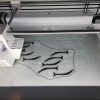
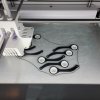
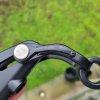
Printing SlicPin Keepers, They are made of nylon to be flexible but strong yet not so strong that if it snags on something it would tug at the SlicPin. Replacements will be on my site soon.
Attachments


southsoundtree
Been here much more than a while
- Location
- Olympia, WA
Seems like a life support connection to the hitch would make the friction body a non-life support accessory????View attachment 80805Only rope to rope contact is the hitch, here 1/2” pipe, painted, didn’t last long, takes the place of slic pin, dog bone, or carabiner. Bushings also work nice.
Richard Mumford-yoyoman
Been here a while
- Location
- Atlanta GA
I'm not certain I understand your comment.Seems like a life support connection to the hitch would make the friction body a non-life support accessory????
The "non-life support accessory" as you refer, is what makes it function. Quoted below is a section from the manual linked at the beginning of this thread for the HHxf. The body of the HHxf adds function to a system but it is indeed a life support connection to the life supporting hitch. It is not like some other popular systems that require the "functional" part to be removed to test the hitch. One of the brilliant concepts that Paul established here is that one ( the friction hitch) cannot function fully without the other, and the other cannot function without the one.
"The metal components of the HitchHikerXF are a connection to the life support function of the friction hitch, therefore it is required that these connections be properly set and inspected. When inserting the SlicPin, make sure both plungers are extended fully, don’t become distracted by other activities, they are very visible, secure, and easy to inspect. There is nearly an infinite number of combinations of cordage material, rope material and methods of connecting those for the creation of a safe and functional friction hitch. Although examples may be used in this manual and other material, it is the responsibility of the user of the HitchHikerXF to ensure the friction hitch functions in a safe and life supporting manner."
southsoundtree
Been here much more than a while
- Location
- Olympia, WA
Yes, I was referring to your gizmo.
If you're packing for ultra light, not ultra durable, it could be interesting.
I love the durable, bullet proof nature of the HH line up.
If you're packing for ultra light, not ultra durable, it could be interesting.
I love the durable, bullet proof nature of the HH line up.












New threads New posts
-
test
-
-
-
-
 Light 14 or 16" narrow kerf bar for 200t or 201t
- Started by southsoundtree
- Replies: 9
-

-








