Redtree
Participating member
- Location
- Mt. Albert
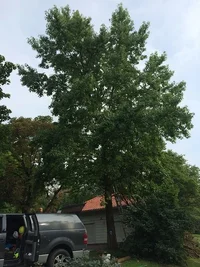
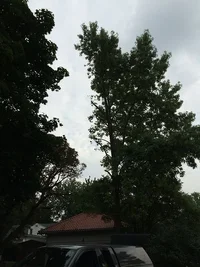
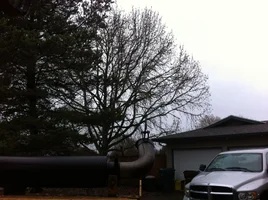
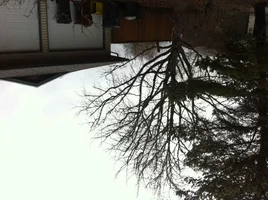
Is it true that many arborists prefer thinning and or crown cleaning to reduction. One leaves the tree more natural but natural trees will do what they are designed to do, grow as fast as possible while having just enough taper to support the extension . Trees have to extend as much as the storms during their growth allow in order to compete. They don't care if they fail they want to win the race and they take chances to do so. The extension can be delayed by the application of detailed reduction pruning, improving taper and creating a structure capable of handling more than just average storms. Reduction is not about smaller trees, it's about civilizing the storm that hits the tree. Spreading it over time. Several applications with typically 2.5 inch cuts and smaller. Reducing the likelihood of failure over 2.5 inch when mother natures storm hits all in one gust in one moment. We can lead the urban canopy into a better, slower extending, longer lasting, bigger, stronger structure.
Should we limit or slow the height of the urban canopy via well planned reduction? Or at least where trees are planted where permanence is better than replanting? Not to mention avoiding huge power outages after ice storms?
Where is this too expensive to do?
Where is this too expensive not do do?
I believe I actually just missed a conference titled ' the cost of not managing our tree'. I think it was in the eastern or central usa. Did anyone attend that can comment on how this relates?
Should we limit or slow the height of the urban canopy via well planned reduction? Or at least where trees are planted where permanence is better than replanting? Not to mention avoiding huge power outages after ice storms?
Where is this too expensive to do?
Where is this too expensive not do do?
I believe I actually just missed a conference titled ' the cost of not managing our tree'. I think it was in the eastern or central usa. Did anyone attend that can comment on how this relates?