Motorized Ascenders Everywhere?

I found this video accidentally when on YouTube. It is a "Assult Asscender." It is boyant, it is water proof up to 10m, and it is black. Because black is tactical.
cool.gif


Here is their website. Act Safe Tactical.

I have a feeling motorized ascenders are going to be popular.

Can the battery operated ascenders be all that difficult to make? I talked to a electrical engineer friend of mine and he thinks it would be simple. I'm thinking of making one.
 
Here is another short video. It is a demo video. It shows the specs a little better. I think it is impressive.

But, the unit is about $17,000 dollars right now.

No worries. Just wait 10 years and it will be $1,700 dollars.

Or, get a geek friend to make you one.
grin.gif
 
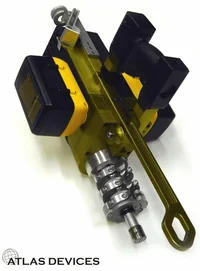
I thought I read somewhere they could be good up to 1000m. That's a lot of energy storage to me. Here is the inside of an Atlas. Looks like a 36v DeWalt.

207146-Atlasropeascender.png
 

Attachments

  • 207146-Atlasropeascender.webp
    207146-Atlasropeascender.webp
    27.9 KB · Views: 93
I'm not in total favor of these jobbers, but I can see a future for them. I think they will be improved/perfected to be used for everyday activity. Especially SRT work in trees. Call me crazy, but I think we're gonna see more and more of these pop up.

Here is another company. They are Edge Ascension. They have a device called the PowerQuick Ascender. Here is a nice video. They mention in this video that they would only have 10 minutes of usage. But, I bed they are not using Lithium Ions, yet...

PowerQuick Ascender
 
At 10 feet per second, I doubt you'd have time to avoid upcoming limbs, too.

But sure... you could ride it for a few days, probably.
 
[ QUOTE ]
yea but the 17,000 is just so much faster. At 10 fet per sec I'd doubt you'd run the batteries empty in a day.

[/ QUOTE ]
Actually, speed probably wouldn't make a significant difference. A faster speed would requre more horsepower (and hence more power from the battery(s) ) but for a shorter period of time.

A slower speed would require less horsepower (hence less power from the battery) but over a longer period of time.

I.e. 10ft/sec would pull twice as much power from the battery as 5ft/sec but you'd get there twice as fast at 10ft/sec.

Probably, there would be a bit more loss due to having to accelerate to a higher speed.
 
Far more at lower speeds; DC drives lose efficiency in a hurry the slower you go from the rated DC RPM on the motor.
 
[ QUOTE ]
Far more at lower speeds; DC drives lose efficiency in a hurry the slower you go from the rated DC RPM on the motor.

[/ QUOTE ]
Motors used in an ascending application would have to be geared down, just like a winch is. In that case the motor would be running at rated speed and the 'climbing' speed would be set by gearing. The only efficiency difference would come from the gearing alone. There might not be any difference in the efficiency of the gearing for a 10 ft/sec or 5 ft/sec speed.

However if one were to try to slow a motor by speed controlling the motor instead of using gearing, electrical efficiency could go down depending on how the regulation was achieved, and certainly the complexity of the speed control would go up.
 
I think if you could combine the capstan and drive gears from the Atlas, and the "currently" more affordable and green, low emissions gasoline powered engine. We might have a better way to access any vertical problem (situation dependent of course) But there's still the drawbacks of the noise, smoke, fumes, heat, petroleum exposer <u>to ropes</u>, that come with the gas engines.

zombie.gif
 
I just don't see how the minute of gas-powered ascender operation is even a consideration when compared to the hours spent running a gas chainsaw.
 
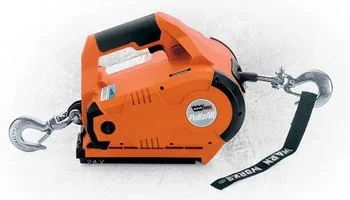
How about modifying a Warn Pulzall to be used as is with Amsteel, or add some kind of self tailing design. I think they're down to $300.
 

Attachments

  • 207932-PullzAll_cordless.webp
    207932-PullzAll_cordless.webp
    15.1 KB · Views: 141
It is true that motorized or powered ascenders are growing in use. A lot of people have been trying to copy the PowerQuick ascender since it was introduced in 2006. In the four years it has been on the market we have seen several people try to develop one like it. When it was first introduced it cost about $14,000. The price then went to about $9,000 and now it is about $6,500. One thing that affects the cost is liability insurance. The Atlas is not sold commercially because it can't pass the drop test which requires that it withstand a 6-ft drop at 5x the rated load without damage. That is also why Act Safe quit selling to the commercial market. I don't know about the Wraptor yet and if it meets the standards. ANSI just set standards for powered ascenders in the new Z359. PowerQuick is the only ascender that meets those standards as far as we know at the present. Speed is a combination of the balance between motor size, current, capstan size and gearing. It is like a ballet. As the other companies have found, most anyone can put a motor on a capstan and even make it go fast. The trick is to make it safe enough to bet your life on. PowerQuick has developed and patented the safety features required to make it safe in the 300 pound and 600 pound versions. We are selling these internationally. So for those want to build one at home, be sure you can pass the safety standards. One "oh crap" can ruin your day.
 

New threads New posts

Kask Stihl NORTHEASTERN Arborists Wesspur TreeStuff.com Teufelberger Westminster X-Rigging Teufelberger
Back
Top Bottom