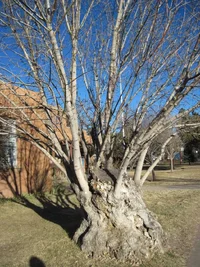
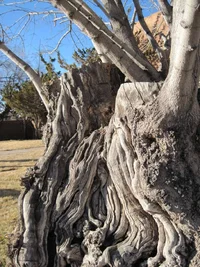
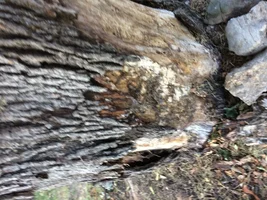
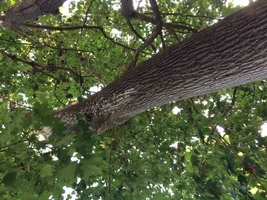
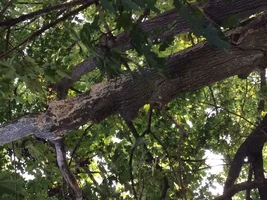
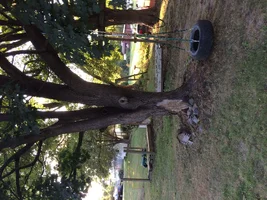
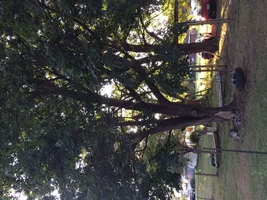
Mrtree probably has it right with Irpex lacteus (the milky-tooth) as the fungus, although the photos are almost useless. On maple, particularly for street trees, Irpex and its ecological brethren are part of the "clean up crew" which decay dead branches that may be attached but have been shed from the living system of the tree. Whether the fungus on the branch is Irpex or somebody else, it is not responsible for the large area of killed tissue at the base of the tree. That was some human-induced mechanical damage. That sort of injury is rare in natural forests, that do have plenty of decay going on.
If you're paying attention, you should be able to find some decay on any tree of size. So the mere presence of decay is part of nature, not a reason to remove the tree. Sounds like you've got a referral. Sounds like you've got a referral, so let us know how it turns out. If that is Bridgewater, NJ or CT, there are likely more than a few good sources of professional help. Yes, often paying for a consultation is better than getting an estimate for removal if you are interested in retaining the tree, if possible.