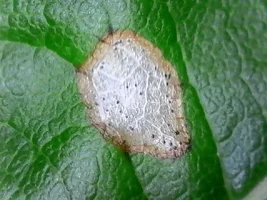
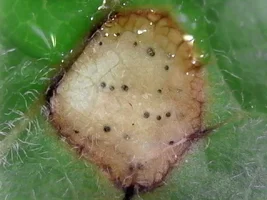
Maple Anthracnose?

Hi, I'm new to the forum and was hoping to get a second opinion and some advice on my water maple.

After looking up information on the common diseases that affect water maples, I believe my tree is suffering from anthracnose.

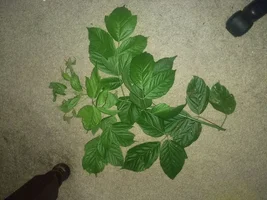
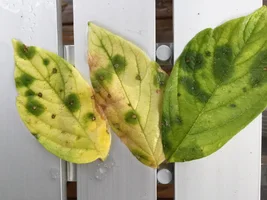
I have posted online a couple of pictures of the leaves:

https://adobe.ly/2L6jDU3

From what I've read, the disease is not deadly and that I can expect the tree to make a full recovery. At least, that's what I've gathered, but I'd like some second opinions on that and on what, if anything, I should do about it.

Thanks,

Marcus
 
Yep tar spot/anthracnose u can thin canopy to increase air/light. Rake up old leaves. If its aesthetics you can have treated in spring.

 
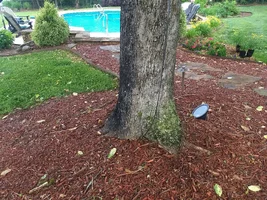
Biggest thing is cultural, get rid of the leaves that fall (which it looks like you might already). Make the tree happy, kill the turf back and mulch. Happy tree - healthier tree.
 
Several distinct species of fungi cause anthracnose on maple, which can account for some slight differences in symptoms and course of infection. The most damaging infections occur at leaf emergence. Consequently, the greatest benefit from chemical control is prior to or at leaf emergence.

Rarely, however, is chemical control justified. If the tree is reasonably happy with good energy reserves, leaves killed by early infections can be replaced with new foliage. Late season symptom expression, although interfering with fall foliage coloration, is likely less of a problem for tree health overall.

Yes removal of last year's leaves is a good idea as well as removal of early-season infected and shed foliage. This doesn't afford complete control in that over-wintering spores are also produced on small acervuli or cankers on twigs and branchlets, but do the best you can.

Year-to-year variation in disease intensity occurs with peak damage associated with cool and wet weather during leaf emergence and expansion. More information from my outfit at: https://www.fs.usda.gov/Internet/FSE_DOCUMENTS/stelprdb5347865.pdf
 
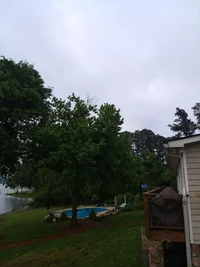
Don't mean to hijack the OP's thread, but it seems I may be dealing with a similar problem. My client has a maple (Acer Negundo, I believe) showing leaf spots (perhaps anthracnose) as well as a thinning top. They had a pool put in about 5 years back, which I think may be the underlying culprit. Shall I just suggest taking out the deadwood and doing some light pruning to facilitate air flow? Maybe try to expose the root flair some? Plan on replacing the tree in ~5 years?
 

Attachments

  • Pic 1.webp
    Pic 1.webp
    336.8 KB · Views: 9
  • Pic 2.webp
    Pic 2.webp
    577.9 KB · Views: 10
  • Pic 3.webp
    Pic 3.webp
    124.8 KB · Views: 10
  • Pic 4.webp
    Pic 4.webp
    1.4 MB · Views: 9
  • Pic 5.webp
    Pic 5.webp
    56 KB · Views: 6
  • Pic 6.webp
    Pic 6.webp
    41.5 KB · Views: 10
Looks like phyllosticta or perhaps another similiar leaf spot. Probably no biggie unless it has a history of earlier defoliation from it.

I would start with deadwood pruning and give things a lookout while your in it.
 
Marcus,

That is definitely maple anthracnose - a fungal disease that causes the unsightly darkening.
It is common in the northern U.S. this time of year. It is a mold which loves the moisture of a cold spring season.


Keeping the maple tree clear of leaf and foliage in the autumn will go a long way to discourage mold growth in spring. Careful pruning and trimming of infected areas will prevent further spread.

There are arborist-certified fungicide treatments for prevention of maple anthracnose, as well.

Hope that Maple can get the help it needs!
 
Don't mean to hijack the OP's thread, but it seems I may be dealing with a similar problem. My client has a maple (Acer Negundo, I believe) showing leaf spots (perhaps anthracnose) as well as a thinning top. They had a pool put in about 5 years back, which I think may be the underlying culprit. Shall I just suggest taking out the deadwood and doing some light pruning to facilitate air flow? Maybe try to expose the root flair some? Plan on replacing the tree in ~5 years?

Boxelder is a short lived (they only look good for a short time) weed species in our area. Boxelder beatle tears them up pretty bad. Tip die back is very common and at times very extensive. Pruning the dead out is simple along with small live wood pruning if necessary. Be extremely careful with large cuts... they DO NOT compartmentalize well at all. Most clients can’t stand the Beatles all over the place and have the trees cut out.
 

New threads New posts

Kask Stihl NORTHEASTERN Arborists Wesspur TreeStuff.com Teufelberger Westminster X-Rigging Teufelberger
Back
Top Bottom