Lot Line Precision Pruning--a followup

guymayor

Branched out member
Location
East US, Earth
28 months ago I started this thread. 21 pages of comments, after this news was posted:

http://www.treebuzz.com/forum/threads/lot-line-precision-pruning-sue-the-bustards.29771/

The public hullabaloo dissolved when the offended parties insisted that "only branch removal with collar cuts is proper pruning". Those "proper" removal cuts would have been far worse for these trees. The powers-that-might=have-been could not describe or even understand proper reduction cuts,
So, lacking any reasonable alternatives, a case could not be made against the lot line cutting.

The last 2 days I have been training (one of several contracts resulting from buzzing), administrative staff of this company on expanding their business by consulting. While I was down there, I went to see the trees' response.
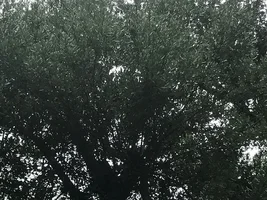
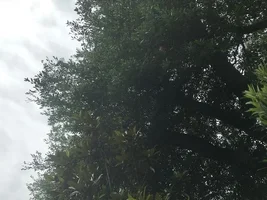
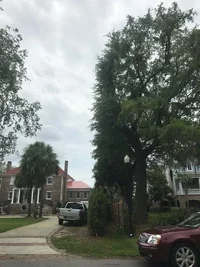
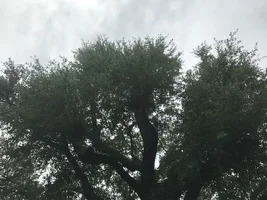
Here's 2.5 years' regrowth; ~3' per year. Yes, those branches are now mops, but the main point is that none of the dieback, sunscald, and decline that were predicted actually happened. The parts of these trees over the neighbor's yard were no visibly affected.
IMG_5291.webp IMG_5292.webp IMG_5294.webp IMG_5303.webp
The property owner is interested in having restoration pruning commence.
The contractor is able and willing to restore a more natural form. What impressed me the most was his ability to stand up, take the heat, and learn a great deal from the experience.
 
The problem started with the landscape architect insisting on the cut, to accentuate his design. The contractor knew the species would respond positively to that treatment, despite all those wrong predictions from others more familiar with dogma than the species. Here it seems that the LA's objective of a "hedge" look did not affect the other property owner's desire for healthy, natural looking trees on their side.

Weird? Yes. Unsightly? Depends on your point of view. I wouldn't want it in my neighborhood, but I wouldn't go to war over it. This experience showed me that we should not underestimate the tree by predicting dire outcomes based on our limited knowledge.
 
The problem started with the landscape architect insisting on the cut, to accentuate his design.

Well, it's a good thing he didn't choose to be a fashion designer instead of a landscape architect.

"I want you to amputate this model's left arm and leg, to accentuate my design!"

It's not unusual, here in farm country, to see trees along a field lopped off to allow the equipment to farm right to the fence/property line. It rarely results in any dead trees, but the aesthetics are nothing short of hideous. I'm curious if the landscape architect still thinks this was a good idea. There were certainly other options that would have served the purpose.

halfass.webp
 
As the son of an architect, I can attest to their attitude of omnipotence and infallibility.

As an arborist, I've have experiences with some LA's having a poor grasp or plant science.
 
Okay this doesn't have anything to do with this thread but do you bcmas @JD3000 and @guymayor find yourselves repeating any particular phrases to help communicate to customers how to view their trees the way an arborist views their tree? Specifically in ways of health, structural integrity and aesthetics. I find myself repeating thing often, do you?
 
My father had an MA in both engineering and architecture, and taught at KU, then UNL for 30+ years... they can be some picky bastards, and hard to deal with sometimes. It's as if they all think they're Frank Lloyd Wright, even if they're more like Frank Lloyd Wrong. Luckily, dad was very flexible on design elements that offered multiple, workable options. He only got stinky when it came to things like contractors skimping on concrete during foundation work, or leaving windows out to save money on public buildings, etc. when the design relied on such things to ensure some thermal performance specifications.

Even as a teen, he and I would discuss design elements for our own landscaping at home, the fences, decks... I think he just enjoyed making me use my brain for something other than a sponge for whatever booze I could get my hands on. I learned a lot about not getting too fixated on an idea that might not appeal to the people driving past the location. He once told me that a lot more people have to look at a building than actually are occupying it. Designing for the occupants is easier than designing for the majority of the people actually impacted by the presence of your structure or landscaping. The very best designs appeal to the largest audience. I might think a giant statue of Lady Gaga having sex with a horse would look good in the front yard, but the lynch mob might not agree.

 
Phrases Repeated:
Create soil more like a forest.

Turf should be a rug, not a carpet.

Reduce, dont remove.

Dont want to do 20 years worth of pruning in an hour.

They're killing them with kindness.

I wont "fertilize" until those tests are run.

We would have to remove your neighbor's and most of your trees to grow grass here. Do you like hostas? I like hostas...

Prune it at ankle height and don't plant more of them...yes I know they're planted everywhere...yes, they're garbage trees...
 
The MLA program at NCSU has *one* course on native plants. I led a class one year, trying to highlight the value of working with existing trees on sites they were designing. Talk about a lead balloon; I could not break through their view of themselves as artists, who desire a blank canvas upon which to render their magic.

It was a huge disappointment. I should reach out to the new instructor and pitch the idea for this fall.
 
"any particular phrases to help communicate to customers how to view their trees the way an arborist views their tree? Specifically in ways of health, structural integrity and aesthetics. I find myself repeating thing often, do you?"

What an excellent question! As a wannabe arborist, I looked at people's trees as problems that I could fix, or, all too often, remove. Now I view their trees as what they truly are--assets to protect, grow, and strengthen. When their owners come around to seeing their trees as assets, the services that an arborist provides increase in value to them.
 
Now I view their trees as what they truly are--assets to protect, grow, and strengthen.

I often wonder why anyone would design a house that takes a week to build, and at the same time want a "blank canvas" for some trees that take 40 years to grow to the envisioned size. I've been trying very hard to push people toward planning now, not later, for replacement trees for aging, diseased ones on their property. Even that idea is like trying to get a crocodile to eat lettuce. This week, finally, a client agreed to let me deadwood and prune their ash tree rather than remove it now, and find them a nice tree to plant nearby that won't be nearly as much trouble as this declining old ash. It shows no signs of EAB and a pre-emptive removal seems drastic, considering the loss of shade and other benefits it provides. I also showed them one of our properties where we used some very fast growing Aspen trees in clumps to shade the house, by planting them fairly close, and their amazing height and beautiful white bark.. in only four years.

Sometimes I think a good investment might be one of those 12-passenger vans... give people tours to sites with good use of tree resources, both new and old, and let them sit in a lawn chair under the trees where it's cool and pleasant. If only one out of a dozen people changed their opinion of trees, it would be worth it.

But, I'm afraid the other eleven people would drive me to drink heavily while driving the tour bus.
 
My background is design as well so I do have at least some advantage when it comes to plant recommendations but LAs and fancy designers are the norm when it comes to higher end installs around here. Our job becomes to "fix" lousy selections in compacted crap soil. Frustrating as all get out.
 
It was a huge disappointment. I should reach out to the new instructor and pitch the idea for this fall.

Yes! You should, indeed, try again. You might need a tour bus, too. Some of your before and after pics should work, but maybe seeing them would have a bigger impact.
 
Thats why Im so excited to get our Arboriculture program up and running this fall. Its only a 2 year degree but we feel it's a step in the right direction.
 
Thats when I buy my bargin bin plants for the yard too. Mostly perennials so if they bite the dust it was a $2 buy. No biggie.

Curious to hear what other folks say and recommend to customers on a regular basis.
 
I actually do that, as well. For large plantings where you're dealing with marginal or unknown soil conditions, etc. I'll buy $3 to $5 small potted plants at the end of the season and plop them in the ground. If they make it through two seasons, you got a bargain. If not, you're not out much money. I pay for good quality stuff when it's important and I know what I want... but 200' of crap fill dirt along a roadside ditch? I can pack it solid with all manner of interesting stuff, dig up the dead stuff the following year and replace those ones with more low-budget plantings. You learn an awful lot about what is truly hardy in your area, especially drought years on properties without any kind of watering or irrigation, or that are subject to a little herbicide overspray from bordering ag land.

The bargain buys sometimes aren't what they were labeled, usually have been badly treated, but for a few bucks each you can save a lot of money and get the desired effect.
 
Thanks Guy for the followup. Case studies like these are really important. Would be nice, but not likely possible, to dissect a couple of these after another 5-10 years. In my own journey on this topic, I've come to accept what the trees figured out a long time ago: a certain amount of compromise of practice is necessary. That's not being unprincipled, it's just accommodation to multiple aims and purposes.
 
Thanks Guy for the followup. Case studies like these are really important. Would be nice, but not likely possible, to dissect a couple of these after another 5-10 years. In my own journey on this topic, I've come to accept what the trees figured out a long time ago: a certain amount of compromise of practice is necessary. That's not being unprincipled, it's just accommodation to multiple aims and purposes.

Kevin, right that the neighbor would probably not consent to a donation to science, but I'll try that later, if the trees can "afford" it.

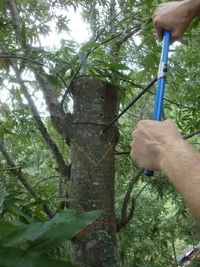
Coring can show codit; on Q phellos I typically see juststub painted small.webp a shallow cone of discoloration (orange line). This limb was reduced to buds; it had no branches or leaves. No sprouting the first season, but now the cut is indistinguishable to most observers.
 
If you want to feed a crocodile lettuce, feed it a vegetarian. Seriously, I've done it wth all sorts of carnivores.

Think outside the box, find subtle ways to influence their concepts. If you do it long enough they may just eat that head of lettuce.
 

New threads New posts

Kask Stihl NORTHEASTERN Arborists Wesspur TreeStuff.com Teufelberger Westminster X-Rigging Teufelberger
Back
Top Bottom