Looking for the ideal rope.

Yes, maybe I have an unusual approach to tree climbing with a rope, but I think it's good to start climbing from the lowest access point so one is more likely get familiar and asses the tree, as they go up.
@Willber whereabouts are you located in New Hampshire (roughly)? We do some winter rec climbs from time-to-time. I'm just south of Lowell, MA near enough to NH border. I'm in NH frequently.

Interesting about accessing the lowest limb first. I teach rec climbers, as they work on their throwing skills they often get in a pickle where they can get the first big limb on a woods tree (typical high first limb, not an open grown yard tree) but find it challenging to advance from there. Goal for them is to at least get their rope set at a point in the tree where they're above the first large limbs and have better opportunities to advance.

Main strategy for any climber in a new tree (arbs are always in "new" trees) is go for a high enough TIP so they're not going to fight too hard to advance but bomber enough to be more than safe enough. After thorough inspection from the ground the inspection continues on first ascent and the climber can make smart choices from there setting the rope higher.

You may know all this 3 years in to your climbing, it's worth mentioning though. It's not all or nothing on first entry into a new tree, inspection/assessment is ongoing. The approach is very different from setting a line in a tree that you know well.
-AJ
 
I'm not "dissing" Reg's message, tree skills or experience. It's precisely the "Hollywood" aspects that I believe could be much improved. For example, due to the backlighting, his face is in deep shadow and the top of his head is way over lit. The only way the lighting could be much worse is to not have any.

I made videos professionally for several years, amongst other duties. Starting out, I knew enough to know I was pretty ignorant of how to make good videos, so I took classes and learned quite a bit, yet only scratched the surface of that field of expertise. That experience makes technical errors jump out at me. Probably similar to how you easily spot technical errors made in tree work.
Oh god haha. That’s the glory of his videos man. No real self promotion, just sharing knowledge and mindset. I feel like there’s more to be gleaned from listening to him talk than watching any of the other YouTubers
 
...
Is it not true that many climbers pruning dead wood out of high far reaching limbs of the crown, in this area, only use DRT because it allows for quick reattaching to a new nearby area without have to change your location, to reattach?
...
I don't use SRT much...but one of the circumstances I do is where there will be a lot of repositioning. No need to unhook and reset TIP - redirects are super easy and you don't have the extra friction fighting you as you do with doubled rope redirects.
 
Reg is so full of wisdom. I love the way he teaches from his humble shed. His teaching videos really influenced me early in my career.

He's right about SRT, once you get the hang of it you will save your body and be able to get more work done at the same time. As much as I love the Rope Wrench, I do not miss climbing on a hitch. The constant readjusting of the hitch, the glazing, the added friction when both the rope and hitch get fuzzy. I predict that Reg's next advancement will be the BDB.
 
@Willber whereabouts are you located in New Hampshire (roughly)? We do some winter rec climbs from time-to-time. I'm just south of Lowell, MA near enough to NH border. I'm in NH frequently.

Interesting about accessing the lowest limb first. I teach rec climbers, as they work on their throwing skills they often get in a pickle where they can get the first big limb on a woods tree (typical high first limb, not an open grown yard tree) but find it challenging to advance from there. Goal for them is to at least get their rope set at a point in the tree where they're above the first large limbs and have better opportunities to advance.

Main strategy for any climber in a new tree (arbs are always in "new" trees) is go for a high enough TIP so they're not going to fight too hard to advance but bomber enough to be more than safe enough. After thorough inspection from the ground the inspection continues on first ascent and the climber can make smart choices from there setting the rope higher.

You may know all this 3 years in to your climbing, it's worth mentioning though. It's not all or nothing on first entry into a new tree, inspection/assessment is ongoing. The approach is very different from setting a line in a tree that you know well.
-AJ
Andrew this is on point. Take him with you and Ian. Great post. This thread is good stuff. Newer climbers can garner some good info here.
 
Is that @treebing ? My eyes may be playing tricks but he appears to have a second line in a tree that would be on the right side just out of the image, or maybe a second line redirected around a branch out near the tip?? Can't tell for sure though. Great picture.
 
@Willber whereabouts are you located in New Hampshire (roughly)? We do some winter rec climbs from time-to-time. I'm just south of Lowell, MA near enough to NH border. I'm in NH frequently.

Main strategy for any climber in a new tree (arbs are always in "new" trees) is go for a high enough TIP so they're not going to fight too hard to advance but bomber enough to be more than safe enough.
-AJ

Don't fully understand the last part of the last passage, about TIP. BTW what does TIP mean, is it an acronym of sorts?

I'm in Peterborough, NH I think it'd be neat to see how you see that some famous ropes, especially the Scnadere don't flatten in the ZigZag.
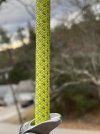
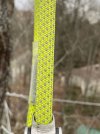
Here is evidence of the Scandere flattening in the ZigZag, and I'm pretty sure that's why it creeps more likely than any other rope I've ever used in the ZigZag.

Here is links to Google Drive with videos of the Scandere's atrocious flattening...
https://drive.google.com/file/d/1EuXagnqQlavFpiPNeWP5Mxb221ArM3sh/view?usp=sharing, https://drive.google.com/file/d/1I_HEonMps0RlGuIlWpzoc_zgMS62066z/view?usp=sharing, https://drive.google.com/file/d/1Ks9169uJFZSHmdHY9_2V4UUOcaH8Dzja/view?usp=sharing, https://drive.google.com/file/d/1hxPCY8nvLNpVzlcoAVNz9amSGXOr1EMX/view?usp=sharing, https://drive.google.com/file/d/1zaaZ3tivqtaBUU7RvazblaP9VKMsgZkK/view?usp=sharing
 

Attachments

  • IMG_1131.JPG
    IMG_1131.JPG
    343.8 KB · Views: 27
  • IMG_1132.JPG
    IMG_1132.JPG
    400.6 KB · Views: 27
Last edited:

Scandere rope construction was designed for SRT mechanicals. I owned a hank of it for a short time, it was excellent with the OG Rope Runner. In your DRT application with the Zig-Zag is it not functioning well (grabbing well, releasing smoothly, tends slack well) or are you having trouble gripping it or both?
-AJ
 
Scandere rope construction was designed for SRT mechanicals. I owned a hank of it for a short time, it was excellent with the OG Rope Runner. In your DRT application with the Zig-Zag is it not functioning well (grabbing well, releasing smoothly, tends slack well) or are you having trouble gripping it or both?
-AJ
Yes, I know it was advertised as being a SRT line that "...is highly compatible with mechanical devices, including the Singing Tree Wrench and Rope Runner."
Well, I thought at least the footage would answer one question, that it clearly creeps, with full climber weight in ZigZag DRT.

Well, creeping being one of the issues, that if I want to not creep when I come to a stop, I must hank up on the stainless zigzag of the device, to stop it from creeping. And, I know some may say, oh that could be because the zigzag contact point are worn.... incorrect! It's because the the rope flattens (becomes oval, not literally flat like a ratchet strap). Because, no other rope creeps like this, and the flattening is clear to see/feel.

To answer your question concerning, "is it not functioning well": Yes, it doesn't grab well in the ZigZag, and it doesn't tend slack as well as most other similar diameter ropes, because when a rope flattens (becomes ovular), the rope will bend on the cross section of less mass - path of least resistance. And, yes, when a rope is ovular, it can be more difficult to grip with one's hand, and it is for me. The answer is both.
 
Last edited:
Yes, I know it was advertised as being a SRT line that "...is highly compatible with mechanical devices, including the Singing Tree Wrench and Rope Runner."
Well, I thought at least the footage would answer one question, that it clearly creeps, with full climber weight in ZigZag DRT.

Well, creeping being one of the issues, that if I want to not creep when I come to a stop, I must hank up on the stainless zigzag of the device, to stop it from creeping. And, I know some may say, oh that could be because the zigzag contact point are worn.... incorrect! It's because the the rope flattens (becomes oval, not literally flat like a ratchet strap). Because, no other rope creeps like this, and the flattening is clear to see/feel.

To answer your question concerning, "is it not functioning well": Yes, it doesn't grab well in the ZigZag, and it doesn't tend slack as well as most other similar diameter ropes, because when a rope flattens (becomes ovular), the rope will bend on the cross section of less mass - path of least resistance. And, yes, when a rope is ovular, it can be more difficult to grip with one's hand, and it is for more. The answer is both.
Have you seen Petzl Control 12.5 kernmantle? Designed specifically with the zigzag in mind. I’ve been using the smaller diameter version (11.6 flow) for a year and change, it’s not my favorite, still prefer something more dynamic but wanted to try something new. It seems like it might be a good fit for you.
 
Yes, I know it was advertised as being a SRT line that "...is highly compatible with mechanical devices, including the Singing Tree Wrench and Rope Runner."
Well, I thought at least the footage would answer one question, that it clearly creeps, with full climber weight in ZigZag DRT.

Well, creeping being one of the issues, that if I want to not creep when I come to a stop, I must hank up on the stainless zigzag of the device, to stop it from creeping. And, I know some may say, oh that could be because the zigzag contact point are worn.... incorrect! It's because the the rope flattens (becomes oval, not literally flat like a ratchet strap). Because, no other rope creeps like this, and the flattening is clear to see/feel.

To answer your question concerning, "is it not functioning well": Yes, it doesn't grab well in the ZigZag, and it doesn't tend slack as well as most other similar diameter ropes, because when a rope flattens (becomes ovular), the rope will bend on the cross section of less mass - path of least resistance. And, yes, when a rope is ovular, it can be more difficult to grip with one's hand, and it is for more. The answer is both.

There is a strong probability that the primary cause of "creep" is the super-smooth 48-strand cover. All things being equal in that 24-strand lines of the recommended diameter lines work very well with the Zag whether they are more or less firm in roundness under load.
-AJ
 
There is a strong probability that the primary cause of "creep" is the super-smooth 48-strand cover. All things being equal in that 24-strand lines of the recommended diameter lines work very well with the Zag whether they are more or less firm in roundness under load.
-AJ
I recently tried a different line of similar construction to scandere with the ZZ and it wouldn’t hold. I have the gen 3 of the old style. I agree with your assessment 100%.
 
Have you seen Petzl Control 12.5 kernmantle? Designed specifically with the zigzag in mind. I’ve been using the smaller diameter version (11.6 flow) for a year and change, it’s not my favorite, still prefer something more dynamic but wanted to try something new. It seems like it might be a good fit for you.
No, originally was going to get the control, but couldn't be offered a sample (it's only sold prepacked by Petzl), and ended up getting the Scandere, because it was the only 48strand on the market I could find. Btw, the other ropes that claim to be 48strand like the Phantom and the HTP, they're actually not, because the second carrier strand of the braid is being counted. And, especially given that the two carrier strands aren't twisted, pretty much nullifies the grip a true 48strand would provide.
 
There is a strong probability that the primary cause of "creep" is the super-smooth 48-strand cover. All things being equal in that 24-strand lines of the recommended diameter lines work very well with the Zag whether they are more or less firm in roundness under load.
-AJ
Yes, maybe. I don't like to say things with certainty, unless it is proven. But, one thing is, it flattens more than my other ropes, and more than I'd like.
But, the 48strand cover does provide a high surface area grip in gloved hands, that will become more grippy as it wears. I purchased the Scandere because from what I saw was the only true 48strand arborists rope on the market today.
The HTP and Phantom or Yale Kernmaster are not true 48strand covers, the second carrier strand is being counted.

I'm located in Peterborough, NH. You do some rec. climbs time to time in the winter, but do you climb regularly in the winter?
 
Last edited:

New threads New posts

Kask Stihl NORTHEASTERN Arborists Wesspur TreeStuff.com Teufelberger Westminster X-Rigging Teufelberger
Back
Top Bottom