Holly prune opinions?

Hi everyone,

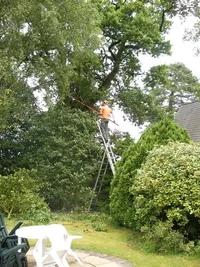
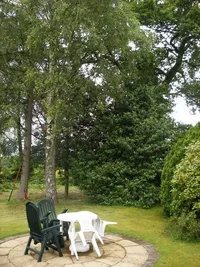
This is job I did this week, the client wanted to remove this holly.

I suggested a prune instead of removal, as the tree was healthy, albeit suppressed by a large oak behind and birch to the left.

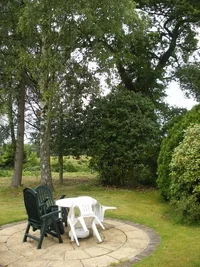
I decided to go for a shaping prune, forming it into an easily maintainable small tree.

There was another holly to left, very suppressed and thin looking I said to keep that as well, similar prune.

My question to you guys, what would you have done in this situation? felled? pruned in a different way? re-planted with a smaller tree under these larger trees?

There is a before/during/after and tools used photo.

Thanks
 

Attachments

  • 90428-hollybefore.webp
    90428-hollybefore.webp
    108.8 KB · Views: 129
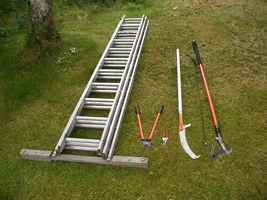
Tools used...

anyone recommend a pole pruner as the Corona one I'm using isn't that good.

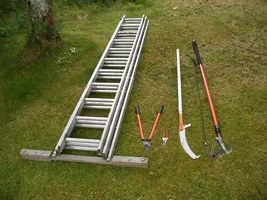
Tools;

Combination ladders
Bahco Loppers
Felco No2s
Stihl Polesaw
Corona Pole Pruner
 

Attachments

  • 90431-tools.webp
    90431-tools.webp
    168.9 KB · Views: 93
Nice pictures, nice work, nice thread.

Most hollies are vry happy with that kind of treatment. It would help to kow the specis/cultivar.

If the primary purpose of the plant seems to be screen, your approach was the best.
 
That pruner looks good, found a company(Wesspur) who will ship the Marvin Pruner Head to Scotland no problem.

The tree is Ilex aquafolium, The Holly native to Britain, Ireland and most of Northern Europe.

Shade tolerant, male and female flowers on separate trees, which is why I think these 2 were planted together, the female starts producing berries after about 40 years.

There used to be woods of pure holly in medieval times in Britain, they used the fresh upper foliage and sapling leaves to feed the animals in harsh winters.

Deer will eat the leaves, even though they are prickly.

Good tree for wildlife in the garden as the birds nest in them and eat the berries.

I think the client wanted them down as they were a mess, now they don't look so bad. I'll probably be asked back in a couple of years to reduce them again.
 
great job, 99% of the companys where im at would have slashed and hauled those trees for the $$$ instead of trying to save them.. some interesting info on the species as well.

what kind of ladder is that?

looks like it would come in super handy for that type of trim work
 
[ QUOTE ]

what kind of ladder is that?


[/ QUOTE ]

We call them Combi ladders, you can use them as regular extension ladders as well as steps, there pretty common in tree companies over here that do hedges and small trees.

I've found them to be more stable than regular orchard ladders.

The one in the photo....I removed the original stabiliser bar at the base, and replaced it with a wider section of mahoghany wood.

I don't really like working on trees from ladders, feel a lot safer using a rope and harness, but on small trees like that you don't really have an option.
 

Attachments

  • 90478-tools.webp
    90478-tools.webp
    168.9 KB · Views: 55
i generally always opt to prun, its easy, less costly and always looks better than a hole in the back yard, but than again, im a tree hugger, than again, i did fall 10ft from an orchard ladder prunning a bradford pear, im a bigger fan now of sending other people up latters, ill take the low road if you take the high
 
[ QUOTE ]
I'll probably be asked back in a couple of years to reduce them again.

[/ QUOTE ]So you might want to schedule a reminder note in a holiday card winter 2009. I like to set the date with the folks before leaving the property. That plant is one parent of the nellie stevens holly, very poular here and tough to beat for tough screen plant.

Holly trees allow rules to be bent--aiming for nodes much less important.
 

New threads New posts

Back
Top Bottom