

Stumpsprouts
Been here much more than a while
- Location
- Asheville
As some of you may know, I have been collecting data on giant trees (trees over 50” diameter at breast height, as defined by the US Forest Service) for about a year. I felt ready to move on from my research on Helene failures, and wanted to find inspiration and hope in what was still standing. I wasn’t exactly sure what I would find, so I took all kinds of data on the attributes of giant trees, open to whatever lessons I might learn. Today, I finished collecting my data for a set of 100 observed trees in Buncombe County (where Asheville is), and I’m really excited to share what I found.
It's a bit of a read, but the biggest takeaway I want to tell you all as arborists, is that these trees tend to have large low limbs. This means in order to cultivate the conditions for the next generation of giant trees to form, we must leave low limbs and give trees ample growing space so that they grow wide, and not tall.
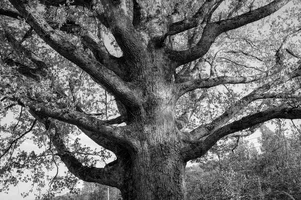
RISK: Giant trees are less hazard prone. Of 87 previously inventoried giant trees, which included the Treasured Tree database and the Biltmore Estate database, only one giant tree failed. That’s a 98.8% survival rate. The average survival rate for all trees in the Biltmore Estate inventory of 15,780 trees was 90%. Giant trees survived at much, much higher rates than the average tree. This is incredible news! Failure rates for trees in the Biltmore Estate database peaked between 20-39" diameter, so those trees tended to be the most at risk of failure in that storm. Once they get past that hump, they tend to survive at much higher rates.
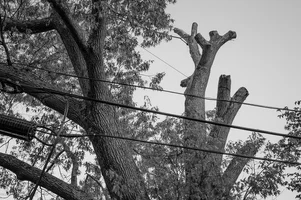
HEIGHT: The average height is 82’. The tallest is an Eastern hemlock at Biltmore Estate at 130’, and the shortest is a 30’ tall Basswood in Montford Park, pictured below, that lost most of its canopy in Helene.. although that particular specimen is growing at an absurd rate and I wouldn’t be surprised if it put on significant height since I measured it.
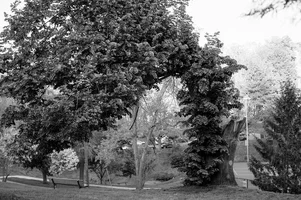
DIAMETER: The biggest is a 89” diameter at breast height Silver maple, seen below, which overlooks a bus stop on Lakeshore Dr. Silver maples dominate the biggest diameters, but there are a few standout White oaks that all measure about 73”. It's possible there is a larger tree in the county, but I haven't been privy to it. (A White oak I discovered in the neighboring county on old pasture measures 112' diameter, which actually exceeds the national champion - I might have to look into that..)
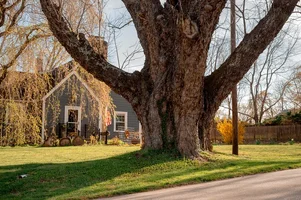
CROWN WIDTH: The average crown width is 75’. The widest is a 124’ wide Sycamore. The narrowest width is a declining Silver maple at 25’ wide.
LOW LIMBS: As measured by live crown ratio (LCR), which is the ratio of overall height to the height from the lowest branch to the top of the tree, giant trees tend to have lots of low limbs. This translates to a LCR average of 83%. That means the average first branch is at about 14’ from the ground. I feel like this may be the most essential takeaway for strategies for giant trees. There are obviously some exceptions, but for the most part, they remain relatively short and bottom heavy as a strategy to weather centuries of storms.
SLOPE: The most common slope was 5 degrees, although a couple Sycamores along the riverbanks were holding things down at about 60 degrees. Thank you guys, you’re amazing!
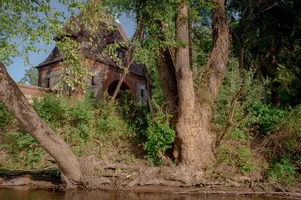
CROWN DENSITY: This was a somewhat subjective assessment from the ground as to the ratio of live branches to dead branches. The average was 91%, there were many at about 99% (nobody’s perfect, after all), and a rugged Black locust that was only 25% alive.
WEIGHT DISTRIBUTION: Also somewhat subjective, I took note of the cardinal direction the overall weight of the canopy was leaning towards. Trees tend to grow SSW, but there were plenty that grew straight north, so I wouldn’t make a big deal about it.
ELEVATION: The average was 2128’ above sea level, and spanned from 1937’ to 2434’. This is also fairly unremarkable as this is just an expression of the county's general elevation spread, although in the future I may see if elevation informs some of these other statistics.
SIGNIFICANT CONDITIONS OF CONCERN: These would include large cavities at the base, significant canopy decline, codominant stems, or injuries from construction. 31% of giant trees had significant conditions of concern. My takeaway? Maybe those conditions shouldn’t be so concerning, if they’re still standing.
AMPLE ROOT SPACE: This measured whether there was an obstruction, such as a road, driveway, or waterway, within a circle measured as 5x the diameter of the tree. So for a 5’ diameter tree, that would be a 25’ radius. The overwhelming majority of giant trees, 72.5%, do not have ample root space. It is extremely important to add this caveat - very, very few of these trees have new obstructions, or construction stresses of any kind, in their root zones, and the few that do are usually about to die. But, if a tree has grown in a compromised root zone for most of its life, we can assume it can continue to do so.
SPECIES: There were 26 different species on this list, which I was really surprised by. The top 5 species were:
White oak - 27%
Sycamore - 18%
Tuliptree - 10%
Silver maple - 10%
Northern red oak - 6%
Some of the surprises on this list included Black locust, Boxelder, Chinese Chestnut, and of course Biltmore’s famous Persian Ironwood.
All these photos were taken by Mike Belleme.
I intend to write a formal paper with this data, as well as potentially something bigger.
It's a bit of a read, but the biggest takeaway I want to tell you all as arborists, is that these trees tend to have large low limbs. This means in order to cultivate the conditions for the next generation of giant trees to form, we must leave low limbs and give trees ample growing space so that they grow wide, and not tall.
RISK: Giant trees are less hazard prone. Of 87 previously inventoried giant trees, which included the Treasured Tree database and the Biltmore Estate database, only one giant tree failed. That’s a 98.8% survival rate. The average survival rate for all trees in the Biltmore Estate inventory of 15,780 trees was 90%. Giant trees survived at much, much higher rates than the average tree. This is incredible news! Failure rates for trees in the Biltmore Estate database peaked between 20-39" diameter, so those trees tended to be the most at risk of failure in that storm. Once they get past that hump, they tend to survive at much higher rates.
HEIGHT: The average height is 82’. The tallest is an Eastern hemlock at Biltmore Estate at 130’, and the shortest is a 30’ tall Basswood in Montford Park, pictured below, that lost most of its canopy in Helene.. although that particular specimen is growing at an absurd rate and I wouldn’t be surprised if it put on significant height since I measured it.
DIAMETER: The biggest is a 89” diameter at breast height Silver maple, seen below, which overlooks a bus stop on Lakeshore Dr. Silver maples dominate the biggest diameters, but there are a few standout White oaks that all measure about 73”. It's possible there is a larger tree in the county, but I haven't been privy to it. (A White oak I discovered in the neighboring county on old pasture measures 112' diameter, which actually exceeds the national champion - I might have to look into that..)
CROWN WIDTH: The average crown width is 75’. The widest is a 124’ wide Sycamore. The narrowest width is a declining Silver maple at 25’ wide.
LOW LIMBS: As measured by live crown ratio (LCR), which is the ratio of overall height to the height from the lowest branch to the top of the tree, giant trees tend to have lots of low limbs. This translates to a LCR average of 83%. That means the average first branch is at about 14’ from the ground. I feel like this may be the most essential takeaway for strategies for giant trees. There are obviously some exceptions, but for the most part, they remain relatively short and bottom heavy as a strategy to weather centuries of storms.
SLOPE: The most common slope was 5 degrees, although a couple Sycamores along the riverbanks were holding things down at about 60 degrees. Thank you guys, you’re amazing!
CROWN DENSITY: This was a somewhat subjective assessment from the ground as to the ratio of live branches to dead branches. The average was 91%, there were many at about 99% (nobody’s perfect, after all), and a rugged Black locust that was only 25% alive.
WEIGHT DISTRIBUTION: Also somewhat subjective, I took note of the cardinal direction the overall weight of the canopy was leaning towards. Trees tend to grow SSW, but there were plenty that grew straight north, so I wouldn’t make a big deal about it.
ELEVATION: The average was 2128’ above sea level, and spanned from 1937’ to 2434’. This is also fairly unremarkable as this is just an expression of the county's general elevation spread, although in the future I may see if elevation informs some of these other statistics.
SIGNIFICANT CONDITIONS OF CONCERN: These would include large cavities at the base, significant canopy decline, codominant stems, or injuries from construction. 31% of giant trees had significant conditions of concern. My takeaway? Maybe those conditions shouldn’t be so concerning, if they’re still standing.
AMPLE ROOT SPACE: This measured whether there was an obstruction, such as a road, driveway, or waterway, within a circle measured as 5x the diameter of the tree. So for a 5’ diameter tree, that would be a 25’ radius. The overwhelming majority of giant trees, 72.5%, do not have ample root space. It is extremely important to add this caveat - very, very few of these trees have new obstructions, or construction stresses of any kind, in their root zones, and the few that do are usually about to die. But, if a tree has grown in a compromised root zone for most of its life, we can assume it can continue to do so.
SPECIES: There were 26 different species on this list, which I was really surprised by. The top 5 species were:
White oak - 27%
Sycamore - 18%
Tuliptree - 10%
Silver maple - 10%
Northern red oak - 6%
Some of the surprises on this list included Black locust, Boxelder, Chinese Chestnut, and of course Biltmore’s famous Persian Ironwood.
All these photos were taken by Mike Belleme.
I intend to write a formal paper with this data, as well as potentially something bigger.


