Evergreens in trouble

macrocarpa

Branched out member
Location
Midwest
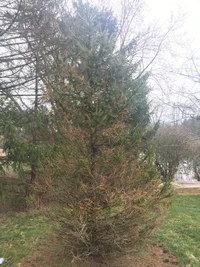
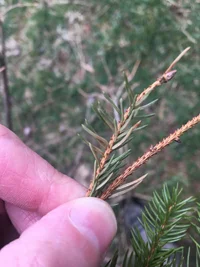
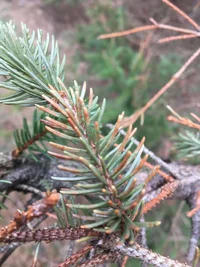
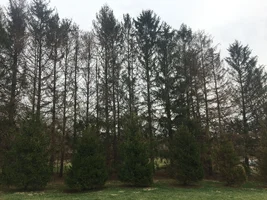
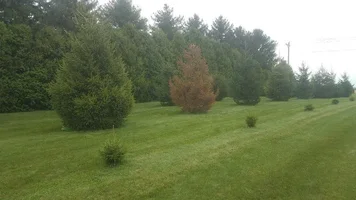
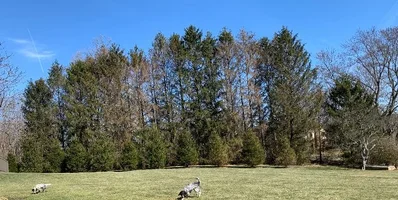
I have definitely noticed an increase in dying evergreens over the last several years. I just got another phone call about the below picture and will go out to look this week but suspect winter/spring saturated soils combined with drought conditions in late summer. Based on the pictures I think these are Norways Which generally haven’t been affected by needlecast like the blue spruce. Anyone in Ohio/the Midwest come to any conclusions other than environmental conditions as to why so many evergreens are dying?
 

Attachments

  • B389AB6A-4A91-4B3A-AB2E-41EAF0B44641.webp
    B389AB6A-4A91-4B3A-AB2E-41EAF0B44641.webp
    109.2 KB · Views: 34
We have a lot of Spruce Spider Mite around here, and an extended warm, wet Spring is the biggest reason they’re so bad around here these days. We’ve had two in a row, and looking at a third coming up this year.
 
Define "wet"... Spruce spider mites get knocked off by hard rains. I think we had a lot of that in NW Ohio last year because I didn't find many mites on trees that had previous damage. We were very wet and a lot of the rain came in heavy downpours.

@macrocarpa ... I don't know why the spruce pests have been so active lately, but P. pungens has been taking it on the chin. Rhizosphaera, SSM (but not so bad here last year), pitch mass borer. They aren't even getting big enough to get cyrospora canker before everything else takes them out.

Crazy idea: cleaner air??? Did higher sulfur, for example, in the air (and rain) control the needlecast diseases in decades past?

Crazy idea #2: genetics??? Are all of the commercially available spruce from a narrow gene pool coming from so few suppliers?

I don't see many Norway spruce suffering. Some, but not many. Blue are horrible. I've been telling people that out climate is more like northern Europe than Colorado which is more arid .... the higher RH is favorable to disease. But why did Blue do OK (not great, but OK) for decades past. Was grown by several Christmas tree farms, but they are unusable by the time they get to size. That may rule out the genetic crazy idea because they probably source trees from different stock than the landscape industry.
 
I’m going to look at these Norways today. I’m not basing this on anything scientific but to me it just seems like the soil is not freezing and we Have saturated soils through most of the winter and spring. Hiking trails are unusable the last several winters because it’s so muddy and I haven’t been able to run my dog in the fields because it doesn’t freeze. It just seems like evergreens are sitting in saturated soils and developing root rot and all the other fungal issues. But I could be way off with my uneducated theory.
 
  • Like
Reactions: ATH
Keep in mind that most conifers aren't sited properly here. I see many in lower areas that live for some time but are thin and chronically stressed. Borers and diseases will win that battle eventually
 
Keep in mind that most conifers aren't sited properly here. I see many in lower areas that live for some time but are thin and chronically stressed. Borers and diseases will win that battle eventually
I agree..but to me it seems like Blue spruce just aren't able to get as big as they used to. Not that they were on good sites before and now they are suddenly bad sites...they were certainly predisposed.

So we have the decline complex:
Predisposed (off site)
Inciting factor
Contributing factors - I think this is where SSM, needlecast and cytospora fall.

So, what is the inciting factor here that wasn't there 15-20 years ago? Lack of soil frost could be as @macrocarpa suggested. My hesitation on that is that the rate of decline seems to have accelerated since the last "real" winters we had in 2013/14/15.
 
Keep in mind that most conifers aren't sited properly here. I see many in lower areas that live for some time but are thin and chronically stressed. Borers and diseases will win that battle eventually

Agree

When I was in college in early 70s we learned about how plants responded to being planted out of their Zone. Or even on one end of that Zone. Too_______ (full in the growing condition) and the plant won’t thrive.

As our weather has changed the plants seem to be responding. Dry and hot soils are the worst. Many weather trends are moving toward unfavorable growing conditions that we’ve known in our lifetimes.
 
I agree..but to me it seems like Blue spruce just aren't able to get as big as they used to. Not that they were on good sites before and now they are suddenly bad sites...they were certainly predisposed.

So we have the decline complex:
Predisposed (off site)
Inciting factor
Contributing factors - I think this is where SSM, needlecast and cytospora fall.

So, what is the inciting factor here that wasn't there 15-20 years ago? Lack of soil frost could be as @macrocarpa suggested. My hesitation on that is that the rate of decline seems to have accelerated since the last "real" winters we had in 2013/14/15.
Years of inoculum building up?

Combine that with wet conditions and some windy days to spread spores around?
 
Whadya find?
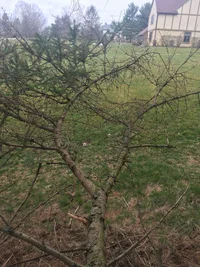
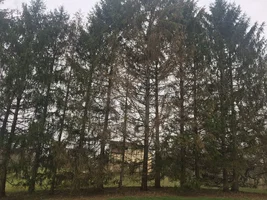
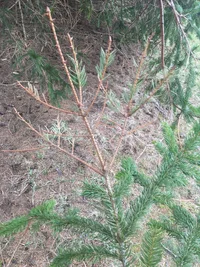
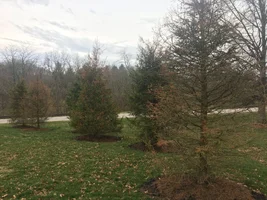
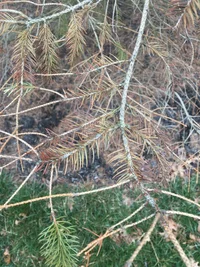
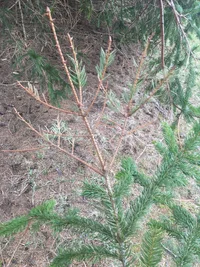
More evidence that maynard keenan was right, its time to “learn to swim”......80+ Norway spruce dead/dying. Multiple adjacent properties affected. Some up on a hill, some down low, some in between. Some 60 feet tall, some 12 feet tall recently planted. I noticed the same symptoms miles away from this site. I sent samples to the Ohio state diagnostic clinic. Looks like some sort of fungal disease.
 

Attachments

  • C0040AE4-0BEF-4BD6-A2D3-70864A014852.webp
    C0040AE4-0BEF-4BD6-A2D3-70864A014852.webp
    1.1 MB · Views: 21
  • E8C5921B-5746-4978-BC2D-C1C09EEB2B5E.webp
    E8C5921B-5746-4978-BC2D-C1C09EEB2B5E.webp
    1 MB · Views: 21
  • C7CAF8E7-77A2-4B92-A000-A1F0D417750F.webp
    C7CAF8E7-77A2-4B92-A000-A1F0D417750F.webp
    1.2 MB · Views: 23
  • 24B629B5-8B19-4E1C-82AF-421F092DF69D.webp
    24B629B5-8B19-4E1C-82AF-421F092DF69D.webp
    1 MB · Views: 25
  • EF22F141-7B3D-47F6-BE38-B5650B623478.webp
    EF22F141-7B3D-47F6-BE38-B5650B623478.webp
    235.6 KB · Views: 24
  • DD3D3EDF-BBDB-4C89-BD09-0D279D98A62B.webp
    DD3D3EDF-BBDB-4C89-BD09-0D279D98A62B.webp
    816.1 KB · Views: 21
  • FC4E3A70-DADA-4161-899D-D87D3D061BC8.webp
    FC4E3A70-DADA-4161-899D-D87D3D061BC8.webp
    535.6 KB · Views: 21
  • 0A885A0B-8A34-4EFB-B3C0-7BEAB0730710.webp
    0A885A0B-8A34-4EFB-B3C0-7BEAB0730710.webp
    1.2 MB · Views: 18
  • B4D48382-549A-4243-8BD6-C491B048E826.webp
    B4D48382-549A-4243-8BD6-C491B048E826.webp
    285 KB · Views: 19
  • A51705AF-42CF-4D01-8C44-4E5CED7C6610.webp
    A51705AF-42CF-4D01-8C44-4E5CED7C6610.webp
    975.7 KB · Views: 15
More evidence that maynard keenan was right, its time to “learn to swim”......80+ Norway spruce dead/dying. Multiple adjacent properties affected. Some up on a hill, some down low, some in between. Some 60 feet tall, some 12 feet tall recently planted. I noticed the same symptoms miles away from this site. I sent samples to the Ohio state diagnostic clinic. Looks like some sort of fungal disease.
Alex-Grey-tool.webp
 
Up N where we are, we seemed to lately have a series of warmer or at least quite variable winters. Last winter there were stretches of -35 degC to ~ -43 degC which helped kill off pine beetle and other bugs no doubt. This winter had a couple of cold bouts, but no real long deadly cold spells (like we used to have 20 - 30 years ago - I still remember squared off fiberglass belted tires thump thumping on the morning drive into the lab). I do think this warm winter thing is one (more) of the reasons for a lot of the damage to our forests of late. The young-uns seem to think this warm up is a recent phenomenon but it's been going on all my life at least - glaciers have been receding for a long, long time (we used to ski in places where there is now only acres of scree and boulders). Maybe we have reached a bug tipping point of some sort. Certainly seems we have lots of bad bad stuff courtesy of China (ash borers etc.) killing everything in sight, not just Wuhan Virus and SARS and . . . . . maybe we should start billing them for cleanups/ remediation (another duty/ surcharge?) . . .
Perhaps studies of exactly how cold labile some of the conifer fungi are would shed light on this.
 
Any thoughts on those pics I posted? The Ohio State lab is closed. They said they put my sample in the fridge for a later date. The customer said he noticed slight thinning last fall but over the last 3 weeks in march they are dying fast.
 
the 4th and 6th pictures remind me of some Norways I looked at last summer. Never did figure that one out. Sent multiple samples to OSU. Some trees were great, others just up and died. No sign of vascular discoloration. No sign of something feeding under the bark or on the roots (we pulled some out of the ground to look at the roots...).

20190903_150941.webp
 

New threads New posts

Back
Top Bottom