Does anyone cut the angle cut first, of a conventional notch?

the only downside i can see to doing the horizontal cut last is that in a really big piece' it can pinch the saw. but that is a minor inconvenience. i cant really think of any other reason why it would make any bit of difference. i normally do angle cut first because its easier to line up the shorter cut.
 
Do you angling-cut first advocates recut the sloping cut again an again to change a few degrees?


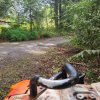
I had a keeper cedar tree to the left, and an electric light to the right.

Not a right shot, granted. 10⁰ or more to hit without consequence, barring any funny bounce or roll.


Hard to see all 4.

Left most, left boundary to protect cedar.

2nd from left (very faint)...layout no farther to right.

3rd cone, in line line from stump through light fixture.

4th. Faint,cone on top of light fixture.


I didn't want to go any farther right than the second cone from the right.
 

Attachments

  • 20220427_115211.jpg
    20220427_115211.jpg
    640.4 KB · Views: 23
  • 20220427_115443.jpg
    20220427_115443.jpg
    1.5 MB · Views: 21
To Kevin's point, Humboldts fall out when you cut them.

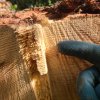
Conventionals take extra work. Some face cuts weigh 100+ pounds, some way more.
When you have to break out a large facecut, boring into the center of the facecut,
cutting up and down, allows you to put a wedge in the vertical kerf in the facecut, and break it in half. One piece sliding out leaves the other to be beat out. Easier to swing into a high humboldt that shows looseness and falls out when loose. IME.


Small trees and/ or open lays, not much matters between the two.

Holdings saw properly doesn't matter so much with small saws, either. It's something people can fight to do improperly on the all end.

You can't scale up and do the same with saws or facecuts, IME.


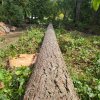
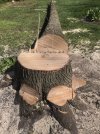
I think you can see where i changed a few degrees from my initial "gunning".


I had 4 stumps in the direct area of the lay, and wanted to hit the soft hill that is 1' above the driveway and utility trench, without getting close to the keeper trees' main roots.


How do you correct when off 3⁰ d? What if you realize you want 5⁰ or 7⁰?

I didn't want to ruin a valuable lots of value turning a straight, beautiful, millable, respectable rings per inch count log into a bunch of low-value firewood by bashing stumps.

 

Attachments

  • 20220428_120319.jpg
    20220428_120319.jpg
    910.9 KB · Views: 4
  • 20220428_120328.jpg
    20220428_120328.jpg
    1.6 MB · Views: 4
I've also been sketching out the hinge w/an 18" bar before I really cut in with a 25 or 28, when it's gotta be perfect. I'd rather work w/a lightweight saw, and start w/a tiny notch while I correct for level, degree etc., then just deepen those cuts once it's dialed in. Of course I could use a big saw, and just do smaller initial cuts, but... I LIKE LIGHT-WEIGHT EQUIPMENT, ha!!!

Sometimes I use the level part of the notch, flat the bar against it, & sketch a cut even w/the 'hinge floor' all around, working from both sides. See if it meets in the back. Then cut about an inch over my mark for the actual back cut, checking as I go.

The guy who owns the tree service, he says when he sees me working w/the MS250, "You're gonna cut a bigger notch, right???" :ROFLMAO: :LOL:
 

Attachments

  • NWales_RS.jpeg
    NWales_RS.jpeg
    468.4 KB · Views: 8
Last edited:

New threads New posts

Back
Top Bottom