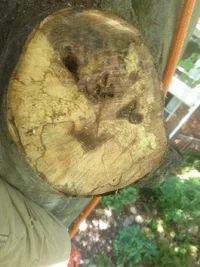
Sometimes it petrifies, as in many oaks and some pines etc. ime. Lots of research in Sweden and Tasmania etc. about habitat values in dead branches, in those regions. I learned a lot thru bloody arguments with sean and some brits on this. we've recovered, mostly, and we're all still learning. I used to feel guilty about removing trees, now I feel guilty about removing dead branches and the habitat they give birds and spiders and godknowswhat. putting habitat back one way or another eases the anguish, or I'd have to quit pruning altogether. from page 8, if you joined late. it aint great, and it's out of date--there are other reaasons i forgot:
Pruning Deadwood: Which, Where, why?
Dead branches are traditionally removed from trees to lessen decay moving into the parent branch or stem, improve air movement, increase stability by lessening load, ease access for climbers and some wildlife, and lessen risk and litter nuisance, among other reasons. Beauty may be in the eye of the beholder, but most clients, as well as most arborists, seem to enjoy the view of the living tree’s architecture more if dead parts are not blocking the view. However, dead branches can also contain value to the tree, when they provide benefits such as:
Resource translocation. Some recently dead limbs may still have ‘juice’ stored inside, containing stored resources that are still traveling downward. (These resources are a reason that some object to the term “deadwood”.) Large branch removal can be done in stages to allow for this movement, which can also result in a protection zone being formed at the final cut. Or the snag can stay, when removing it would speed trunk decay.
Support. Dead branches in dense evergereens may be holding up neighboring branches above. This support can prevent breakage as it increases sunlight to and air flow around living branches.
Habitat. In trees that compartmentalize well and have no major disease concerns, dead branches are retained because some organisms find niches in branches that are not in stems. Or on branches: spiderwebbing between twigs can catch aphids and other plant pests. Also, dead branches that protrude from the crown provide perches for raptors and other valuable birds.
Load Damping. Branches, living or dead, in the middle of limbs keep them wiggling in many directions, not wobbling and jerking and breaking. This is why pruning standards advise against “liontailing” branches. On a larger scale, branches in the middle of trees can absorb load and improve stability. If you watch trees on a windy day, you’ll see limbs dance in time with each other, brushing against each other as they whirl and twirl. If they don’t brush against each other and make some contact, they tend to go out of control—kind of like humans, in a way. When pruning we change that dance like choreographers, cautiously considering dose and timing.
The function of deadwood as habitat is ultimately realized when it hits the ground and recycles. Leaving dead branches to border natural areas can be aesthetically pleasing as they fit naturally into many landscapes. Clients appreciate the entomo-myco-arboricultural role these pruned branches play by increasing habitat for soil microflora and microfauna.