Dead (and Undead) Wood

Since Wall 4 of CODIT includes closure of the wound, I'm not understanding that assertion. Only in rare cases Walls 1-3 are enough.
Forest Service
U.S. Department of Agriculture
Agriculture Information
Bulletin No. 405
July 1977

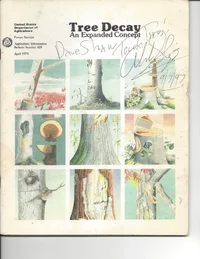
Guy, I was not able to pull up your referenced bulletin for some reason, but your assertion that Wall 4 of CODIT includes closure of the wound is different from what I have read. In Shigo's New Tree Biology, under A New Tree Biology Dictionary, pg 22 states "CODIT - ...The model has 2 parts. Part 1 is within the wood present at the time of injury and infection." ..."After injury and infection, the still-living cambium forms cells that differentiate to form the barrier zone." .... "Part 2 has one wall, wall 4, which is a model term for the barrier zone."

Then on pg 6 under the BARRIER ZONE definition "A protection boundary formed in the wood by the still-living cambium, after a tree is injured. The barrier zone DOES NOT (emphasis mine) form over the surface of a wound."

Does your referenced forest service bulletin contradict these quotes?
 
Nope it says the same. The new growth outside the barrier may not be Wall 4 as defined, but it sure does continue the compartmentalization process, as it closes the wound.

You'll remember the bulletin; great use of graphics for 1977.
 
...The new growth outside the barrier may not be Wall 4 as defined, but it sure does continue the compartmentalization process, as it closes the wound...

I hear this from a lot of different sources and find it disturbing. The growth that slowly encapsulates a wound is clearly not part of wall 4 or the CODIT model. Saying it is would be like adding bark growth to that definition as it also lays down a protective layer to defend and protect the trees inner workings.
 
Nope it says the same. The new growth outside the barrier may not be Wall 4 as defined, but it sure does continue the compartmentalization process, as it closes the wound.

You'll remember the bulletin; great use of graphics for 1977.

Got this a year before I met Alex Shigo at the first Arbor Age Expo in Phil. in 1980 when I sat next to him during a Don Blair seminar then went to his later.

alx.webp
 
Tree removal is usually necessary when a tree is dying or dead. Many people believe that trees need not be taken down when they die but a homeowner or a landowner needs to make sure that there are no hazardous trees in his property to avoid injuries, fatalities and other complications. :)
 
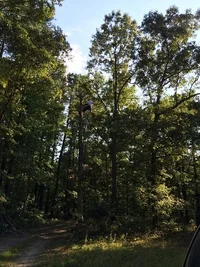
All trees carry risk. Hazard trees are often managed without removal. This dead white oak is tied back to prevent falling on road, and will be left at this height for wildlife value.
 

Attachments

  • monolith habitat white oak.webp
    monolith habitat white oak.webp
    131.7 KB · Views: 43
All trees carry risk. Hazard trees are often managed without removal. This dead white oak is tied back to prevent falling on road, and will be left at this height for wildlife value.


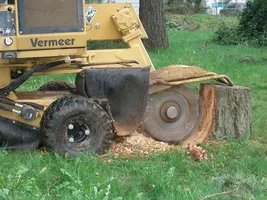
Hmmmm...nice thought....A stump could cause a trip and fall with possible injury :eek:...So it need to remove...:rolleyes:
 

Attachments

  • media5.webp
    media5.webp
    54.7 KB · Views: 34
Removal is one option. Carving it into a chair, using it as a table, planting shrubs around it; all options.

"Trees offer many benefits, so removal should be the last option to reduce risk." ISA Risk BMP, p. 44.
 
Not sure if this was covered above, but one thing to consider when deciding to remove deadwood is the possibility of exposing branches to wind, I know some species of conifers have natural dieback of much of the interior canopy, removal may cause wind tunnels to open up that branches haven't compensated for resulting in failure..

Very interesting question, I enjoyed reading some of the responses you got, thank you :)
 
Does removing dead wood from the canopy actually produce some net benefit for the tree? Does anyone out there actually know of any research that suggests trees respond positively when dead wood is removed?
Most of the time I suspect that the tree benefits from the removal of deadwood. Let's get specific. Is EVERY deadwood cut made beneficial. Now let's look at what is likely a mistake or a cut that should not have been made. I made a cut removing the 12 inch diameter dead top of a Red Oak. There were two limbs now taking over where the top had died back to. After hesitation I removed the dead top with a cut almost level but slightly tipped. Right away I knew I had made the wrong cut. Or at least if, nothing else, an indifferent cut. Once remove I realized I had taken the roof of of this tree. What remained was an eleven inch hole where you could put your arm in up to the elbow, but I didn't want to because of the squirrel nest inside. Not a cut likely to ever close over. Before the cut, there was a solidified protective shell which kept water and fungal spores out. The dead piece was tapered well and was short and unlikely to fail. Failure would only drop the dead top onto a steep forest hill. Being oak, this hardened dead top looked 10 years old, and ready to last another ten, being high and dry in the canopys' upper level. A few years later I worked on an Ironwood which is a species also likely to die back its original leader. This time I left the piece on but deadwooded the rest. So to answer the main question, it depends on the situation but if you think every piece of deadwood is better removed then consider that just maybe there is one or two in a hundred better left alone. A Question I have is "is there any species that would benefit from leaving deadwood on or having it cut off during the late autumn?" Siberian elm actually hisses and leaks when larger deadwood is cut.
 
Most of the time I suspect that the tree benefits from the removal of deadwood. Let's get specific. Is EVERY deadwood cut made beneficial. Now let's look at what is likely a mistake or a cut that should not have been made. I made a cut removing the 12 inch diameter dead top of a Red Oak. There were two limbs now taking over where the top had died back to. After hesitation I removed the dead top with a cut almost level but slightly tipped. Right away I knew I had made the wrong cut. Or at least if, nothing else, an indifferent cut. Once remove I realized I had taken the roof of of this tree. What remained was an eleven inch hole where you could put your arm in up to the elbow, but I didn't want to because of the squirrel nest inside. Not a cut likely to ever close over. Before the cut, there was a solidified protective shell which kept water and fungal spores out. The dead piece was tapered well and was short and unlikely to fail. Failure would only drop the dead top onto a steep forest hill. Being oak, this hardened dead top looked 10 years old, and ready to last another ten, being high and dry in the canopys' upper level. A few years later I worked on an Ironwood which is a species also likely to die back its original leader. This time I left the piece on but deadwooded the rest. So to answer the main question, it depends on the situation but if you think every piece of deadwood is better removed then consider that just maybe there is one or two in a hundred better left alone. A Question I have is "is there any species that would benefit from leaving deadwood on or having it cut off during the late autumn?" Siberian elm actually hisses and leaks when larger deadwood is cut.
Is this JeremyJeremy
 
No it's not but does Jeremy have a similar story. It's Ryan Redvers.
So I've looked at some of this great thread since my last comment. I hope this isn't a repeated point.
Where does dead wood go?
Uncut, it falls off in bits like mild fertilizer and soil texture building pellets. You know the ones. From ants. From woodpeckers. And yes your right in the city they land on the road and wash down the drain. So sad. But in an urban backyard the fallen bits go through the lawnmower and back to the soil instead of the chipper into the truck. It's similar to the removal of leaves although I'm sure not the same.
To add to this concept is rain that runs through deadwood picking up grub and insect poo. Then this yummy organic tea runs down the branches and stems (think sugar maple structure) and lands right where we want it. As far as I understand the root flare area has great uptake abilities, which is possibly is due to this recycling of nutrients effect or at least the water thing.
Do trees act like a Hosta leaf in this way?
Remove deadwood over 2 inches and LEAVE deadwood under 2 inches?
Oh wait. That's a common spec anyway.
Perhaps a reminder that when you see fine deadwood up high where no one sees it then leave it for the birds and bugs who will feed there shit later to the tree. Then you eat the apples. But don't shit on the lawn and tell the client you're fertilizing.
Ryan
 
Hi Guy! -20 Celsius here this morning. debating reducing this Black Cherry. Blowing 30 km wind. Ya I got the winter crazies. I've still been doing a fair bit of reduction work though. Guy do you think the deadwood under 2 inch can stay? Or 1 inch? Species specific I believe too. I know you believe cutting it and I mostly agree and practice it. in a suburban setting isn't it possibly beneficial to let it fall to the soil in pieces as long as there are multiple trees. Not all can get infected and die from infection via deadwood.
I guess the question is what's worse? Taking organic nutrient holding deadwood away from the site or leaving it on and risking infection. I know a guy out west who cuts it off, cuts it shorter and leaves it in the garden. He sells it well and cut up it looks better than u think.
Suburban arboriculture. Has anyone heard that term before?
 
Doing urban forest restoration, we would leave as much woody plant material as we could, dead or alive. Branches were spread over the site and cut to lay flat, logs were used for terracing. Most sites were ravine slopes so the branches also helped hold organic matter in place to decompose.
 
Ryan are you talking about Nicho Dankers? He presented his Dougfir retrenchment work in 2013.

What to do with deadwood depends on the objective.

humper's got the recycling plan down. :)
 
Ryan are you talking about Nicho Dankers? He presented his Dougfir retrenchment work in 2013.

What to do with deadwood depends on the objective.

humper's got the recycling plan down. :)
Yup. Wasn't it 2014 Milwaukee? I thought he was crazy until he showed me his pictures. Cut at the small crotches with loppers and spread evenly in gardens further from the house. It really blends well when u lay it flat. With my suburban clientele I could put cuttings in gardens quite often like this. Still hard to compete with the chipper. But in backyards it might be faster than dragging. Not easy to convince the client. But if I had pics to show. Now I feel like I'm playing tennis with myself.
 
In 2013 he presented on reducing 100-year-old Dougfirs on UW campus. Standard, specified retrenchment; it was phenomenal.
Finding a compromise between The Neat Look and natural processing can be done! On most pruning jobs I spec flare care, including weeding (often turf) and mulching, at least out to cover exposed buttress roots.
By removing all the biomass and leaving the ground barren, I felt like I was part of the tree's health problems.
 
Flare care. That's a good one. I think many arborists including myself forget the big picture sometimes. I suspect most of us should be selling and performing more root flare excavations. Often a tree needs girdling roots pruned more than it needs the crown pruned.
Also recommending more replacement trees BEFORE the declining tree is even removed. The declining tree nurses the new tree during hot seasons and windy days. Shares mycorrhizae and promotes better branch structure for the young tree as well
 

New threads New posts

Kask Stihl NORTHEASTERN Arborists Wesspur TreeStuff.com Teufelberger Westminster X-Rigging Teufelberger
Back
Top Bottom