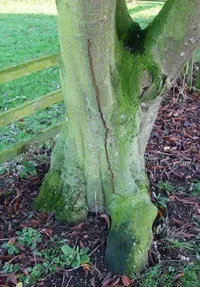
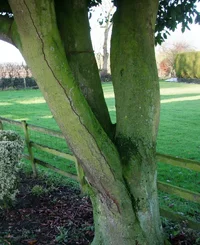
Cracked bark on 30ft diam prunus

I have a 30 ft diam prunus estimated at 35+ years old - it has doubled in size since we moved in 24 years ago. It is now developing long vertical cracks in the bark of stem and branches. Is this age or disease related? - Does it have to come down? It's loss would not be a disaster as it is now shading a ground mounted solar panel array.
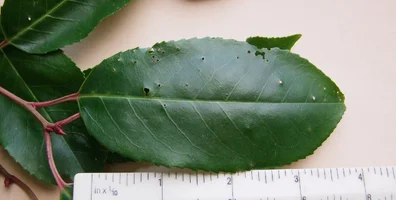
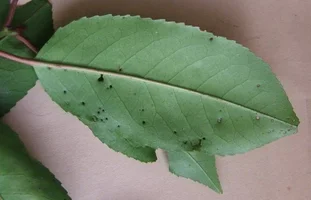
The spherical crown produces good leaf and spring white flower growth but leaf fall this year seems heavier than in the past (even allowing for the bigger the tree, the bigger the leaf fall.) . My attempts at species identification (leaf shape and size) suggest that it is akin to an oversize Prunus laurocerasus.
Advice would be appreciated.
 
Wow sounds big. Absolutely no way to tell for sure online. Very clear photos would help us guess, only guesses though. Remember if the tree has no target it’s not a hazard! If it’s out in your yard somewhere where if it were to fail what would it hit?
 
Prunus can have problems here with frost cracks, typically long and vertical. Often reopen each winter and can be a wonderful entry point for fungi
 
Thanks for the responses.
The 30 ft diam is easy enough to measure but height, at a guess, must be about the same.
At the moment there is no urgency about its condition unless the signs are terminal. If it were to fall the only damage would be to a wooden stock fence and other bushes and plants. It appears to be fairly shallow rooted. One prominent root radiates out at soil level along a cultivated border in the direction of a well.
If the prognosis is bad, I'd rather take controlled remedial action now rather than wait for the inevitable.
More info - the soil is calcareous.
The trunk appears to have split naturally into three stems.
The leaves appear to fall after a couple of years or so but the tree presents an evergreen appearance.
The leaf stems are reddish which might indicate that the species is more likely to be P. lusitanica rather than P. laurocerasus as previously thought.
 

Attachments

  • DSCF7543.webp
    DSCF7543.webp
    66 KB · Views: 31
  • DSCF7544.webp
    DSCF7544.webp
    756.8 KB · Views: 34
  • DSCF7546.webp
    DSCF7546.webp
    200.1 KB · Views: 30
  • DSCF7548.webp
    DSCF7548.webp
    30.3 KB · Views: 25
  • DSCF7549[1].webp
    DSCF7549[1].webp
    83.2 KB · Views: 32
The brown "cracks" appear to be rapid growth in the stem commonly called reaction wood. Reaction wood is a specific type of wood a tree puts on to compensate for something. Often times it's prevailing winds, gravity, or a defect such as a internal crack. I often find these bark cracks in line with a dominate root, or limb, which simply means the tree is putting more wood on in that area.

Photo dscf7544 shows the union where these three stems meet. The main crotch has what is called included bark. There is now lateral continuity between these to stems do to the V shaped nature of this union. They can and do tear out leading to huge problems for the tree, It would take a very close look and a site visit to determine if this is a issue for your tree or not. It can be mitigated but unfortunately not fully corrected (meaning one shot one kill).

In the same photo you can see a rib of expanded wood with your "crack" directly in the middle. There may be loading stress in this are. Regardless this reaction wood is some of the densest wood the tree can produce, often very difficult to split with an axe.

I'd have some one qualified look at it. Be specific that it's just a consultation, nothing more.
 

New threads New posts

Back
Top Bottom