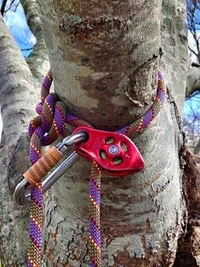
Cambium saver.. Is it safe?

Location
Canada, Ont
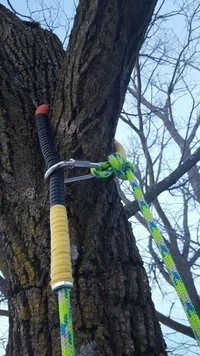
Usually I'll have a smaller cambium saver for the branch but in my last climb I didn't and when it was cinched on the limb it was butted up against the EDGE of the cambium saver so not tight on the branch. I wiggled and got it to cinch down further but because of the size it was over the cambium saver. I figured out of the two this is the safest.. Am I right, is it ok or is it best to make sure you have the right size for the job??
 

Attachments

  • 20160125_172918_resized.webp
    20160125_172918_resized.webp
    353.1 KB · Views: 370
As a general rule I would not like that configuration. Assuming the ferrule is still good that is not what worries me, it is actually the cross loading on the conduit sleeve that bothers me. I would be worried that it might become crushed and separated, possibly becoming sharp at the given point of failure. Just a speculation as I have never test that theory.
 
As a general rule I would not like that configuration. Assuming the ferrule is still good that is not what worries me, it is actually the cross loading on the conduit sleeve that bothers me. I would be worried that it might become crushed and separated, possibly becoming sharp at the given point of failure. Just a speculation as I have never test that theory.
That's precisely what I was thinking and no way I could check the inside. Best not keep that up. Appreciate your insight.
 
Usually I'll have a smaller cambium saver for the branch but in my last climb I didn't and when it was cinched on the limb it was butted up against the EDGE of the cambium saver so not tight on the branch. I wiggled and got it to cinch down further but because of the size it was over the cambium saver. I figured out of the two this is the safest.. Am I right, is it ok or is it best to make sure you have the right size for the job??

Just curious... Why are you using a conduit sleeve for a choked SRT anchor?
 
Usually I'll have a smaller cambium saver for the branch but in my last climb I didn't and when it was cinched on the limb it was butted up against the EDGE of the cambium saver so not tight on the branch. I wiggled and got it to cinch down further but because of the size it was over the cambium saver. I figured out of the two this is the safest.. Am I right, is it ok or is it best to make sure you have the right size for the job??
To be honest, with your application, IMHO. You're wasting your time and ruining your Cambium Saver, in this configuration. You don't need it for SRT, your rope won't damage the bark, let alone the cambium of the tree, there's no weight applied to the rope until you ascend. As stated in a previous post, the cambium saver can do damage to your rope if it's not centered on the crotch due to the metal insert @ the ends of the CS. Do what you like, but the CS has a specific purpose and that's not it. Best of Luck, on your endeavor!


Dave6390 in WI
 
Sometimes I'll use a conduit for a base anchored SRT line, that's because I'm planning on switching over to DdRT after initial ascent and it's convenient to have the sleeve already in place over the limb. Otherwise for an SRT canopy anchor, no.
-AJ
 
To be honest, with your application, IMHO. You're wasting your time and ruining your Cambium Saver, in this configuration. You don't need it for SRT, your rope won't damage the bark, let alone the cambium of the tree, there's no weight applied to the rope until you ascend.

Thanks for setting me straight. I'm just a rec climber teaching myself.

My understanding has been rope rubbing on bark would damage the tree so I was doing my due diligence to protect it. I can see putting constant weight on the line with it rubbing would do damage for sure. I have a cambium saver with hitch cord and pulley on the tail of my rope for ddrt traverses so for that it will work good.

Thanks again
 
Is pointless I found out. I figured any rubbing of rope on a tree would create damage but unless weight is applied it's not the case
Hold the phone bud .most instances probably not. I wouldn't say that it's pointless .. Certain trees with thin bark can easily be damaged from climbing around just from the pressure of the line which moves and stretches over crotch when it becomes weighted and unweighted from climber in a stationary system. Each Tree is different and different systems can be applied accordingly to minimize unnecessary damage. I can't say I know from anything other than beating up a few trees along the way cause that'd be lyin
 
Hold the phone bud .most instances probably not. I wouldn't say that it's pointless .. Certain trees with thin bark can easily be damaged from climbing around just from the pressure of the line which moves and stretches over crotch when it becomes weighted and unweighted from climber in a stationary system. Each Tree is different and different systems can be applied accordingly to minimize unnecessary damage. I can't say I know from anything other than beating up a few trees along the way cause that'd be lyin

Yep, single rope can cut into younger upper branches, beech, white pine etc. etc. Setting static redirects helps deal with that. On white pine a high redirect from a basal anchor will cut right into younger upper limbs from the climber's ascent motion. Always subtleties and exceptions to all of the "rules".
-AJ
 

New threads New posts

Back
Top Bottom