Brummel tail bury length

Wow I must retract my previous assumption that the tail bury doesn’t matter much on a locked brumel.
This does pose a bunch of questions when it comes to some of the dynamic cabling recommendations.
 
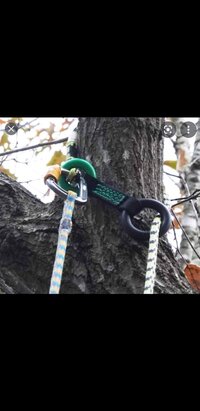
Doesn't the compression of the rope around the tree induce additional clamping force on the buried tail within the rope? And how much does that bend aid in reducing slippage of the bury? I thought that this was the crux of the discussion.
 
Doesn't the compression of the rope around the tree induce additional clamping force on the buried tail within the rope? And how much does that bend aid in reducing slippage of the bury? I thought that this was the crux of the discussion.
I think that it’s actually the opposite. The splice bury shouldn’t be bent. If a clamping force is applied it could limit the amount of friction further up in the bury, or disrupt the even ‘flow’ of intended friction of the splice.
Now in daily use does it matter? Probably not much. But I make my own slings and make the eyes long enough the bury section of the splice isn’t bent in a choking configuration.
A 10-12” eye is sufficient
 
I think that it’s actually the opposite. The splice bury shouldn’t be bent. If a clamping force is applied it could limit the amount of friction further up in the bury, or disrupt the even ‘flow’ of intended friction of the splice.
Now in daily use does it matter? Probably not much. But I make my own slings and make the eyes long enough the bury section of the splice isn’t bent in a choking configuration.
A 10-12” eye is sufficient
Very interesting. I do recall many sources advising not to bend the throat, regardless of how things actually get used. Do you make any ring slings? How would that work?
 
Very interesting. I do recall many sources advising not to bend the throat, regardless of how things actually get used. Do you make any ring slings? How would that work?
I’ve made a number of ring slings, all single ring dead eye. I don’t trip. But where and when I can I try my best not to load the bury section of line, nor cross load the throat.
Might be full of shit when it comes to compressing the bury, but would be interested to hear different
 
I’ve made a number of ring slings, all single ring dead eye. I don’t trip. But where and when I can I try my best not to load the bury section of line, nor cross load the throat.
Might be full of shit when it comes to compressing the bury, but would be interested to hear different
Precisely why we're sitting here having this discussion. I want some data. I want decent testing with data.
 
georgio fiori has some video‘s where he is breaktesting various configurations with 9mm tenex, it‘s on his youtube. i don‘t remember if he‘s testing different splice‘s or just knot‘s.
 
georgio fiori has some video‘s where he is breaktesting various configurations with 9mm tenex, it‘s on his youtube. i don‘t remember if he‘s testing different splice‘s or just knot‘s.
I was thinking that's what one would test these concepts with, so that the rest of the equipment isn't pushed too hard.
 
Don't cranes have built in load cells? Maybe someone with a big crane could pull a series of small slings to failure in their actual use configurations? Just set up a bigger rope with just enough slack to catch the hook.
 
This notion of not loading the throat, is that a holdover from double braid splices? Wondering if that applies equally to hollow braids/Tenex...
 
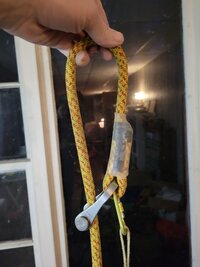
I climbed on a flint locker the other day. Had it set like in the picture. The entirety of the double braid splice on my line was bend over the TIP limb. When I was done, something just seemed off about that setup being loaded on on the bury so I decided next time I would just knot block the little ring in a section of the rope near the spliced eye, but outside of the bury section. While I don't think my body weight, and whatever load I could possibly apply to it would make it fail, this thread is at least giving some validity to my initial thoughts on the configuration. Loads applied while rigging are drastically larger than when climbing, but the concept is the same.
 

Attachments

  • 1.jpg
    1.jpg
    42.5 KB · Views: 12
First of all, how dare you post a picture showing me a simpler way to accomplish my task lol. I'll keep using the flint locker until I feel like I've justified my buying it. Probably put like 8 climbs on it before I never use it again haha.

Second of all, yes, stitched splices eliminate the odd loading of a bury.
Apologize, wasn't showing a better tie-in. This is my aerial rescue line setup that clips onto the retrieval side of my main line. Just wanted to compare the look of a sewn eye.
No, I love the soft 8, it's my go-to srt tie-in. I have 3 homemade ones and 1 from wesspur :cool:
 
First of all, how dare you post a picture showing me a simpler way to accomplish my task lol. I'll keep using the flint locker until I feel like I've justified my buying it. Probably put like 8 climbs on it before I never use it again haha.

Second of all, yes, stitched splices eliminate the odd loading of a bury.
But stitched eyes are bulky, and don't fit through the small rigging rings as easily. Still, I sew eyes in 32 strand for now too, as I haven't felt up to the challenge of splicing it yet
 
To the original question, part of what got me questioning the tail length on tenex locking brummel splices was the informal nature of the taper. With other stricter splices, the tail taper is very exacting. With tenex it's just kinda like "cut a few inches off the end on an angle". So it leaves a lot of room for interpretation, which makes me wonder how much load is making its way to the end of the tail bury.....
 
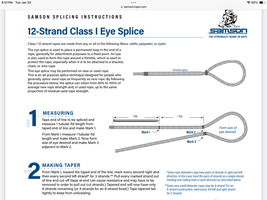
I've been splicing tenex slings the past couple days by the way, and using a full fid length as per Samson, as shown at the beginning of this thread...
 

New threads New posts

Kask Stihl NORTHEASTERN Arborists Wesspur TreeStuff.com Teufelberger Westminster X-Rigging Teufelberger
Back
Top Bottom