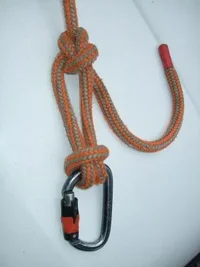
Bowline as an endline knot

[ QUOTE ]
Laz, that was an excellent post! The dogma of the newly formed expert can be quite damaging to the learning process. When someone tells me "this is the ONLY way something must be done" it definitely gets my attention. This is not an industry where absolutes can be used very often, if at all. There are so many variables in any given situation that just accept the fact that you need to keep learning as much as possible to have the tools that are required.

All knots were developed for some purpose. Properly tied and used they will fulfill that purpose.

I still think the Bowline is the King of Knots.

Dave

[/ QUOTE ]

I just read your bio Dave - to say you have a qualified opinion must be an understatement; I wish I could've worked with Ed Hobbs.

I hope you find the time to post more.

I reverted back to the Bowline for mountaineering. With a Yosemite Tie off. Three good reasons spring to mind.
 
[ QUOTE ]
[ QUOTE ]
I know of good reasons. They're good enough for me.

[/ QUOTE ]


Care to elaborate? Maybe good for other people too.

[/ QUOTE ]

I appreciate that Mahk, but isn't the quest for the holy grail all about enlightenment through the personal, perilous and perennial journey?
cool.gif


(something tells me you can bat off that quite nicely
grin.gif
).
 
Bermie said:
[ QUOTE ]
The Yosemite tieoff is an accident waiting to happen, too easy to reclip into the tucked tail instead of the loop.


[/ QUOTE ]

If the knot is tied right, it's not easy to clip into that tucked tail, it's very difficult. This is a weird thread.

A bowline is a good knot for many things, but it's inappropriate for use on a non-captive eye carabiner for the obvious issue of side loading.

There's really no better knot for this application than a scaffold knot.

It's not like the bowline is cheaper to tie or something, just use a scaffold.
 
I'm sorry, I'm ignorant. In the tree climber's companion the buntline hitch is considered a secure end-line knot even without hitches. I've used it for more than a year as a lifeline knot without incident or slippage. it's the knot that uses the least amount of rope to tie.... is there a link to why the buntline hitch is inappropriate for life-lines or/and does somebody have some comparisons of different endline knots? thanks, Island
 
[ QUOTE ]
I'm sorry, I'm ignorant. In the tree climber's companion the buntline hitch is considered a secure end-line knot even without hitches. I've used it for more than a year as a lifeline knot without incident or slippage. it's the knot that uses the least amount of rope to tie.... is there a link to why the buntline hitch is inappropriate for life-lines or/and does somebody have some comparisons of different endline knots? thanks, Island

[/ QUOTE ]

The buntline and bowline are two very different knots.

The Tree Climber's Companion has a pretty good section on endline knots, I believe the scaffold is in there?

jp
grin.gif
 
[ QUOTE ]


It's not like the bowline is cheaper to tie or something, just use a scaffold.

[/ QUOTE ]

That's my personal opinion as well. But not everyone is going to adopt your way so readily. There are legendary climbers who still use the tautline and wouldn't touch a VT for their life.

[ QUOTE ]


This is not an industry where absolutes can be used very often, if at all.


[/ QUOTE ]

If Gerry showed up at the workshop, I might have a hard time telling him he couldn't use the bowline
blush.gif


jp
grin.gif
 
[ QUOTE ]
Bermie said:
[ QUOTE ]
The Yosemite tieoff is an accident waiting to happen, too easy to reclip into the tucked tail instead of the loop.


[/ QUOTE ]

If the knot is tied right, it's not easy to clip into that tucked tail, it's very difficult. This is a weird thread.

A bowline is a good knot for many things, but it's inappropriate for use on a non-captive eye carabiner for the obvious issue of side loading.

There's really no better knot for this application than a scaffold knot.

It's not like the bowline is cheaper to tie or something, just use a scaffold.

[/ QUOTE ]

Ditto.

It's simple to untie a scaffold by slipping the biner out and pushing the turns out with your thumb, takes a couple of seconds.

The buntline is a great tie-in knot too.

The anchor is a little less reliable, it will loosen from cycling with stiffer rope.
 
[ QUOTE ]
[ QUOTE ]
but now I just tie Tommy D's choked bowline.

[/ QUOTE ]


What is that?

[/ QUOTE ]


129114-TommyDsChokedBowline.jpg
 

Attachments

  • 129114-TommyDsChokedBowline.webp
    129114-TommyDsChokedBowline.webp
    10.1 KB · Views: 45
I use a choked yosemite bowline to clip a biner and pulley into when setting up a single line to support a double rope system or sometimes for a rigging point.
 
Nice avatar Grover - quest for the Golden Fleece would be a similar principle.
grin.gif


My meaning was that, whilst I feel compelled to share my experience to help prevent others getting eaten by the Cyclops, the principle should be that the one on the quest has to seek advice and make choices based on their own reasoning. Then take the risk and accept the consequences. Our chances of survival are increased if we don't blindly trust to any advice, but heed warnings and maintain vigilence until what appears a better way becomes more apparant.

The internet is a great crystal ball, with as many risks as solutions. Sometimes for me it has the same effect as looking too long into a Palantir.

Standards should be used as guidance, to help avoid pitfalls at the start of the quest. But they always end up being used to control those who are well versed in slaying the Cyclops, usually by those who like the idea of being associated with Cyclops slaying, without ever actually daring to attempt such a task. Or did it once and are arrogant enough to assume that other challenges could be resolved the same way with the same tools and techniques.

Frodo had an Elves sword AND a mithril vest.

Fun allegories.
 
[ QUOTE ]
Standards should be used as guidance, to help avoid pitfalls at the start of the quest. But they always end up being used to control those who are well versed in slaying the Cyclops, usually by those who like the idea of being associated with Cyclops slaying, without ever actually daring to attempt such a task. Or did it once and are arrogant enough to assume that other challenges could be resolved the same way with the same tools and techniques.

[/ QUOTE ]

nice....
 
i think part of this depends on the line; some stiffer stuff can make a bowline (Sheetbend to self to form eye, that the hitch turns into a half) more dangerous than in types of lines that seat well. A Doubled Bowline or DBY (a personal favorite) can be more secure by the extra bite on the Bitters, and also that 2nd turn adding strength. The strength is by restabilizing the Standing that is destabilized more by just 1 turn around it. The 2nd turn gives more gradual change in bend and stretch in the Standing (that tends to weaken the system by weakening this specific area). A 3rd Turn gives more improvemeant, but it is more marginal change; and stiffens a longer part of the line, like a long splice; so leaves a larger area that shouldn't be bent by the application. But, in stiffer lines, even the 2nd tier/ ring can give extra leverage to invert the lacing into a slip knot (slip knot method is my favorite way to lace, especially a Double or Water Bowline; making the bowline like this makes it especially easy to see how it could invert). The Yosemite tieoff can give more security, and 'clean up' the eye to make it easier to work with; more like a temporary fixed/non shrinking eye in the end of your line. DBY maid by slip knot method a personal all around favorite; especially being able to assemble in 2 portions. i do like it in 'knotless rigging'; by placing a sling /krab set around load and just attaching to the eye of the DBY correctly. On a single, tightened lowering, that doesn't get 'rattled' we don't see the misalignmeant error that leverages the krab. That seems to come when it is allowed to shift and ridden all day, not single lowering kept tight, and not bouncing around etc.

A Bowline in a snap is different from than in a krab in a few ways. The eye is round and the equal and opposite pull is usually farther away. These 2 factors combine to make the snap more 'self righting' than a krab, so need less guarding to cross load, if not make it impossible to cross load. To come closer to matching, a krab would have to have a round (so there could be no hang up of the bowline) and be longer to have even more leverage to pull self straight multiplying each other. A Noose/Scaffold cinches down to capture. All ways remembe a krab is like an open hook with a well moused eye-it does have a weak side. The gate is not a solid leg pulled inline. The gate's strength depends on a thin pin pulled perpendiculararily, not inline. This is about nothing compared to the solid, large leg pulled inline; so is stronger and not leveraged 'weaker'. This is why a clevis or screwlink can have same tensile rating in a lower diameter; these devices have 2 dependable legs to a krab's 1. Of curse a clevis or screwlink that are wide across, need more diameter, for the width is the leveraged axis on a proper pull; so wider is more leveraged.

i like a triple Scaffold/Noose/ Anchor to self to form eye on a krab cuz i can slide it off the mount to free, and still have the lock in position on krab, 3 turn stabilization instead of the Double Bowline's 2, and is constructed for more dynamic absorption of forces than a Bowline IMLHO.
MyTreeLessons/Carabiner Bowlines Warning
 
[ QUOTE ]
Laz: I know of good reasons. They're good enough for me.
Mahk: Care to elaborate? Maybe good for other people too.
Laz: I appreciate that Mahk, but isn't the quest for the holy grail all about
enlightenment through the personal, perilous and perennial journey?
----------
Laz: My meaning was that, whilst I feel compelled to share my experience
to help prevent others getting eaten by the Cyclops, the principle should be
that the one on the quest has to seek advice and make choices based on
their own reasoning. Then take the risk and accept the consequences.
Our chances of survival are increased if we don't blindly trust to any advice, ...

[/ QUOTE ]
Sorry, I don't see the merit of imposing the risk of peril on others as any
valid heuristic here, as the peril could be great, even fatal!?
So far, all those questers for knowledge have from this is ad hominen
--one person's vote, and vague hints of some rationale: it's the specific
experience you say you have (but don't share) that must be what
others are to "seek and make choices based on" using their own reasoning.
We're left waiting & wondering (if not blindly following, or turning away).
(Frodo had a lot of luck, too--like not being first in line to greet the balrog!)

[ QUOTE ]
From ANSI Z133 2006
8.1.3 Climbing lines used in a split-tail system and split-tails shall be terminated with an eye splice or a knot that interfaces appropriately with the connecting link that it is attached to. The termination knot selected shall remain secure under normal loading and unloading. When using a carabiner without a captive eye, the knot or eye splice shall cinch in place to prevent the accidental opening and/or side-loading of the carabiner.

[/ QUOTE ]

"appropriately" is an inappropriately vacuous specification. The following
spec. about "cinch in place" is helpful. It would be good had the standard
acknowledged that the appropriateness of any particular knot could
depend upon qualities of the knotted material (to explain/anticipate these
This knot is best! v. No it's not! debates).

The Girth Hitching (aka "Larksheading" (misnomer'd "Larksfooting" in UK!))
of a loopknot's eye is sometimes helpful, though in imparts greater load on
the 'biner (by putting some load off of the main axis).

One might try this: with a thin cord (about 2-3mm, 40") tied in a closed loop
through (around one leg of ...) the loopknot's eye, seize the eye tight
to the ring/'biner, even putting some cord wraps on the 'biner to further
hold the eye in place. But this defeats the quickness-of-tying that is cited by
Grover re the Bowline. (Though this seizing really isn't all THAT slow, either
--several tight wraps, then a tie-off.)

[ QUOTE ]
IMHO [the Bwl] the best knot to use for and endline termination attachment. Once tied,
dressed and set the Bowline is a far superior knot to the pathetic buntline, woeful
anchor hitch and convoluted scaffold. The Buntline and anchor hitches are extremely
dangerous hitches to be using as end-line knots despite their cinching/choking abilities.
[How so, we must ask?! --and you say ...]
There is just too much room for error with these hitches, especially when you are multiple
tying and untying during a climb to prevent the rope getting caught in tight crotches.
Although a great hitch - the scaffold takes too long to undo once it's been loaded with
the climber's weight unlike the easliy breakable and all round friendly bowline.

[/ QUOTE ]
Hmmm, the explanation for asserting the woeful, dangerousness of the hitches
rings dull. If one cannot get the Buntline H. right, stay away from ropes!
(There are many simple hitches that can work, here. Ashley is by no means
comprehensive--surprisingly so, at times!)

[ QUOTE ]
IMHO The yosemite is a classic example of people trying to be too clever for their
own good. The yosemite actually turns the perfectly simple and safe bowline into a monster.
[In what way?!]
People have been known to accidently tie into an accidently loosened tie off bight mid
climb only to find themselves freefallin through the tree moments later. The yosemite
tie-off on the bowline should be put on the list of banned knots in arboriculture along
with the buntline and anchor hitch. Why people should continue to berate and denounce
the bowline is beyond me. You guys just dont know a good thing when you've got it.

[/ QUOTE ]
Tie into the what??! I'm no fan of the YoBowl, but I don't fault it for that.
I find it too hard to dress in firm rope, and not especially well suited to giving better
security or strength, IMHO. (But one can tie it in the bight (no ends).)

The bowline loosens all too easily, in many cordages. The relatively soft,
flexible (and increasingly w/ageing/usage, frictive) arboRopes might be
less vulnerable to this; but haven't I seen KM III cited for use, here? The bit
of that (3/8") that I have is damnably slick-firm-stiff, and a Bowline has NO
chance of holding, in it!
And, FYI, Grover et al., in the 12-strand (unsheathed/pure) HMPE (Spectra/Dymeema)
rope put to use (or argued for wire-rope substitute) in forestry, the Bowline doesn't
hold in steady tension above ?-25% tensile, even. (Stoppered, it breaks in that
stuff around 33%.)
A simple further tucking of the Bowline (or Dbl.Bwl) got by making the same sort
of "around the tree & back through the hole" with the end going around the
side of the eye coming from the knot's main loop (i.e., the hole), not only
gives additional security, points the end away from the eye, but also puts a third
diameter in the hole to be compressed around by the mainline, which might raise
strength.

*kN*

 
KN

The concept that because I know something that works for my own quest, I am ethically bound to to tell all whom ask, is not valid:

1. It assumes that what I know is the correct way and will lead to no risk, when in reality, I can only vouch for what i have discovered in my own quest, and my readiness to accept the consequences for my own risk taking.

2. The practical implications and costs involved of ensuring the message is understood through this medium. Treebuzz is a great educational tool, but too many use it as a substitute for proper training.

3. The concept of an apprenticeship, is that someone signs themselves under another's care, usually via payment through reduction in earnings, or payment of an agreed fee. All in exchange for knowledge. This implies responsibility upon the master to ensure his apprentice's safety, whilst he gains experience in timely stages. If someone wants to undertake their own quest without training, that is their responsibility.

4. Am I to sit on TB and spend my life answering questions for free? Nice idea, but who is going to feed my wife and family? How can I profit?

5. If there is no fee, there is no accountability, and therefore questionable credibility.

Despite that, i think I do more than most to see people on their quest OK. In this case it was a discussion of semantics rather than life/death decisions.

Spoon feeding too long doesn't make for a robust independent individual, thinking on his/her feet. That can be very dangerous on a perilous, perennial quest.

I prefer to allude to better ways as I have found them, and let an enquiring mind pick up the trail, helping where I can find the time (which actually costs me money).
cool.gif
 

New threads New posts

Back
Top Bottom