Greetings Josh T, welcome to the Buzz!
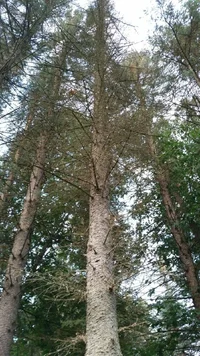
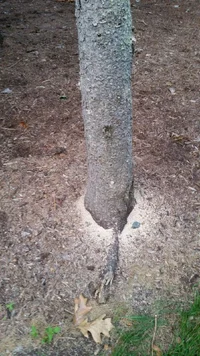
Given the heavy deposit of sawdust and the host genus, I'd start with the pine ambrosia beetle. Are you sure those are pines? The bark looks a bit spruce-y to me. No matter. That group of beetles makes many very small holes. The precise species of beetle is beyond my skill, even if I had one in front of me. They usually go for declining trees that are stressed by other causes.
Now, are you in Chelsea, MI? MSU Extension is pretty good with guides and free information. To my knowledge, there is not a good chemical control strategy to employ. I'd recommend you get an on-the-ground assessment by a certified arborist. A good consulting forester could probably help with this as well.
As an aside which is not so very useful, the ambrosia beetles do not gain nutrition from the wood directly. Rather, they cultivate fungi that line those small and sometimes deep radial tunnels and then the larvae and perhaps adults browse the fungal growth. Interestingly, the fungi involved are phylogenetically diverse. That is, they are pretty unrelated to each except for their relationship with the beetles who provide them nice cozy quarters and perhaps some essential elements. So it is a mutualistic, symbiotic relationship.
Not much help, I'm afraid.




 Apr 09 (Free CEUs) & May 07 - 'Urban Forestry Today' Webcasts @ Noon (Eastern)
