A friend in need.

Re: that telltale click

</font><blockquote><font class="small">In reply to:</font><hr />
The only think I can't get out of my mind is the click I heard

[/ QUOTE ]

This is starting to sound like the trumpet I've been blowing lately. I just got an article accepted for publication in Advanced Rescue Technology (June/July issue) called "Is Fail-Safe Really Safe" in which I argue that an over-reliance on new "fool-proof" self-actuating equipment is just asking for trouble.

Sounds like that LockJack is a clever device, not unlike the globaly-popular Petzl I'D, but is it wise to bet your life on a piece of gear with internal moving parts that can't be inspected during use?

It might work flawlessly a thousand times and then get some grit or sap into it and...

I'm a gearhound, but I also subscribe to KISS - keep it simple and safe.

- Robert
 
Robert,

I read one warning article about the I'd on a rope access page. They found that some part had broken on the inside which lead to a fall but not death if I remember right.

Do you have links to any other info on the I'd?

Tom
 
Re: that telltale click

</font><blockquote><font class="small">In reply to:</font><hr />
is it wise to bet your life on a piece of gear with internal moving parts

[/ QUOTE ]

I wouldn't trust my life to anything mechanical when it comes to climbing.
I always have a hitch to back it up.
 
Re: that telltale click

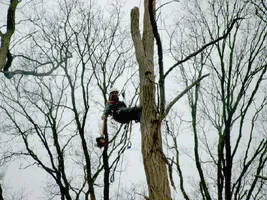
Robert, this has nothing to do with gear failure. My entire set-up as seen in pics. of the LJ sys. remained together, intact and still funtional. My climbing line was off the triple auto-lock 'biner. I tried to release the gate with rope at different angles using same set-up. I got it to push the twist lock down. That's about it. I also had some slack in sys. due to closeness of trunks and length of choker. So, the possibility of the rope at LEAST to come in contact with the twist gate is there. Which the fist motion is down,twist,push then open. Some are up first as you may already know, if your interested. If anything, "Is Fail Safe Really Safe" would pertain to the 'biner. But, I do agree with the trust in mechanical apps. your talking about. That would also include 'biners as well, hell even the older metal snaps. You can beat them to death and probably not break, but still accidents on them as well. I wouldn't give up my 'biners or other mechanicals. Just use wisely. Seems like lately, maybe past 5 years, basics are some webbing chokers and a 'biner with a pulley. My basics were a knuckle busting "sissy strap" and a basic 4d-ring saddle and a couple of ropes.
Later
 
</font><blockquote><font class="small">In reply to:</font><hr />
Do you have links to any other info on the I'd?

[/ QUOTE ]

I've seen no reports of failures, but I'm not surprised that it's occured. The I'D is commonly used for rope access work both here and in Europe.

If you come across that reference, I'd like to know.

- Robert
 
SawDust,
Do you have a spliced eye on your climbing rope?

Did the spliced eye move around to the barrel of the biner with no weight on the system and twist and pull it when you sat back?

I know you have no way of knowing.

Just a guess.

thanks,

Dan
Atlanta
 
Re: that telltale click

</font><blockquote><font class="small">In reply to:</font><hr />
this has nothing to do with gear failure. My entire set-up as seen in pics. of the LJ sys. remained together, intact and still funtional. My climbing line was off the triple auto-lock 'biner

[/ QUOTE ]

Sawdust,

Are you saying that the choker and triple-lock was still at the top of the spar but your climbing rope was no longer clipped to it? So, somehow, the rope came unclipped from the TIP 'biner?

Then that was the "click" you heard as the biner gate snapped shut again?

- Robert
 
Re: that telltale click

Dan,

I think Rob's pictures reenact the chain of events as he recalls. Thus his climb line and all attached gear were still in a loop. Same goes for the aerial choked sling. Thus, the climb line was not correctly installed in the biner, or the biner gate opened...which is virtually unheard of with a triple locker. I'm guessing that the rope was caught in the gate, and popped out when Rob weighted it,thus the "click" he heard.
 
Tom,

Where did you read that article concerning the I'd?

During ascent and positioning my backup is the cammed Petzl ascender which I leave clipped in. When using the 338 chainsaw or handsaw I use a flipline as well (yes, I've learned the hard way). When rapelling I use the I'd only.

Dick
 

Attachments

  • 9686-SIMG1417small.webp
    9686-SIMG1417small.webp
    111.2 KB · Views: 57
Re: that telltale click

That was how I interpreted it too. It seems as though the rope was never really set all the way or the biner failed. Does that sound possible Rob?

The first time I learned to tie into a biner, I was taught to always use two in opposing directions. I guess that this would be why. It always seemed like it wasn't neccesary, until now. Even though I never felt threatened by using one, I've always used two. This kind of event makes you want to follow every safety standard and concept available.
 
Re: that telltale click

I have never tied in with caribiners before during tree work. When rock climbing I was always taught 2 caribiners opposite and opposing.
 
Re: that telltale click

I've had a couple people mention the 2 scenarios Roger has been pointing out. One, that the rope was not clipped all the way past gate. Two, 'biner opened up. As I described in my last post, the possibility was there for the gate to open. When someone mentions those 2 possibilities to me, they both seem equally hard to swallow, in my mind.
Sure you would like to think that the 'biner just can't open up with the triple-auto. I feel the same about not clipping the rope all the way in. Although the probability of human error is greater, I just can't imagine me not clipping in. I remember opening the gate and slapping the loop in there. I can't give you 110% positive picture that the rope was laying at the bottom of the 'biner, but a 99.9% picture that the loop went in there. Maybe the gate didn't close all the way? Either way I should have stuck with my normal gear check routine while re-positioning and such. All I can do from here on is GUESS what happened. Those seem to be the only 2 possibilities and neither makes sense.
Looks like the 2 'biner plan needs to be in the routine now. I'm sure most of us have an extra 'biner lying around somewhere....
I still would like to know what Rescueman thinks of the triple-auto "theory". Didn't you mention about "IS FAIL SAFE REALLY SAFE".
Thanks, everyone for their inputs about this and reading these long posts. Still eating my humble pie here thinking of other better ways to improve all the systems I use. Feedback still welcome, keep it coming.
Later
 
Re: that telltale click

IN rock climbing its SOP to use two opposite/opposing biners for top roping. Since it's less common to have auto locks but lots of plain biners this is the way it's done. The added safety can't be argued either.

Think of all the places that we use single biners in our life support system though. If we start to use two lockers at a FC or main TIP, then it almost makes sense to follow the cascade and use doubles on the end of the rope that attaches to our harness. This adds more unnecessary complexity like Robert addresses.

This close call is a good one for everyone to learn from. Check system components carefully and consciously. When I set up a climbing system I check it from the anchor point to my attachment point. Each component gets a tick. When I change over from one system to another, the second gets load tested before the first is detached. That goes right down to setting a lanyard, slacking off the climbing line, working on the lanyard and then going back to the climbing line. Before I take off the lanyard, the climbing line gets checked and loaded. This adds redundancies and check points in my systems.
 
Re: that telltale click

</font><blockquote><font class="small">In reply to:</font><hr />
I still would like to know what Rescueman thinks of the triple-auto "theory"

[/ QUOTE ]

A few of you mentioned the opposite and opposing rule for rock climbing. In top-rope climbing (kind of like what you guys do) in which a single top anchor is relied on, double opposed 'biners were the rule if they were NON-locking. When screw-gate 'biners became more common, some continued to use two at the anchor out of habit or to keep a larger radius in the rope at that turn because climbers were going to take somewhat dynamic falls on it. But it's not considered necessary for safety to use doubled 'biners as long as the gate locks are checked.

For lead climbing, in which lots of gear and intermediate anchors are set along the route, single non-lockers are the rule except at belay stations. But precautions need to be taken to ensure that 'biner gates won't get accidentally opened by the moving rope or the rock face.

When single-action autolockers (twist action) came out, some climbers distrusted them - and they have been known to get twisted open by moving rope or by being rubbed against another surface.

Thus, for rope access and fall protection, the regulatory bodies required double-acting (type 4) autolockers, with two distinct motions to unlock and another to open the gate. These are about as safe as can be, but they're not "fool-proof" and, as many of you know, they can create other handling problems such as difficulty of use when wearing gloves.

The potential problem with type 4 autolockers, though, is the same I see in so much modern "high-tech" gear - that we become more complacent as we rely on the engineered-in safety.

Even (or especially) a double-acting autolocker can get contamination in the mechanism and fail to completely close and lock, but we might get used to just assuming that once we let go of the gate it takes care of itself.

Tom's point is the pertinent one. ALWAYS double check every piece of gear and every element of your system before you hang your life on it. And, if you can easily use a backup, do it.

In rescue, for instance, we look for any "critical point" of a system - any element that can cause catastrophe if it fails - and that gets a back-up. Even a rescue-rated pulley, if it's the only thing that keeps a rope up in the air, gets a separate sling and steel carabiner clipped in to the rope below it in case the pulley axle/bearings give out.

So, I guess my rule is go light where you can and go safe where you must, but always give a "hands and eyes" check of every piece of gear.

- Robert
 
Re: that telltale click

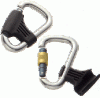
i personally climb with the dmm belay master biners, i trust them more than any other biner, also the clip tends to keep everything where it should be. Don't seem to hear you guys discuss them though, anyone else using them?
 
Re: that telltale click

bullman - if the DMM Belay masters model is the compact (smaller than a Petzl williams) pear shaped biner then I climb on that biner. I also use that biner on my gri-gri that I use on my lanyard. The biner has great triple locking action and a nice textured gate.

I agree with Tom in that if I am on a spar and getting ready to come out of a tree on a false crotch choker system. I always weight the lifeline while I am still lanyarded into the tree.

Here is another question sometimes I come out of the tree on the pull-line on a gri-gri, 8,or munter hitch has anyone ever heard of anyone suffering an accident in this situation, such as the pull line popping of the top of the spar?
 
Re: that telltale click

no its not triple locking, its a screwgate with protective cover, i'll add a link
 

Attachments

  • 9773-dmbelaymas.gif
    9773-dmbelaymas.gif
    11.8 KB · Views: 59

New threads New posts

Back
Top Bottom