












Ha, I was just about to post that video as well. Cool to see him working with some arborists and that he is going to make some content in that direction.
Navigation
Install the app
How to install the app on iOS
Follow along with the video below to see how to install our site as a web app on your home screen.
Note: This feature may not be available in some browsers.
More options
You are using an out of date browser. It may not display this or other websites correctly.
You should upgrade or use an alternative browser.
You should upgrade or use an alternative browser.
jamming knots
- Thread starter J.Tree
- Start date
Makes me feel better about how old my rope bridge was, I just recently changed it but it was way past the recommended life span but still in good condition.

Richard Mumford-yoyoman
Been here a while
- Location
- Atlanta GA
"AGAINST" I'll try but stopper knots are truly very useful.what are all, if any, arguments y'all can think of AGAINST the use of using jamming knots in any life support system? I've heard people say they don't or won't use them but never heard any good reasons why.
- Don't use them if you need more than 50% or the rope strength. (Could be said for any knot)
- Don't use them if you can't tie them. ( For example, Double Overhand, Stevedor, or Ashley stopper knots for termination or Alpine Butterfly for midline) Make sure the knot is tied, dressed, set and verified. If it is not properly set and left unloaded, it is more likely to roll out prior to use.
- Don't use them if you will exceed the SWL of the rope, they will be difficult to release. (but then, just don't exceed the SWL anyway)
- Don't use them if the object they are against is not sized or shaped correctly, has sharp edges or could fail by being pried apart by the knot. (Example, pulley without a becket to keep the cheeks from spreading, using a quick link that does not support the knot 360°, or an opening that is more than 20% or so of the rope diameter,
Sorry you didn't ask "FOR" the use of a stopper knot but I'll add a couple anyway.
- Ease of use, I use stopper knots on the a HH dogbone as they are easier to tie than a termination knot and don't get in the way or half the bulk of a tied termination. Also a sewn or spliced termination is not needed making it easy to adjust the length to re-align wear spots.
- I use an Ashley stopper knot on the small ring when using a Ring and Ring Friction Saver. It is a large knot to match the size of the small ring and is very secure when unloaded or loaded.
- The rope strength for the ropes I use, both climbing, friction hitch and bridge, are all much more than the estimated 50% I will ever need out of them after tying a knot in them. We seem to focus on knot strength when IMO it is the least important attribute.
For some reason I wanted to block a knot against the bigger ring of the friction saver. In order to give it a try I made a big washer from a 8.4 mm thick cutting board, which my GF allowed me to destroy...
This really works well as the plastic they use for making these cutting boards is surprisingly stiff. Obviously an aluminum version could also be easily made.
The external diameter is 72 mm and the internal one is 15mm. The oblong hole is just big enough for a sewn eye.
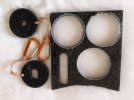
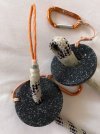
No need to say that it also helps for securing the knot against the small ring.. OK, I said it
This really works well as the plastic they use for making these cutting boards is surprisingly stiff. Obviously an aluminum version could also be easily made.
The external diameter is 72 mm and the internal one is 15mm. The oblong hole is just big enough for a sewn eye.
No need to say that it also helps for securing the knot against the small ring.. OK, I said it
Last edited:

- Location
- Retired in Minneapolis
I'd be inclined to use the Delrin like you did instead of aluminum.

evo
Been here much more than a while
- Location
- My Island, WA
Not posting this because of any particular thing, but in a srt config, you loose the x2 of the basket. So your 7,600 is about 3,900. I know they changed their mbs for arbormaster rope but it use to be close to 8,000kJust came across another bridge and stopper knot video, this one from Monkey Beaver. Go to about 3 minutes, they pull the bridge on their saddle to 7,667 pounds, about the weight of an F350 dually truck, before it fails.
So 50% of the breaking strength of the line in a straight pull?
Richard Mumford-yoyoman
Been here a while
- Location
- Atlanta GA
Agree and not picking on the tests as I'm not sure we are testing stopper knots or bridge configurations.Not posting this because of any particular thing, but in a srt config, you loose the x2 of the basket. So your 7,600 is about 3,900. I know they changed their mbs for arbormaster rope but it use to be close to 8,000k
So 50% of the breaking strength of the line in a straight pull?
A bridge also has an angle vector force, side Ds or lower Ds may be at a 90 degree, putting 1.41 tension on the bridge at 50% for each side.
I guess my point is, make the test a fair representation of what is being tested.
evo
Been here much more than a while
- Location
- My Island, WA
I know this isn't the right thread, but here is a canyoneering knot block backup. I think I like this more than a alpine with a carabiner backup.
Skip to 30:30
Skip to 30:30

NE tech cord, 6 mm rated to +5000#good questions.. under high loads the knot tail can slip though.. This is likely why on the newer TM bridges the tails are stitched pinning cover and core. do I think a bridge would ever see that kind of loads? Nahh...
Also I can't recall the name of that micro line, but they specific It must be tied with a triple fishermans over a double.
I think @Richard Mumford-yoyoman has video showing this. Also I’ve seen mid line knots pulled so damn tight they weren’t much bigger than the relaxed diameter for the line
View attachment 81705
evo
Been here much more than a while
- Location
- My Island, WA
I would NOT use a hdpe cutting board for this. Maybe a small rigging plateFor some reason I wanted to block a knot against the bigger ring of the friction saver. In order to give it a try I made a big washer from a 8.4 mm thick cutting board, which my GF allowed me to destroy...
This really works well as the plastic they use for making these cutting boards is surprisingly stiff. Obviously an aluminum version could also be easily made.
The external diameter is 72 mm and the internal one is 15mm. The oblong hole is just big enough for a sewn eye.
View attachment 81731View attachment 81732
No need to say that it also helps for securing the knot against the small ring.. OK, I said it

southsoundtree
Been here much more than a while
- Location
- Olympia, WA
Why is a jamming knot not working without a piece of cutting board?
- Location
- Western PA
OP said he had to jam against the big ring of a friction saverWhy is a jamming knot not working without a piece of cutting board?

southsoundtree
Been here much more than a while
- Location
- Olympia, WA
Thanks.OP said he had to jam against the big ring of a friction saver
How big a ring are we talking. I've got a lot of rope, like 200'. I imagine I could manage a big enough knot/ carabiner "spike".
I made the test on a 46 mm ID aluminum ring , a 50 mm ID steel ring as well as on a Delta 10mm quick link. It worked for me and at no point was I worried that the plastic ring might get destroyed. I could not find any trace of cracks or even slight embossment on the high density plastic ring I made.Thanks.
How big a ring are we talking. I've got a lot of rope, like 200'. I imagine I could manage a big enough knot/ carabiner "spike".
Obviously some knots bigger than the classic Alpine Butterfly would also work. Just a bit big for a proper retrieval in some configurations.
I still believe that my option is safe... Remember that we are talking about pulling a knot through a 15 mm hole made in a 8.4 mm thick HDPE material in contact with a ring of 46 to 50 mm ID. I would be very interested in knowing how much force would be necessary to destroy the plastic so an AB knot could go through the ring.
Unluckily I do not have a fixture to make stress tests. Actually may be a 1 or 2 tons press would be good enough for this kind of destructive test.. But again, I don't have one either
 .
.As a reminder, this test was not for rigging but only for climbing, which might make a difference in terms of stress.
Last edited:

Tony
Carpal tunnel level member
- Location
- Lancaster, PA
I totally agree with this. I would go further to say when using jamming knot for life support thimbles are much preferable. I won’t use rings for this application.If it doesn't jam without The plastic scrap it doesn't jam well enough to use IMO
Tony
dmonn
Branched out member
- Location
- Port Washington Wisconsin
I'm no expert, but why would you prefer a thimble over a ring?I totally agree with this. I would go further to say when using jamming knot for life support thimbles are much preferable. I won’t use rings for this application.
dmonn
Branched out member
- Location
- Port Washington Wisconsin
I've got a sailboat application for this thread. I want to use a stopper knot (jam knot) for a single strand of 5 mm Amsteel. Two questions:
1. Does a stopper knot weaken the line?
2. What's the best stopper knot to use for amsteel? Burying the tail may not be an option due to the size of the hole.
TIA
Don
1. Does a stopper knot weaken the line?
2. What's the best stopper knot to use for amsteel? Burying the tail may not be an option due to the size of the hole.
TIA
Don












New threads New posts
-
test
-
 Free CEUs: February 05 & March 05 - 'Urban Forestry Today' Webcasts @ Noon (Eastern)
- Started by UFT
- Replies: 0
-

-

-
-
-








