Rope milking & adding splices to smaller diameter lines

Jackohh1412

New member
Location
Bay Area
Hello all,

can someone explain rope milking? And why it’s not advisable to have a line with two splices other then 1/2” lines? I’m curious cause I’d like a smaller diameter line but would really want to keep two splices it’s sweet for line setting doesn’t matter which side I get over a Union on for me. Thank you wise people
 
Milking is movement of the outer cover along the core of a double-braid rope. The outer cover will sometimes move in the direction of the applied load. If the rope has two eye splices, the cover might bunch up toward the end that's not secured.

Kernmantle rope doesn't have a braided core, and milking isn't usually a problem. It can be spliced at both ends, so maybe the 1/2" rope you mentioned is kernmantle type. Both types come in lots of sizes.

Some mechanical devices used in climbing cannot be used with a rope that has splices on both ends, so that might determine which type rope you use and the number of splices. Devices that are designated as "mid-line attachable" will work on ropes with two splices.

I don't use a rope with a splice because I like to swap my rope end-for-end occasionally to even out wear and I use a Petzl Zigzag which isn't mid-line attachable.
 
Last edited:
I think the 1/2” line you’re talking about means 16 strand arborist lines. Technically a double braid I guess since it is a braided cover over a braided core, but the cover holds much more of the load than the core.
 
Those of a certain age will remember when the first 16 strand half inch ropes were designed. The rope makers were working on setting tensions inthe bobbins of the core and sheath.
It wasn’t unusual for six or more feet of sheath to milk off a 120’ rope.

It took a few runs to get the machines adjusted. Now it’s rare to have any milking.

the rope makers spent a lot of time explaining that the ropes weren’t unsafe or compromised. A benefit of this is that the mystery of rope weaving was explained and understood.
 
Those of a certain age will remember when the first 16 strand half inch ropes were designed. The rope makers were working on setting tensions inthe bobbins of the core and sheath.
It wasn’t unusual for six or more feet of sheath to milk off a 120’ rope.

It took a few runs to get the machines adjusted. Now it’s rare to have any milking.

the rope makers spent a lot of time explaining that the ropes weren’t unsafe or compromised. A benefit of this is that the mystery of rope weaving was explained and understood.
Isn't it just grand to be "of a certain age" ?
 
Isn't it just grand to be "of a certain age" ?
Sometimes it is!

I became a ‘certain age’ when I read a forum post that was written with sincerity expressing a concern about using a climbing line that had ‘only’ a breaking strength of 6k#. The guy was totally clueless about three strand natural fiber ropes at around 2,700#. Lol
 
Hello all,

can someone explain rope milking? And why it’s not advisable to have a line with two splices other then 1/2” lines? I’m curious cause I’d like a smaller diameter line but would really want to keep two splices it’s sweet for line setting doesn’t matter which side I get over a Union on for me. Thank you wise people
The reason for the milking has to do with the way the rope is made, then how it is used. The jacket is woven around the cover, essentially two separate ropes woven independently. Once used / loaded, all things equalize, mean things are stretched and now the core and jacket are balanced. Because the jacket is woven around the core, is isn't EXACTLY the same length of the core, so you see this excess material as you use it. As you milk that excess material down to one side, let's say your un-spliced side, it all comes.off the end and now you have just rope cover with no core. You're now making the rope what it is meant to be / how it's meant to feel.
 
If I were going to run two splices, I would stretch the rope out full length and really tug on it. Maybe with a 3:1 or some sort of MA. This would help balance the core and cover before use. My guess is you would still jave some bunching of cover whole using, but if you reverse sides of the rope used often, and use the full length of the rope often, I wouldn't say it's a terrible idea. I person just won't do it
 
In the case of a double braid rope, I wonder if milking the cover, making it stretch, doesn’t make it weaker. If the rope is designed to come directly off the spool, and given its break strength, then the stretched cover would break sooner than the core, instead of them working together.
 
Milking was explained to me by an engineer from one of the big rope makers. He said it wasn’t effected as much my the bungee like stretching of the fibers as a straightening of the fibers

the inner and outer parts of rope are woven into bundles. Inner tends to be more parallel, outer is in more of a diagonal weave

a bit of Pythagorean math is useful. Compare the length of the angled hypotenuse of a triangle To the straight, longer, leg. Each weave of the rope fiber has a teenie bit ‘extra’

as rope is used and run over a bollard or pulley those fibers are pushed into a more end to end alignment making the longer hypotonus longer which shows up as milking

over the years the weaving process has gotten better. Some ropes are so stable they don’t milk a bit so they can have eyes on both ends

I kept a rescue eight around in case I wanted to milk a new rope. That wasn’t fun...running
 
Just a straight pull has less effect. On strength or milking issues. You’ll get more milking by bending the rope around a bollard and have it change directions...180*...then just pulling. The bending rolls the inner and outer rope parts and helps align the fibers. Like brushing hair
 
I have all my double braid rigging lines spliced at both ends. I have only ever had issues with Samson products milking a lot. I have had no issues with Yale rigging lines in years of using their lines spliced at both ends.

I also double splice my yale 11.7 climb lines, except for the hank that I use a SJ3 on for crane. The single splice line usually milks a couple inches near the end of its service life. Curiously, the double spliced lines do not. Could be because I regularly use both ends on the double spliced lines.

 
I also double splice my yale 11.7 climb lines, except for the hank that I use a SJ3 on for crane. The single splice line usually milks a couple inches near the end of its service life.
Thats interesting that, that is all the milking you get out of a yale 11.7. I have a fairly new short piece of blue moon, about 90' long, that was creeping in my roperunner in a few spots. I washed it and milked about a foot and a half off of it.
 
Thats interesting that, that is all the milking you get out of a yale 11.7. I have a fairly new short piece of blue moon, about 90' long, that was creeping in my roperunner in a few spots. I washed it and milked about a foot and a half off of it.
Maybe it’s the production batch, or the RR, which I have never used? I threw out a tote full of old 11.7 120’ single splice lines this winter, all of which were either minimally milked or not milked at all. Maybe I just don’t wear my lines as much as some? I religiously de-service lines after 5-8 months, depending on use.
 
Maybe it’s the production batch, or the RR, which I have never used? I threw out a tote full of old 11.7 120’ single splice lines this winter, all of which were either minimally milked or not milked at all. Maybe I just don’t wear my lines as much as some? I religiously de-service lines after 5-8 months, depending on use.
Threw out?? or re-purposed
 
I repurpose some line, but when you replace 3 lines almost twice a year, it’s easy to build a hoard. I needed the room in my workshop! They smell bad, and weren’t sparking joy...
 
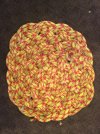
About 90 feet of All Gear Rocket Line. It was an old retired rope that I washed to bring the color back. I thought it made for a too thick/too small rug, so I took it apart. Maybe I’ll use it for rope swings or something else non life support.
 

Attachments

  • 77CE263B-9D18-4707-9E45-509AE1721024.jpeg
    77CE263B-9D18-4707-9E45-509AE1721024.jpeg
    748.8 KB · Views: 19

New threads New posts

Kask Stihl NORTHEASTERN Arborists Wesspur TreeStuff.com Teufelberger Westminster X-Rigging Teufelberger
Back
Top Bottom