









notch jet step

This can also be made into a good knee ascender by adding a bungee and strap. I am trying to understand why saka or any other knee ascender cost so much more than the actual ascender.(They don't make the ascenders) They are just bungee cord and a strap.

But the strap arrangement for the notch foot ascender require specific footwear or modification. You can use a knee ascender barefoot.

A knee ascender is easier to make than a foot ascender because it is more natural to stand in a loop than on the side of your foot. A loop foot ascenders might work.

Lot of room for innovations here. Could also be used as a chest roller/ascender. Since rope walking without hands is the least strenuous way to ascend a rope.
 
This can also be made into a good knee ascender by adding a bungee and strap. I am trying to understand why saka or any other knee ascender cost so much more than the actual ascender.(They don't make the ascenders) They are just bungee cord and a strap.

But the strap arrangement for the notch foot ascender require specific footwear or modification. You can use a knee ascender barefoot.

A knee ascender is easier to make than a foot ascender because it is more natural to stand in a loop than on the side of your foot. A loop foot ascenders might work.

Lot of room for innovations here. Could also be used as a chest roller/ascender. Since rope walking without hands is the least strenuous way to ascend a rope.
I like the concept for a foot looped ascender, but the extra bungee is a bit much if used in combination with a knee ascender's bungee. We've have had other discussions about the virtues of barefoot climbing, or climbing without more traditional boots needed to comfortably secure foot ascender straps. In fact, the Saka-mini's strap can be adjusted higher or lower and used for a knee and/or a foot ascender.

Besides the CMI double chest roller, which is out of stock practically everywhere, I'm surprised there aren't other comparable and available chest rollers for that specific purpose (rope walking without hands). Glad to see people still finding reasons to use chest rollers for maximum efficiency in their climbing systems.
 
Last edited:
I like the concept for a foot looped ascender, but the extra bungee is a bit much if used in combination with a knee ascender's bungee. We've have had other discussions about the virtues of barefoot climbing, or climbing without more traditional boots needed to comfortably secure foot ascender straps. In fact, the Saka-mini's strap can be adjusted higher or lower and used for a knee and/or a foot ascender.

Besides the CMI double chest roller, which is out of stock practically everywhere, I'm surprised there aren't other comparable and available chest rollers for that specific purpose (rope walking without hands). Glad to see people still finding reasons to use chest rollers for maximum efficiency in their climbing systems.
I like the concept for a foot looped ascender, but the extra bungee is a bit much if used in combination with a knee ascender's bungee. We've have had other discussions about the virtues of barefoot climbing, or climbing without more traditional boots needed to comfortably secure foot ascender straps. In fact, the Saka-mini's strap can be adjusted higher or lower and used for a knee and/or a foot ascender.

Besides the CMI double chest roller, which is out of stock practically everywhere, I'm surprised there aren't other comparable and available chest rollers for that specific purpose (rope walking without hands). Glad to see people still finding reasons to use chest rollers for maximum efficiency in their climbing systems.
Interesting, I never tried the saka as a foot ascender. Seems the cave people figure a lot of things out first. At least rope walking and chest rollers. Of course they have no choice, if they can't ascend or get tired they could easily die. Tree climbers are just out of a job.

I wonder if the rope runner or zigzag are ever used by cavers or high-rise window washers. Would they be safe descents and position to wash windows.

Sorry to veer off topic a little, but I am sure cavers would prefer the notch foot ascender also. I don't know about window cleaners. They are always descending.
 
Interesting, I never tried the saka as a foot ascender. Seems the cave people figure a lot of things out first. At least rope walking and chest rollers. Of course they have no choice, if they can't ascend or get tired they could easily die. Tree climbers are just out of a job.

I wonder if the rope runner or zigzag are ever used by cavers or high-rise window washers. Would they be safe descents and position to wash windows.

Sorry to veer off topic a little, but I am sure cavers would prefer the notch foot ascender also. I don't know about window cleaners. They are always descending.
Depending on the length and type of a cave, a tree climbing harness can be more beneficial than a rock climbing one. in certain instances. Tree climbing harnesses are better designed to keep the blood flowing through the legs when suspended for long periods.

If positioning is part of the descent or cave experience, than having the ability to move up or down the climbing line with a multicender is helpful. Not having to perform potentially dangerous gear transitions from a chest ascender like a croll, to a descending device is another good reason to use a rope runner or a zig zag, for sure, but for safety reasons, descenders like the Petzl ID or Rig are usually pretty standard for at-height occupations, including window washers who only need either safely lock off or descend.
 
Anyone ever used a rope runner or zigzag to repel off 1000 foot building?

I know they usually use racks or peztl rig in practice, but why? Are racks safer than the rope runner and zigzag?
 
Anyone ever used a rope runner or zigzag to repel off 1000 foot building?

I know they usually use racks or peztl rig in practice, but why? Are racks safer than the rope runner and zigzag?
I'd rather burn through a Rig or a Rack than waste a zig-zag or a runner on a 1000' rappel. Friction and heat build up are based on the actual physics, despite how smoothly any device might run on any given rope. Most static climbing ropes don't exceed 600'.
 
Anyone ever used a rope runner or zigzag to repel off 1000 foot building?

I know they usually use racks or peztl rig in practice, but why? Are racks safer than the rope runner and zigzag?
At 325lbs after 100 foot descent on a zigzag chicane combo it gets hot enough to give blisters on the skin of you touch it... I would expect much more distance than that and it would get got enough to begin to damage the rope.

If I know I'm going to be doing that kind of descent I attach a second rope wrench above the chicane to add extra friction (and so far) it's kept the temperature much more reasonable


I'm assuming with a rack (never used one) you would add more barrels for heat dissipation doing that length of a decent
 
At 325lbs after 100 foot descent on a zigzag chicane combo it gets hot enough to give blisters on the skin of you touch it... I would expect much more distance than that and it would get got enough to begin to damage the rope.

If I know I'm going to be doing that kind of descent I attach a second rope wrench above the chicane to add extra friction (and so far) it's kept the temperature much more reasonable


I'm assuming with a rack (never used one) you would add more barrels for heat dissipation doing that length of a decent
It is a real concern. If I'm zipping down from 50 feet I can't touch my slic pin on my wrench, and I'm not a big guy.


Storrick has two portawrap style devices in there somewhere.
He mentioned stuffing wet sponges into the barrel before descending to keep it cool for longer, and that cool water can be added during a descent if memory serves.
 
This can also be made into a good knee ascender by adding a bungee and strap. I am trying to understand why saka or any other knee ascender cost so much more than the actual ascender.(They don't make the ascenders) They are just bungee cord and a strap.

But the strap arrangement for the notch foot ascender require specific footwear or modification. You can use a knee ascender barefoot.

A knee ascender is easier to make than a foot ascender because it is more natural to stand in a loop than on the side of your foot. A loop foot ascenders might work.

Lot of room for innovations here. Could also be used as a chest roller/ascender. Since rope walking without hands is the least strenuous way to ascend a rop

This can also be made into a good knee ascender by adding a bungee and strap. I am trying to understand why saka or any other knee ascender cost so much more than the actual ascender.(They don't make the ascenders) They are just bungee cord and a strap.

But the strap arrangement for the notch foot ascender require specific footwear or modification. You can use a knee ascender barefoot.

A knee ascender is easier to make than a foot ascender because it is more natural to stand in a loop than on the side of your foot. A loop foot ascenders might work.

Lot of room for innovations here. Could also be used as a chest roller/ascender. Since rope walking without hands is the least strenuous way to ascend a rope.
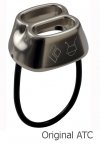
Was thinking the same thing, I love it as a foot asender but looking to make a knee asender with another one. Noticed it has some nice holes in the back plate, thinking of fabbing an aluminum plate to put it on the shank of my spurs to solve @Sprucinator issues, then a nylon loop bungee setup for the knee ascender. By far the best foot asender I've used but straps need help, hard to tighten and seem flimsy.
 

New threads New posts

Kask Stihl NORTHEASTERN Arborists Wesspur TreeStuff.com Teufelberger Westminster X-Rigging Teufelberger
Back
Top Bottom












