JeffGu
Been here much more than a while
- Location
- Osceola, Nebraska
I would organize nationwide protests to protect our right not to wear pants while climbing. The helmet is a good idea, though.
Follow along with the video below to see how to install our site as a web app on your home screen.
Note: This feature may not be available in some browsers.

There are many moves that our industry could take that would save more lives than a mandatory second rope. I already use one more rope than a lot of guys on a daily.Hi all, New member here. I obtained an IRATA level 1 before I started doing tree work. A big take away from the class is the curriculum for IRATA and SPRAT seems to be geared toward training trades people to do rope maneuvers. I think this is a big player in the second rope. Its the safest possible universal system and a really good one. Im curious to see how this will play out in the tree world. If we are going to standardize do you guys think a better trade wide push would be just to get everybody in a helmet and a pair of saw pants?
I can't climb while not wearing pants - when you go past squirrels, their tails tickle - there's nothing worse in a tree than tail tickle. You'd hate it.I would organize nationwide protests to protect our right not to wear pants while climbing. The helmet is a good idea, though.
We're all adults. Fairly tasteful profanity is let slide pretty often. Stay away from racial slurs, though. Tom is not fond of them, even when they're funny.They are hot sometimes... not even **less chaps? can you cuss on here ? Theres a pretty big gap in standards in this industry is all. For example we are discussing the pros and cons of two ropes while there are crews out there that don't get basic saw handling training or a safety culture is chastised as non productive or stupid. They don't have the option to not wear pants or chaps because they don't know

Could I ask out of curiosity about your comment on Kevlar sleeves for lanyards?Agreed, but I see here an imposition by the safety regulation on doubling up ropes in case one fails. So my statement was on the limited case of rope failure due defect
The cutting argument is thin. If you can cut one, you can cut two (and the probability of cutting/damaging two is likely fairly high since I haven’t seen too many cutters cut below their bridge/waist height...)
And justifying two ropes to prevent a slide down the trunk? Pretty sloppy to get an uncontrolled slide down trunk - use a lanyard in crossed configuration if need to stop an uncontrolled slide... and even then when lanyard only sliding down a trunk I have only received a bit of bark rash - hardly justification for two ropes...
Or install a Kevlar rope sleeve prior to cutting is less labour intensive than two ropes throughout the tree, if one really feels like cutting a rope is that probable...

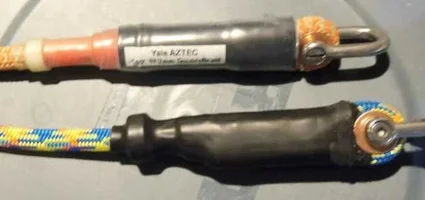
The problem I see with a sleeve over the lanyard is that it will not go through the lanyard adjuster, which limits how much you can shorten your lanyard. If the sleeve is short enough that is never a problem, it seems to me it would be too short to be of any use either.Could I ask out of curiosity about your comment on Kevlar sleeves for lanyards?
Clogger (where I work) are currently working with Brett Huet to develop a chainsaw protective sleeve to go over lanyards for the utilities market in the US/Canada. Is this something that would be used in normal arb work as well?
Hahahaha definitely agree. Not trying to push the product just interested in potential usage scenarios.I think folk should keep a saw from cutting their rope. Really better thing to do.
Appreciate the feedback, it is similar to what I have heard from a number of Arborists in New Zealand since coming back from TCIA.The problem I see with a sleeve over the lanyard is that it will not go through the lanyard adjuster, which limits how much you can shorten your lanyard. If the sleeve is short enough that is never a problem, it seems to me it would be too short to be of any use either.
The problem I see with a sleeve over the lanyard is that it will not go through the lanyard adjuster, which limits how much you can shorten your lanyard. If the sleeve is short enough that is never a problem, it seems to me it would be too short to be of any use either.

I have been using Richard's (yoyoman's) midline attachable leather cambium savers on my lanyards. Easy on and off, depending on situation, and can quickly swap it over to main line too, for a DdRT move.. . . Needs to be made so can’t interfere with hitch or mechanical adjuster, maybe midline attachable. . .