- Location
- Ames
Great pic, trametes is my guessView attachment 57839
Which one?
Follow along with the video below to see how to install our site as a web app on your home screen.
Note: This feature may not be available in some browsers.
Great pic, trametes is my guessView attachment 57839
Which one?

Ha, ha, but what does the underside of the brackets look like? If the undersides lack pores, it's an easy call as Stereum ostrea. If tiny pores are present, first check Polyporus badius. Also, the presence or absence of tiny hairs on the upper surface of the brackets can help confirm.
If gills are present on the underside, I'm way off track, but could try to find my way back.

I’ll get some close ups when am back at that location. ThanksI do see that the tree has been repeatedly wounded over a period of years. I need a sharper look at the brown patches on the lower bole. Is that what you were referring to as fungus? This photo does tell a lot, but not enough closeup detail for me.
Just back from the Maine Mycology club lecture that I mentioned earlier in this thread. It was way fun.

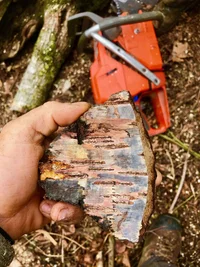
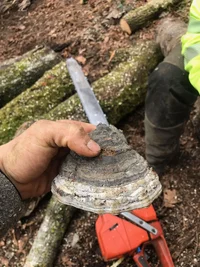

I've seen lots of similar red coloration on my box elders. I should check with the wood turners in my family to see if they'd like some pieces to play with. I figured it was just how box elder wood looked, since the coloration is present on any of the box elders I've removed.

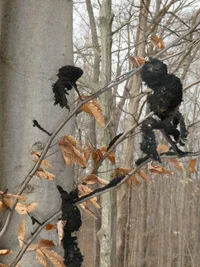
Looking forward to meeting you in Seattle in a few days, sounds like it will be a packed houseThat’s remarkable JD, I’ve seen sooty mold on aphid honeydew a lot, but this extreme!
Joe Boggs from our OSU Extension calls them the beech "Boogie Woogie" aphid as they "dance" in unison when disturbed.That’s remarkable JD, I’ve seen sooty mold on aphid honeydew a lot, but this extreme!