Pollarding time

Location
Utah
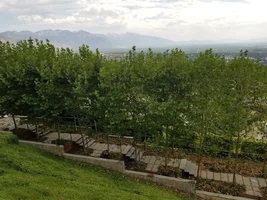
I will be working on a pollard job at a high end residential landscape. We have 22 London plane trees to make initial pollarding cuts on. What is the best time of year to do this? My initial thought is when they are dormant but I would appreciate any feedback that can be offered.London Plane trees Ave.webp
 
Right after leaf fall is the worst time as far as decay spread goes, but your cuts will be so small that may not be a big factor.
If the objective is size control and shaping, late summer is good; I saw planetrees in Paris getting pruned in August.

What is the owner's goal?
 
The goal is to train for the initial pollard cuts. The trees aren't too big so the cuts will be relatively small. After that they will be pruned back to the pollard cuts each year. I agree there are disadvantages too big cuts in the fall but these should be relatively small.
 
The goal is to train for the initial pollard cuts. The trees aren't too big so the cuts will be relatively small. After that they will be pruned back to the pollard cuts each year. I agree there are disadvantages too big cuts in the fall but these should be relatively small.
Late fall for major heading cuts, early spring for shaping, early summer for thinning and training
 
On small trees branches can be treated much the same as a bonsai. You can use various techniques to position branches to spread growth where it creates better balance. An example would be a tree who’s branches at mostly on one side of the trunk. Rather than removing a branch it can be wired or bent in a direction over time by placing a stake in the ground. In the direction you wish the branch to grow. You place a rope in the branch and gently apply more tension over a period to achieve the bend. Fruit tree growers unknowingly do this when espalier or trellis tying. I would encourage this training to young specimen trees to establish good balance. Then when you have a nice form it’s much easier to see where to make heading cuts.

 
On small trees branches can be treated much the same as a bonsai. You can use various techniques to position branches to spread growth where it creates better balance. An example would be a tree who’s branches at mostly on one side of the trunk. Rather than removing a branch it can be wired or bent in a direction over time by placing a stake in the ground. In the direction you wish the branch to grow. You place a rope in the branch and gently apply more tension over a period to achieve the bend. Fruit tree growers unknowingly do this when espalier or trellis tying. I would encourage this training to young specimen trees to establish good balance. Then when you have a nice form it’s much easier to see where to make heading cuts.

I appreciate the heads up. Should be an interesting project.
 
Enjoy it, remember that you trees have vigour and usually respond quite well to pruning and training. Keep tools clean. Always aim for good balance and structure within the form you are trying to achieve. Some trees like weeping willows are pollard loving monsters! You can cut them down to the stump and they will just get bushier. Others- not so much and greater understanding of what they can tolerate is needed.
 
Traditionally pollarded trees are cut dormat in the autum. That way they stand as sculptures throughout the winter.
The sculpture bit is a byproduct not the reason. The reason is because the energy for bud break and new stem growth is captured during the growing season and stored in the trunk and root. You wouldn’t want to reduce the capture period by doing the work before the leaves change colour? Once the leaves start to look colourful, the sugar production has pretty much stopped. The tree no longer draws water and photosynthesis is slowed down and finally stopped. The tree enters its dormant phase.
 

New threads New posts

Kask Stihl NORTHEASTERN Arborists Wesspur TreeStuff.com Teufelberger Westminster X-Rigging Teufelberger
Back
Top Bottom