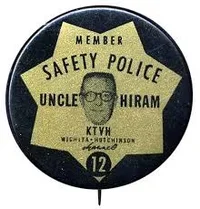
The Illusion of Safety: Safe vs. Safer vs. Safer-er

Great post Treehumper/Rob. I had no idea I was so close to the Z on one-handing ;-) The additional part about the supervisor/boss/owner deciding who gets to one-hand/when is pretty smart. Because that's where the biggest awareness and change has to happen as far as creating a safer/smarter work environment. And there is a conflict of interest for the owner/operator, they do need to make the numbers work. Very challenging to resolve safe practices with meeting the quote for some operators.

I'm not saying something new, every single tree worker knows that meeting the quote is potentially the deadliest part of their job, just end of the day fatigue alone, burning hard to meet the quote could account for a significant number of accidents annually.
-AJ
 
every single tree worker knows that meeting the quote is potentially the deadliest part of their job, just end of the day fatigue alone, burning hard to meet the quote could account for a significant number of accidents annually.
It's where shortcuts come into play or that strange notion of being safe enough. Mangoes video hits it right on. We don't include pricing in the work orders that go to the crew. The work is the work and there is trust that everyone is working in concert to achieve the end goal of every getting home safely, meeting the schedule and doing it profitably.

There's a continuous feedback loop of sales, estimating, scheduling, job completion, comparative analysis, adjustment to sales and estimating to reflect the results of the analysis. It requires honest data which in turn requires trust and objectivity. We track our time on the job so sales can see how closely they are estimating time. Factors that may have caused lost time, i.e., equipment failure, unforeseen conditions, weather, etc... are noted. This keeps sales up to date and allows the crews to measure their performance. Scheduling is also part of this. In the morning when the work orders are given to the crews the expectations are set out. X number of work orders, whether it's felt that all the work can be completed within a standard day, extended day, or if it may go into a second day.

At the end of the day or the morning following there's feedback on what transpired. Honest dialog of what the crew came up against that may have caused it to take longer or if the estimate was just plain to rosy. There's also plenty of days when the work is done in much less time. That too is invaluable feedback. Not so much in order to drop the price but to reflect on the value the work in and of itself has to the client. Here's where we can look at actual $/man-hour and make an adjustment to our standard rate.

What we try our very best to do is not let the quoted price drive the work. This becomes the job of the owner to constantly assess this and make appropriate adjustments, whether it's training, equipment acquisition or revamping processes. But what doesn't happen is a compromising of safety or tolerance of anything less.
 
Rob, in the above example I cited, bear in mind I'm talking about small limbs. Small ones. <5lb. That you can't just cut and let fall. Larger ones on conifers (over a structure) I'll speedline, or let down several at a time.
I've been playing this game a long time; it ain't my first rodeo. I'm 56 and still.contract climb for several other tree services. They dont hire me for my looks.
For you to say the difference in time is miniscule is a bit ridiculous. Since your customers are amazed with your efficiency, carry on with your methodology.
I'll take the bait.
If they're that small I use a handsaw. Another thing I don't do is leave the chainsaw running. Why does that come into play? Its part of the trade off that comes into the overhead costs. I'm not wasting time starting the saw or unclipping it. The handsaw comes out faster, I can then use one hand to cut and the other to hold and toss. The time to do that is much less than cutting with a chainsaw and I'm saving on fuel. Add it all up and it then comes out as miniscule in terms of the quote.

At nearly 58 and having played the game not only in the world of tree care but in other industries, I've learned that people buy what you are selling. For us we sell our reputation, efficiency, quality, knowledge and skill, not our price. It is a more challenging sale but it is much more rewarding.

Oh and it's not a race, a battle, war, etc... its a service to people.

I've always liked the story of the old bull and the young bull...
 
And to be quite honest Rob, I'm scared shitless of that machine! The ability to miscalculate and have a catastrophic failure is so easy. I'm not happy with the load read out and am having trouble finding a solutions. With all that said, It will be a long time of first days for me with lots of moving parts and factors I haven't even though of yet. Its very stressful.
I've worked with Rick Yoos and his rig. Scary and awesome all at once! Good luck!
 
"One-handing is one of my favorite things to do but not brag about, by the way"
.
i think; we should lean away from this;
if know the warnings; weigh the warnings; weigh the shituation and have skill level;
care-fully concede;
BUT, not as a favorite; 1st thing to reach for; and there are no bragging rites
this is a git by, not a real win i think.
Make the 1handing mentally a longer path thru brain of checklist to no other options;
>>and proper handling as short route; take that as a win/win!
.
Book says to pull wire connectors by connector, not wire.
Every once in awhile mite have to cheat;
but if cheat all the time, gonna get caught the numbers say...
.
Tho we choose to roll back on our hind 2 and walk and climb thru the valley of death;
>>we must still fear these evils..
chainsaw_safety.png

.
from my personal haunts:
"..There was an incident here locally years back,my buddy came and got me to close the job for the guy..
i'll never forget;can't erase nor elude;
the haunting ring still in my ears from the funeral ;
from the in-human wails made by the husband that was the one that found his wife of 8mos. spraying out the wrong end of the chipper
as he clutched the 6yr. old kid that was left behind; while shaking involuntarily..."
.
(this is a before shot...)

roz.jpg
 
Good information, but wow what a buzz kill first thing in the morning.
More like a sobering wake up to reality. Throughout the day starting first thing in the morning, I'll tell the crew about the latest misadventures. I want them thinking about this all the time in order to think about safe work practices all the time.
 
If they're that small I use a handsaw. Another thing I don't do is leave the chainsaw running. Why does that come into play? Its part of the trade off that comes into the overhead costs. I'm not wasting time starting the saw or unclipping it. The handsaw comes out faster, I can then use one hand to cut and the other to hold and toss. The time to do that is much less than cutting with a chainsaw and I'm saving on fuel.
Oh and it's not a race, a battle, war, etc... its a service to people.


Yeah....about that handsaw:
imagine you have two or three of those trees to dismantle planted in a row close to a house. Not an uncommon occurrence.
The only limbs you gotta hold and toss are the ones extending over the roof / eavestrough. So, do you start your chainsaw, whack the other three or four limbs (in every tier), shut it off (cause you don't leave it running) and then take your handsaw to cut that remaining limb or two?
And then you ascend to the next tier of limbs and start your MS150 again...et cetera.
Or do you dismantle ALL those limbs with your trusty Zubat? If so, good on you.

I'm really trying to get my head around your methadology here, because to me it seems very inefficient and more tiring (hence exposing you to greater risk).
No hard feelings; I realize there are different ways to approach things.
What works, apparently works ok for both of us (being approximately the same vintage and mileage)

For the above situation, my MS150 stays running for several minutes at a time. Chainbreak engaged when I'm climbing up to the next tier of limbs. It sips very little fuel, and isn't noisy. Shut it off when there are enough limbs on ground to be worthwhile to have a groundman gather them up to trek 'em to the chipper. The 150 is a wonderful saw. btw, I started climbing (in '87) with an 028 as my go-to climbing saw. It was the smallest/lightest one that I owned for years.
The "service to people" thing is nice; heading to Costa Rica in a couple of weeks to do some pro bono treework.

Cheers and goodwill,
Dave
 
My approach to the bushy conifers in Pelorus' example (wishing I could just dual wield 2 150s) is cut with two hands into the collar at an angle, chain brake, then let go to catch/grab and rip off/handle/throw. It takes some adjustment for species (I'm usually in a pine or occasional spruce). Its pretty easy to cut enough to cause limb failure, but not enough for full detachment. I'm not cutting one handed and am able to handle the branch and throw it. And its still pretty darn fast.
 
I'm really trying to get my head around your methadology here, because to me it seems very inefficient and more tiring (hence exposing you to greater risk).
I started with an 026 as my climbing saw. It was a revelation to switch to a 200T. Now I climb with a 201. If I can cut and let it fly I do. Then shut it off to make whatever cuts I need to with my trusty Zubat. In the grand scheme of things I only need to cut as fast as my ground crew can clear. Any faster and I'll end up waiting for them to free up my rope. The shutting of the 201 also ensures I have fuel to make it through the whole climb on one tank. That ends up another time saver since I'm not stopping to send the saw down for refueling.

For me productivity is measured on the whole crew performance not mine alone. All of us working at a steady pace gets the job done in great time. Whether its one or a dozen, if I can't wield the tools of the trade for the whole day then I'm not much use. It's like any exercise, one builds up the strength and stamina to finish without fatigue...
I'm paid to provide a service to people in the form of tree care. As for pro bono, I do that too on a nearly weekly basis between the environmental commission in town, the riverkeeper board of trustees, fundraising and river clean ups.

Did I mention the story of the old bull and the young bull?
 
Muggs,

Without going overboard, your argument perpetrates some fundamental philosophical fallacies:

Etymological fallacy: This is when word meaning changes over time. Such changes generally include a shift that narrows or widens the original meaning meanings
Definitional Retreat: Definitions without merit because they are overly broad, contain circular reasoning, use obscure or ambiguous language.
Definitional Retreat: By imposing conflicting requirements, you make it impossible for the definition to to apply to anything.
Definitional Retreat: Changing the definition to suit your argument

A more fair definition to start from is this:

Safety is the thoughtful, reasonable recognition of hazards, the formulation of a plan to mitigate/avoid them followed by the execution of said plan.

Tony
 
Actually Tony, my definition is straight out of the Oxford dictionary:

https://en.oxforddictionaries.com/definition/safe

But yes, there was clearly a bit of wordplay on my part with the "safer" and "safest", etc., just to make a point. If we were going to accuse anybody of "changing the definition to suit your argument", it would be you sir, but I won't hold that against you. You're a standup guy in my book.

Clearly when I posted this, I did so with the recognition that the safety police would pounce all over it, claiming that I said all sorts of things that I didn't actually say. At one point there I was starting to question whether people had actually read it at all, or were just reacting to what others were posting in return.

When I write something like this, I am not hoping to appeal to everyone. If my material appealed to everyone, it would appeal to no-one. That being said, this is not about being controversial for the sake of being controversial. This is my honest opinion based on years of hearing the 'safety, safety, safety' mantra droned on endlessly by the industry. I care deeply about safety! I truly do. But that's not why we come to work. This idea that the safety police cares more about your own safety than you do is ludicrous. The reason that the safety police feel the need to nitpick everything they see online is to stoke their own egos, plain and simple. They want to be seen as authorities, as knowing more than everybody else. I literally see tons of stuff every single day on Instagram, Youtube, Facebook, and the like that makes me just shake my head. Ridiculous, stupid stuff. Super unsafe. Do I think that my comment on their picture or video is going to change hearts and minds, pulling the poor souls back from the dark side so they can finally see the light? No, I don't. So I just shake my head and move on. I guess I'm just practical that way. Sorry if that rubs people the wrong way. Like I said, I care deeply about safety. Life is full of contradictions, both real, and assumed. But this one... I don't see this one as a contradiction.
 
Ok mb you are right about the ego:ROFLMAO:. but damn man i know most people learn the hard way but quite a few do listen and take some of the safety concerns to heart/practice.
Why would you say such malarkey? push the safety! Why? I dunno its as close as I will ever get to diving on a grenade in a foxhole
the industry as whole is fucked up because of the safe enough attitude.
And its all a lie. Tree care is lie. Why do you think there is so much death and injury? High insurance rates, low pay, training companies/profiteers linked to retailers selling a dream/death etc etc blah bla blah
I think you lost the plot on this:rolleyes:
 
Clearly when I posted this, I did so with the recognition that the safety police would pounce all over it, claiming that I said all sorts of things that I didn't actually say. At one point there I was starting to question whether people had actually read it at all, or were just reacting to what others were posting in return.

When I write something like this, I am not hoping to appeal to everyone. If my material appealed to everyone, it would appeal to no-one. That being said, this is not about being controversial for the sake of being controversial. This is my honest opinion based on years of hearing the 'safety, safety, safety' mantra droned on endlessly by the industry. I care deeply about safety! I truly do. But that's not why we come to work. This idea that the safety police cares more about your own safety than you do is ludicrous. The reason that the safety police feel the need to nitpick everything they see online is to stoke their own egos, plain and simple. They want to be seen as authorities, as knowing more than everybody else. I literally see tons of stuff every single day on Instagram, Youtube, Facebook, and the like that makes me just shake my head. Ridiculous, stupid stuff. Super unsafe. Do I think that my comment on their picture or video is going to change hearts and minds, pulling the poor souls back from the dark side so they can finally see the light? No, I don't. So I just shake my head and move on. I guess I'm just practical that way. Sorry if that rubs people the wrong way. Like I said, I care deeply about safety. Life is full of contradictions, both real, and assumed. But this one... I don't see this one as a contradiction.
This post helps illuminate your persepective, Patrick.
The corporate, top-down style of safety speech is worn out, I agree. Its not going to change very much because it is trying to emulate what the Alcoa CEO, Paul O'Neill, did to value safety. The enforcement of safety as a precondition of work was extremely healthy for the company.
I think the language of safety could change to be more effective. Emphasizing personal risk and responsibility is an approach that gets us closer to reality, rather than the vague, "safety first."

Who are the safety police? When I go to work, my main job is to make sure that the crew is working in ways that make sure nobody and nothing is damaged. I am usually doing this out of genuine concern for my fellows. At least that's how it feels. And I do know more than them, which is why I have been given greater responsibilities, appropriate for my experience level. Our company has a safety director. He is responsible for training new hires, he has a responsibility appropriate to his seniority. Does he care more about the new hire's safety? Who can say? The training goes on because of the obvious: ignorance can easily override self preservation. So the responsibility is shared, everyone cares about someone getting hurt, in different ways.

So now we're tree workers on the internet posting text, pictures, video...I think we still share some responsibility although we don't work together, or even in the same country. People are watching and copying what they see and filming it and posting it and propagating risky work habits. Enter the comment box warrior.
I believe those that know a less risky way to work have a responsibility to share, just like I do with my crew. Could I bully my crew into being safer? Of course, but I don't want to be that way or cause crew problems.
Lo and behold, the anonymity of internet forums allows tree guys to be rude to one another under the guise of criticism. We now have somewhere to go to pretend to be better than someone else.
Will they listen?
Who are the safety police?
 

New threads New posts

Kask Stihl NORTHEASTERN Arborists Wesspur TreeStuff.com Teufelberger Westminster X-Rigging Teufelberger
Back
Top Bottom