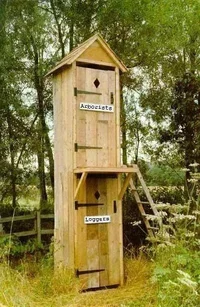
waht makes you the same?

All words are made-up words.

I'm an arborist when i focus on one tree and an urban forester when I manage many trees and an urban logger when I take part in harvesting trees for pulp or timber.

A logger by any other name would smell as sour.

;)
 
there you go! Very well said Guymayor. So how do we sum it up in a few words? Or should I say, whats a good title for what we do? I still lean towards urban logger...maybe because its so cool sounding...
 
The key word there is harvesting. I have never done a removal for the sake of harvesting. Not saying I wouldn't. But the resources are not in place to make harvesting worth while (for me.) Even fire wood is produced from urban trees that were not removed for that specific purpose but at least it is being put to good use and not just buried in a land fill.
 
I talked to kevin in Athens today about this very subject and he didnt like the word "harvest". I think "harvest is a good word as long as the wood is being regenerated for some other use.Wiich is my goal always, if possible.
 
I don't tell people i am an arborist. I tell them i am "An Arboreal Biomass Processing Engineer Specializing In Preventative Maintenace and Deconstruction" It sounds way cooler
 

Attachments

  • 170724-outhousecopy.webp
    170724-outhousecopy.webp
    78.9 KB · Views: 35
I tend to think that my garden makes me an urban farmer. I am doing the same things a farmer would do, but I dont use any diesel to do it. Just thought there was a similar parallel to the question.
 
I agree with you. Its the same with logging only more tech. in the urban environment. More reasons to be presise. Again the word "refined" come to mind. more skill needed in the urban environment. alot more safety requirement as well? This thread is harder that I thought, when it comes to getting a hard answer.
 
[ QUOTE ]
Phil, do you mind if others start using that title?

[/ QUOTE ]

Promote the name my friend. If its what you are then by all means, give those people that "Wow" factor.
 
From dictionary.com:


logger; [law-ger, log-er]
–noun 1. a person whose work is logging; lumberjack.
2. a tractor used in logging.
3. a machine for loading logs.

Origin:
1725–35, Americanism; log + -er

the definition of logging:

logging; [law-ging, log-ing]
–noun 1. the process, work, or business of cutting down trees and transporting the logs to sawmills.
2. Nautical. a deduction from the pay of a sailor, made as a fine or forfeit and recorded in the logbook of the ship.


Origin:
1700–10, Americanism; log + -ing

And the definition of arborist: Note the origin dates. The term is older than logger by more than a century. Maybe our spellcheckers need to be updated.....


arborist; [ahr-ber-ist]
–noun a specialist in the cultivation and care of trees and shrubs, including tree surgery, the diagnosis, treatment, and prevention of tree diseases, and the control of pests.


Origin:
1570–80; arbor + -ist

So logger is an inaccurate term since we don't remove trees for the transportation to sawmills. What happens afterwards is waste management for many or biomass repurposing for others.

If we were urban loggers we'd be knocking on the doors of homes where we had spotted ideal specimens for timber wood, offer to pay them for the logs and then reap our profit from the sawmills.

Think about surgeons, are they organ harvesters? We hope not......
 
this is where I have a hard time with discounting what we do. I believe we are loggers at the last term in the life of a tree. When I diagnose and old specimen and treat it, maybe fert. or use a growth regulator and every few years maybe clean the crown or install a cable system I am preserving by careing for that tree. Now I feel good knowing I am taking proper steps to help it along. I also know when its time for removal, I have a plan for that wood. Its most likeky not ending up at the dump. If the client has spent $$ on preserving the tree for so long I will talk to them about reuse of the wood . Maybe some wood turners for some and depending on the wood use it for furniture. Either way the wood we remove goes to other uses. So, at some point we are logging, urban logging.
 
Tree surgeon/doctor, always liked that one the best. As it puts to picture in the mind what it is we do, care for trees like a dotor cares for people. Arborist ='s ( Tree ist) knid of sounds like one of them fruits that chain themselves to trees, even Priceton University puts Tree surgeon before Arborist.
http://www.wordreference.com/definition/arborist

Urban logger would be the second best, since most of our byproduct of the trees can be resold for even more profit.

Logs for mill (there are alot of mills that will by our logs) or firewood.

Chips can and still are used for beds, or they can be run through a Rotochopper and make mulch.

Though we don't chase after trees just to send to a mill, we still produce much the same.
 
Good point holly. It helps the community understand the importance of reusing the wood from the urban environment. Its not just to be dumped and forgotten.....
 
There are alot of arborist out there that have not answered this thread. I was relly needing to hear from all the usuals that are in this profession. I respect what you all have to say and would love to hear from more of you on this subject.
 
There is a saying that I read somewhere that really sums up our skills as technical arborists but I can't remember the author. It goes something like this:

Skill and training are required to fell trees safely and efficiently as in logging, but ingenuity is required to remove large trees from small sites. Observing a master rigger(arborist) dismantling such a tree is like watching an artist at work.
 
The logging world and the tree service world are two distinctly different industries in my experience.

I worked for about a year subbing to a 3rd generation logging company who'd set up shop in Lake Arrowhead after the 03 fires in SoCal.

This outfit actually brought a WW2 tank landing craft up to Lake Arrowhead and used it to remove all the dead cedars, pines and alders on the lake's shoreline.

The loggers are all about good clean undamaged logs cut at precisely 33 foot lengths preferrably, and 16 foot lengths as a sloppy second choice.

These guys hated me because I was hired as a climber to deal with the big trees that could't be dropped, being surrounded by boat docks, mansions and manicured landscapes.
And I wasn't about to catch anf 16 foot logs with my Hobbs!

All my logs were 5-10 feet long, useless to a logging company for anything but firewood or making turpentine with.

However the owner of the company was glad to have me despite my inability produce sawmill grade logs because the fellow I replaced had been told to do the best he could to avoid damage, resulting in the owner paying for a full time repair crew following the crew around repairing fences, cracked concrete and damaged boat docks.

Loggers are fantastic at getting trees on the ground from the ground, they have a multitude of ways to accomplish that and buck the log into 33 foot sections, and get those sections to a landing pronto.

But when it comes to safely getting big strategic removals safely on the ground with no damage, let's just say it aint their thing.

Their production quotas are staggering though, 10-12 hour days are common, big rubber tracked bobcats are amazing in their ability to load brush into a landing craft and line the craft's gunwales with 33 foot long logs, all with just one man doing cleanup!

I was paid real good to get the strategic stuff safely on the ground with either my Hobbs or a speedline to the beach, but once that was done, I hired out to another logging firm that had a bunch of strategic trees to remove in Santa's Village at the Rim of the World.

I learned alot from those loggers, they are much better paid than the average arborist in my opinion.

Totally different worlds and mind sets though.

jomoco

 

New threads New posts

Back
Top Bottom