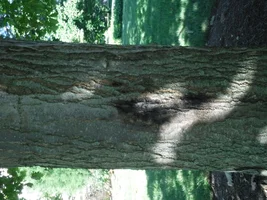
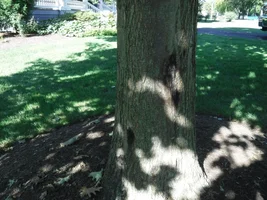
two lined chestnut borer on pin oak?

I have seen the same symptoms here on a young pin oak and a young red oak. I had not seen this before. Are you sure it is Two Lined Chestnut borer? I was leaning towards the Red Oak Borer, but I do not know for sure.
 
I am pretty sure the 2 lined is a flat head borer so I should check inside the fluxing for a D hole I guess........need to review. Maybe the same treatment, but this late in the year...prob. not still active? I think EAB is active thru Sept. tho. Got a contact to call and will get back FJR.
 
I am pretty sure the 2 lined is a flat head borer so I should check inside the fluxing for a D hole I guess........need to review. Maybe the same treatment, but this late in the year...prob. not still active? I think EAB is active thru Sept. tho. Got a contact to call and will get back FJR.

Is fluxing a typo?

The pics remind me of bacterial oozing on elms. I'm not sure what borer would have that impact at the base? Two line typically hits the branches and advances down.


Sent from my iPhone using Tapatalk
 
The pics looks superficial. Is the bark loose? Is there crown dieback? Those three spot could be from nails driven into the bark years ago.


Sent from my iPhone using Tapatalk
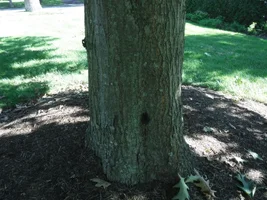
 
Is fluxing a typo?

The pics remind me of bacterial oozing on elms. I'm not sure what borer would have that impact at the base? Two line typically hits the branches and advances down.


Sent from my iPhone using Tapatalk

Slime "flux" is bacterial wetwood. "Typo"?...wtf?
 
Last edited:
The pics looks superficial. Is the bark loose? Is there crown dieback? Those three spot could be from nails driven into the bark years ago.


Sent from my iPhone using Tapatalk

Rather silly comment. Tree was planted less than 10 years ago and went in as a 12" dbh transplant. It has NO canopy die back. It has grown substantially. NO loose bark.

How is the pict superficial? NO nails have been driven into the trunk....pretty silly comment.

DSCF3162.webp
 
You're a silly comment!

I haven't heard it called fluxing, or maybe I have and forgot.

I meant the "wounds" looked superficial, on top of the bark versus in the cambium.

Good luck figuring it out!


Sent from my iPhone using Tapatalk
 
I am pretty sure the 2 lined is a flat head borer so I should check inside the fluxing for a D hole I guess........need to review. Maybe the same treatment, but this late in the year...prob. not still active? I think EAB is active thru Sept. tho. Got a contact to call and will get back FJR.

Wash the wound with clean water and look for the old D shaped exit holes from an Agrilis or Chrysobothris borer. Dinotefuron or emmamectin are quite effective but expensive. Look into bleeding canker diseases, fungal, oomycete, and bacterial.
 
You're a silly comment!

I haven't heard it called fluxing, or maybe I have and forgot.

I meant the "wounds" looked superficial, on top of the bark versus in the cambium.

Good luck figuring it out!


Sent from my iPhone using Tapatalk

You can see the cambium??!!?? What a guy!

Thanks for the encouragement.
 
Wash the wound with clean water and look for the old D shaped exit holes from an Agrilis or Chrysobothris borer. Dinotefuron or emmamectin are quite effective but expensive. Look into bleeding canker diseases, fungal, oomycete, and bacterial.

I have Dino from Eab treatments. Question is if this time of year it is worthwhile. No response from Ohio State Extension Svc. yet. I would suspect the bleeding canker disease were it a beech.
 
Maybe Phytophthora. How's the root collar? Have you sounded the area with a rubber mallet? Scrape off the black stuff and look for holes, but it does not look like insects.
http://arbtalk.co.uk/forum/attachme...ay-dysfunction-dendro-15-stubborn-streaks.pdf
"These lesions may be caused by a species of Phytophthora or some other soil-borne agent. They are typically hard to identify, but I have collected tissue from the margins to send to the lab. We could use this torch on the lesions in an effort to cauterize the infections. This method has proven successful on infected trunks of walnut trees, which are also in the Order Fagales, along with oaks and beeches, and this disease is hard to get out by other treatments once it has set in"

Similar symptoms, and treatment, to bleeding canker in beech.
 
I have Dino from Eab treatments. Question is if this time of year it is worthwhile. No response from Ohio State Extension Svc. yet. I would suspect the bleeding canker disease were it a beech.
I'll paraphrase USDA forest service: Adults active April through August, eggs hatch in 1 to 2 weeks, over winter as larvae or pupae. I would say that if your problem is a borer to try a treatment asap but try to have good soil moisture to improve uptake.
 
The lesions are centered in sinuses, typical for a soilborne disease. The included bark in sinuses provides an entry point.

Ever try a phosphite trunk spray for Phytophthora? Pretty quick and easy. Never tried cauterizing, I'm intrigued
 

New threads New posts

Kask Stihl NORTHEASTERN Arborists Wesspur TreeStuff.com Teufelberger Westminster X-Rigging Teufelberger
Back
Top Bottom