Tulip Tree Repair

Wrangler

Participating member
Location
Woodbine
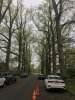
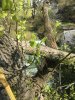
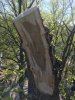
The town I live in hired me to remove a large tulip that blew down in wind storm. Both sides of street are lined with Tulips, It’s pretty awesome. Tree adjacent to the one that blew down was stripped of most of it’s limbs by the falling tree until about 80’ (trees are 120’-130’ tall) I cleaned up wounds of jagged edges with a 201 ( two 12-14” limbs broke of at branch collar) the third I opted to clean up a little and leave the 3’ stub that had a half dozen epicormic sprouts on it and one 1” branch(this is at about 75’. Im thinking there is a better chance of this stub becoming a viable limb than tree sealing over a third 12” wound from removing stub at branch collar. Right call or would you have removed it with proper cut. Tree also has epicormics all over trunk, decent crown though, sparse but very little deadwood.

 

Attachments

  • B5FB95E3-EA74-42C4-8BD5-F3BAD0892848.jpeg
    B5FB95E3-EA74-42C4-8BD5-F3BAD0892848.jpeg
    1,020.3 KB · Views: 49
  • BF8C872C-EF02-43C4-9422-5096AEFA0BFD.jpeg
    BF8C872C-EF02-43C4-9422-5096AEFA0BFD.jpeg
    997 KB · Views: 49
  • BFE75439-DE66-4E8D-9C53-36474E6ACF19.jpeg
    BFE75439-DE66-4E8D-9C53-36474E6ACF19.jpeg
    852.6 KB · Views: 48
I would prune it back to the branch collar and let the tree decide if it needs to put new growth on the edge of the branch collar. Any new growth on that stub will most likely tear off when it gets to be heavy enough.
 
A lot of times, the big factor that drives storm damage pruning, is whether you'll get a chance to follow up at intervals in the future, or whether it's a one-and-done proposition. If you can come back and monitor growth and health, you can afford to give the tree more leeway, since one of the main drivers in assigning a level of risk of failure, is the re-inspection interval. Another way of looking at it is that nature has been blowing the tops out of trees for millions of years before either the saw or ascent gear were invented. The trees have figured out things that we don't even know are things, yet.

What a beautiful street!
 
A lot of times, the big factor that drives storm damage pruning, is whether you'll get a chance to follow up at intervals in the future, or whether it's a one-and-done proposition. If you can come back and monitor growth and health, you can afford to give the tree more leeway, since one of the main drivers in assigning a level of risk of failure, is the re-inspection interval. Another way of looking at it is that nature has been blowing the tops out of trees for millions of years before either the saw or ascent gear were invented. The trees have figured out things that we don't even know are things, yet.

What a beautiful street!
The tree is less than a mile from my house so I will definitely monitor. I often wonder if I leave a long stub (in situations like this where good options are nonexistent )if giving the stub a chance to regenerate helps situation even if it fails? Does the dying stub jump start compartmentalization? In other words are there more chemical barriers present if I make the coller cut in a year or two when subordinated limb has failed? Does failing subordinated limb waste trees resources or does it give it head start to create barrier before removal cut is made?
Tough questions in situations like this( lots of targets and 45-50 feet of tree top above wound)
 
Lots of things to consider. The stub is peeled down one side, so it's a pretty large wound for the tree to try to occlude with wound wood. On the other hand, I've got a live oak over my house with the same kind of branch that I've been looking at daily....for 6 or 7 years. It's not showing any signs of delcline, and has lots of wound wood, so I'm inclined to think that the tree has solved its own problem.
 
Lots of things to consider. The stub is peeled down one side, so it's a pretty large wound for the tree to try to occlude with wound wood. On the other hand, I've got a live oak over my house with the same kind of branch that I've been looking at daily....for 6 or 7 years. It's not showing any signs of delcline, and has lots of wound wood, so I'm inclined to think that the tree has solved its own problem.

Man, that would be an AWESOME timelapse. Surely, someone has done this! One photo per day from the exact same spot/angle.
 
If possible, our pruning standards favor the stub being left. Based on avoiding the larger trunk wound. If it's not viable as a limb any more, the same compartmental changes will happen if you cut it off.
 

New threads New posts

Kask Stihl NORTHEASTERN Arborists Wesspur TreeStuff.com Teufelberger Westminster X-Rigging Teufelberger
Back
Top Bottom