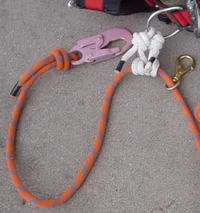
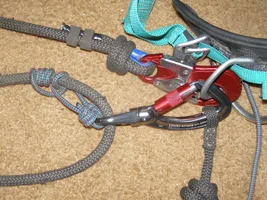
Being a machinist most of my life, I tend to look at anything like these swivels with x-ray vision. Most of them have a surprisingly slender inner shaft. They look very beefy on the outside but the actual spindle between the two halves is not all that big. On the ZigZag, for instance, you can see this since the spindle is exposed and not encircled with bearings or housing. Also, the halves of the swivels are often just held together with a rather small cross pin. Now, I don't mean to sound like I am casting doubt on the load ratings. I am sure these are thoroughly tested, at least by the reputable, better known companies. It is simply a personal feeling of misgiving I have, from my own life basically depending on my various gear. I remember noticing how skinny the spindle on the ZigZag swivel was and I simply could not bring myself to hang from it at any considerable height! I bypass it with a biner through the hole beside it and just forget the swivel. With my other swivels, I use a safety strap, a short webbing sling, rigged past it which would catch me if the swivel let go. I can still spin quite a bit on the swivel since this strap is not tight, but it would catch me before I dropped more than a foot or so. I confess some of my concern stems from me simply being quite a bit heavier than I was when younger. I weigh about 185 now instead of the 140 pounds I was most of my life, and I can certainly feel the unpleasant difference when climbing. And I think we tend to get more cautious as we approach our elder years, taking less risks, more mindful of our mortality. Anyway, the internal neck of these swivels just seems to me like a weak link in the overall chain of a climbing system, but I am perfectly happy to be proved wrong.



























 Free CEUs: February 05 & March 05 - 'Urban Forestry Today' Webcasts @ Noon (Eastern)








