Span Rigging moving anchor choices

Stumpsprouts

Been here much more than a while
Location
Asheville
Span rigging- aka a double whip tackle but with the terminal rigging point and terminal anchor point being spread apart.

For those of you who use span rigging on the regs, what have you settled into as your go to block or xring and sling combo for what ends up on the piece being rigged?

Ive been using an Omni 2.6- those span rigs tend to avoid a dramatic hit into a spar but there is often inversion. Given the on-off every rig nature of things, I’m really hoping to avoid using the impact block. For something dead/compromised needing lots of half hitches, been using a 25’ section of amsteel. But more often than not, the standard ultrasling.

Im been using this method all the dang a lang time for the past 2 years or so and would love to hear from those who’ve settled into it, what you’re loving, what you’ve learned. The technique is nothing new in a general sense but I still don’t see it much.
 
I usually only span small material, so a micropulley and biner clipped to backbone mini, with 3/8” ultra sling.

I’m not happy with my tool selection for spanning large material. The backbone mini would still be my go-to, or the larger one, due to easy compatibility with ultra slings for efficient on/off. The real issue I face is backbone to pulley interface for larger blocks. Ideas, anyone?
 
I moved from the Inland Northwest to the Midwest November of 2019 and since I’ve been here, I’ve been span rigging on almost every removal. It’s a good way to handle multi leader giants where a regular rigging system would swing somethin’ hard. I’ll typically be using a safebloc on the rigging point and then I’ll sling the piece with either a tubing sling or a tenex whoopie (depending on the size) and attach it to the line with a pinto rig and a DMM steel O biner. I’ve had great success with some pretty big stuff.
 
I usually only span small material, so a micropulley and biner clipped to backbone mini, with 3/8” ultra sling.

I’m not happy with my tool selection for spanning large material. The backbone mini would still be my go-to, or the larger one, due to easy compatibility with ultra slings for efficient on/off. The real issue I face is backbone to pulley interface for larger blocks. Ideas, anyone?
I just bought a Stein tree angel so I’ll be trying to figure out the same thing.
 
I rarely do span rigging.. It's more like a speed line with a very high tail anchor (10-20' up), and a very slack line...

But if I were to do a bit of span rigging, Id likely use a ring dead eye on the load, on the control or lowering end likely a block, I would see use for a rig n wrench. In a conifer I'd consider a safebloc if I had one or if both the safebloc and terminal were in reach.

 
I usually only span small material, so a micropulley and biner clipped to backbone mini, with 3/8” ultra sling.

I’m not happy with my tool selection for spanning large material. The backbone mini would still be my go-to, or the larger one, due to easy compatibility with ultra slings for efficient on/off. The real issue I face is backbone to pulley interface for larger blocks. Ideas, anyone?
What purpose does the backbone serve in your setup?
 
I moved from the Inland Northwest to the Midwest November of 2019 and since I’ve been here, I’ve been span rigging on almost every removal. It’s a good way to handle multi leader giants where a regular rigging system would swing somethin’ hard. I’ll typically be using a safebloc on the rigging point and then I’ll sling the piece with either a tubing sling or a tenex whoopie (depending on the size) and attach it to the line with a pinto rig and a DMM steel O biner. I’ve had great success with some pretty big stuff.
I’ve also been using the pinto rig for this purpose when all my bigger blocks are being used. Tend to avoid it for the larger wood but I’m glad to know you’re using it and it’s playing nice. It lacks the self orienting nature of the swivel Omni and I have seen that lead to a little more motion and stress in that moment of inversion when using pinto rig. How big are we talkin here?
 
I’ve also been using the pinto rig for this purpose when all my bigger blocks are being used. Tend to avoid it for the larger wood but I’m glad to know you’re using it and it’s playing nice. It lacks the self orienting nature of the swivel Omni and I have seen that lead to a little more motion and stress in that moment of inversion when using pinto rig. How big are we talkin here?
If I had an Omni I would probably use it more than the pinto. They are awesome. I agree with you, although, because I don’t have an Omni block, I don’t really know the difference. Big enough to picker the bunghole pretty good when the piece goes. But the force dissipation always lessens the shock much more than my body anticipates. Another reason why I like the span rigging.
 
I don't use span rigging often but I pull it out of the tool box occasionally. Recently used it to help lower trunk wood with a remote rigging point in another tree. Ring and ring in adjacent tree, double headed dead eye sling on the piece being rig and the rigging rope terminated just below the cut.

Span rigging kept the trunk wood from swinging into the other tree as well as making a stronger rigging system by spreading the weight between anchor points.
 
I prefer rings mostly for heavy span rigging on moving block if i need less friction I like the pinto rigs ability to work with up to 5/8 sized line. Still safe work load around 2200. we rig whole trees occasionally that require impact blocks or xl rings , but all the details make a difference with rigging choice.. I dont run omni in span configuration just to aid for lifting or z rig or 3to1 for a pull because the side push button and space between sheaves and side plates isnt fitting for me for dynamic loads, larger loads ,fast runs coming off inverted and rotating around the line make them less "bulletproof" to use some sort of term to help me describe why I'll avoid them for the moving block even though their ease of use to remove off the line is desirable for span rigging for simplicity, that's where I use loop runner with biners mostly until shits too heavy, then a redirect with the deadeye slings as another rigg point near or far to the main doesn't matter much , staiinary of moving side doesn't matter much either until you want to use it,, can be taken off the load still and albeit trapped on line in a ring or pinto on deadeye its still better to me personally than omnis , I'm sure I'm being a bit overzealous about there use or lack thereof for me or possibly for failure but whatever call me crazy... I run the yellow atlas rigging line when I graduate up from forestry pro 1/2 inch for the heavy trees when I'm onto wood and can take it bigger , rare , cause we tight round here white and red oaks which are frequent so the Omni won't fit me in there with 16mm line.. Rings and thicker lines creates more friction on the sheaves and require less friction on the ground than a thinner line( just a side note there.) I'm sure many know this.. but the force dissipation throughout the span riggs do make sense and if you just treat it simply it will work wonders for certain applications.. ( for those who don't play with it) the ways you can drift loads far and wide with a few degrees of vector change make sense as well for tree workers..
 
So far, one conclusion is to ditch the ultra sling. Requires the ring or pulley to be removed from rope. Using a dead eye sling allows the ring or block to remain on the line, I like that.

I don’t use rings for this application because often I’m setting the system up with the hard-tie anchor on an adjacent tree, set up remotely with a throwline. Using a ring would bugger the whole process up. But for those removals where the the setup is reversed, I can see how that would be bombproof.

Is there a definitive diagram or reference for this technique that we could use to reference parts of the system? I’m just thinking about what to call each part. A little geeky but I like when something is called the same thing from WA to NJ.
 
What purpose does the backbone serve in your setup?
I use it to connect ultraslings and sometimes a tag line to the pulley. It’s super easy on and off, no gate manipulation, and I can set the next sling while a piece is landing. Somehow the only times I span rig are with the same company, but they’ve seen the couple variations I’ve used and like the backbone system the best. I’m leery of connecting it straight to a pulley’s sling sheave, though. If this concern is baseless, please some shed some light.
 
I use it to connect ultraslings and sometimes a tag line to the pulley. It’s super easy on and off, no gate manipulation, and I can set the next sling while a piece is landing. Somehow the only times I span rig are with the same company, but they’ve seen the couple variations I’ve used and like the backbone system the best. I’m leery of connecting it straight to a pulley’s sling sheave, though. If this concern is baseless, please some shed some light.
That makes sense, particularly being able to set up a sling for the next piece, for something squirrelly requiring lots of half hitches I could see merit in that.

I totally agree connecting it directly to the sheave of a pulley is a bad idea.
 
Omni on an ultra sling or a dead eye sling with a ring (i prefer a timber hitch), both come off the piece when it lands on the ground really easily.

I usually use a triple thimble (or safebloc) for aerial friction and that generally coupled with 2:1 nature of span rigging allows me to take most of what i need weight wise without needing a port a wrap

I've found that you can lay the anchor side of your span rigging line through natural crotches like you would with natural redirects from SRT to spread the load out across weaker stem unions. Most of my span rigging it done to position pieces better for lower through obstacles rather than to increase the overall strength of the system.
 
Omni on an ultra sling or a dead eye sling with a ring (i prefer a timber hitch), both come off the piece when it lands on the ground really easily.

I usually use a triple thimble (or safebloc) for aerial friction and that generally coupled with 2:1 nature of span rigging allows me to take most of what i need weight wise without needing a port a wrap

I've found that you can lay the anchor side of your span rigging line through natural crotches like you would with natural redirects from SRT to spread the load out across weaker stem unions. Most of my span rigging it done to position pieces better for lower through obstacles rather than to increase the overall strength of the system.
That’s almost precisely why I started using it. That way you’re not having to have the line swung to you or tied on your climb line every time. The rigger can just pull it up once the piece is detached.
 
I use it to connect ultraslings and sometimes a tag line to the pulley. It’s super easy on and off, no gate manipulation, and I can set the next sling while a piece is landing. Somehow the only times I span rig are with the same company, but they’ve seen the couple variations I’ve used and like the backbone system the best. I’m leery of connecting it straight to a pulley’s sling sheave, though. If this concern is baseless, please some shed some light.
One idea for this is to just use a heavy duty short sling. Girth the sling around one eye of the backbone and then put a block on the other end of the sling and onto the rigging line. That way you have minimized carabiners in the system that could get cross loaded and or opened.

Most of the time I am doing span rigging I use blocks and not rings but lately I have been using rings more often. I do like how blocks can be taken on and off the rope by the ground crew when I want to stop doing span rigging and don’t have the end of the rope down to them for some reason. Pulleys for me just seem a bit too lightweight for span rigging except for light loads. The temptation to go big is always there and I would rather have the WLL to do so. Also pulleys often have carabiners also attached to them which for me is an unnecessary additional point of concern.
 
Last edited:
Omni on whoopie/loopie sling if it is "big" (usually 10" diameter). Speedline clips if it's small. The bend radius of the speedline clip is fine when span rigging. I agree with the post about using it in tight quarters rather than for big wood.

I don't usually find span rigging desirable for big stuff, but I size up to an x ring tenex with spliced eye on the other end for that rare trunk wood pick over the roof. It's not always convenient to retrieve the sling back for the next pick - doable, but not convenient. With my ~6 foot sling, the lack of being able to attach midline could be awkward if I had to rig a large crotch below the crotch - you'd have to get the loop over the large diameter. Fortunately, a bit of planning to leave a long stub above a crotch can help with that. If the wood is much bigger and I had to span rig, I'd get out a cmi steel 3/4 block on an Ultra sling. The Ultra slings come in lengths that are too short relative to their weight rating, so I custom ordered my length over the phone with TreeStuff. Buyer beware...
 
Omni on an ultra sling or a dead eye sling with a ring (i prefer a timber hitch), both come off the piece when it lands on the ground really easily.

I usually use a triple thimble (or safebloc) for aerial friction and that generally coupled with 2:1 nature of span rigging allows me to take most of what i need weight wise without needing a port a wrap

I've found that you can lay the anchor side of your span rigging line through natural crotches like you would with natural redirects from SRT to spread the load out across weaker stem unions. Most of my span rigging it done to position pieces better for lower through obstacles rather than to increase the overall strength of the system.
Leave it to a theater tech to be a badass rigger.


I don't usually find span rigging desirable for big stuff
Ah, I do love it for some stemwood. Particularly in those wonderful moments when the piece can be tip tied or balance tied. And the direction of the rig moves everything away from the climber. And the piece hardly moves when you cut it. Drool.

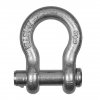
Would any of you consider using this? It’s a shackle with a slick pin with a 3 and a quarter ton WLL. $45ish
 

Attachments

  • 20FF28DB-8E09-4535-B9F8-91F08247A8CD.jpeg
    20FF28DB-8E09-4535-B9F8-91F08247A8CD.jpeg
    66.1 KB · Views: 4

New threads New posts

Kask Stihl NORTHEASTERN Arborists Wesspur TreeStuff.com Teufelberger Westminster X-Rigging Teufelberger
Back
Top Bottom