Richard Mumford-yoyoman
Been here a while
- Location
- Atlanta GA
Sometimes I don't know the question but so often the answer is..............a prusik.
When climbing tall trees I convert the support point of a base anchor to a canopy cinched anchor with bunny ears and a screw link.
On a tall climb the other day I wanted to do the same to a limb that was on the way up but not quite to the primary support point. This way a second climber could begin access without effecting my higher support point, plus that second climber would be anchored now on a larger but slightly lower limb.
Because most methods of tying off have a top or bottom where the knot is located, it created movement I did not like.
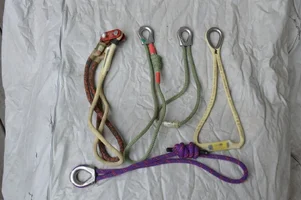
Looking at this now, this prusik combination would be perfect, much less movement, the line does not have to be unweighted nor does slack need to be pulled. Although the weight of the second climber on the other side of the line does not effect a base anchor support point, this configuration makes everything stationary.

When climbing tall trees I convert the support point of a base anchor to a canopy cinched anchor with bunny ears and a screw link.
On a tall climb the other day I wanted to do the same to a limb that was on the way up but not quite to the primary support point. This way a second climber could begin access without effecting my higher support point, plus that second climber would be anchored now on a larger but slightly lower limb.
Because most methods of tying off have a top or bottom where the knot is located, it created movement I did not like.
Looking at this now, this prusik combination would be perfect, much less movement, the line does not have to be unweighted nor does slack need to be pulled. Although the weight of the second climber on the other side of the line does not effect a base anchor support point, this configuration makes everything stationary.