treebing
Been here much more than a while
- Location
- Detroit, Mi.
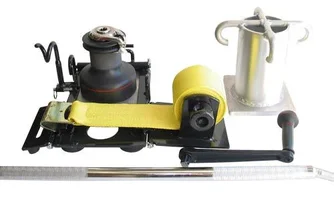
This event occured about a month ago while I was using a newly puchased GRCS. We were in the proccess of removing a large silver maple and on the last phases of butt hitching down the top and stem.
The first mistake that we made was not switching out the GRCS for the aluminum bollard as no raising was neccesary.
Due to the shape of the tree I could not see how many wraps my groundsman was taking. The second mistake was not communicating with him prior to every cut how many wraps etc.
Now, when I chunked over the top and said "let her run" My groundman found that it was easier, naturaly to "let her run" if he used less wraps.
By doing this however he was inadvertantly transferring wieght on to the pigtail. He was probably standing at about a 60 degree angle from the GRCS and about 20 feet away. the rope was passing through the pigtail at this angle as well.
We continued chunking down the stem and consequently with each piece we took, we were loading the pigtail, which is held on by a simple weld and NOT meant to be taking loads of any sort.
The last chunk was fairly large. probably in the vicinity of 300+ pounds. the piece came over, and my groundman had only one wrap because he had been decieved by the friction in the pigtail that there was enough. I still fail to understand how his computer was calculating this one, but ultimately I am to blame for not communicating with him and not making sure all things were in place before making the cut.
What occured thanks to god, did not do any damage to person or property but the pigtail broke and the log flew my groundman into the air. He let it go and the log hit the only small piece of lawn in the vicinity.
We did several things wrong on this project. The number one thing was not communicating prior to every cut what was going on with the GRCS.
Being a new tool, it was a bit different than a small diameter port a wrap which my groundsman had become quite profficient and understanding of. I think he felt the larger diameter bollard required less wraps. During the course of the job, in which we were using a new rope that was quite sticky he found that for fluidities sake less wraps worked better. Through experimenting he discounted the effect that the pigtail had on the friction.
This whole incident also would not have occured if we had placed the aluminum bollard and replaced the winching device. That is what is was there for. We did not I thinkbecause we were on such a roll, and the GRCS was in a location where I was not worried about nailing it with logs. I also liked the ability to get the rope nice and tight before making the cut.
I post this because I want to put out there the danger that the GRCS device has if used improperly. The pigtail can decieve the user into thinking that there is more friction than there actually is. This is something to always be aware of.
Thinking of bad scenarios, my groundsman could have not let go of the rope and been pulled directly under the falling log. The pigtail could have flown off and struck someone. The log could have went through the pavement or through a roof.
The main thing however is to clarify communication throughout the proccess. It is easy to become complacent and assume or trust that your team members are doing the right thing. This is especially important when using a new tool. We had not been working on the same page and were unaware of this until things went wrong.
Anyway, the pigtail was easily welded back on, the job was completed with no damage to anyone or anything (besides the GRCS). And life goes on.
The aluminum bollard from now on will be used in likewise lowering situations where lifting is not required. It runs a lot smoother besides.
Thats all. Lessons learned.
kevin
The first mistake that we made was not switching out the GRCS for the aluminum bollard as no raising was neccesary.
Due to the shape of the tree I could not see how many wraps my groundsman was taking. The second mistake was not communicating with him prior to every cut how many wraps etc.
Now, when I chunked over the top and said "let her run" My groundman found that it was easier, naturaly to "let her run" if he used less wraps.
By doing this however he was inadvertantly transferring wieght on to the pigtail. He was probably standing at about a 60 degree angle from the GRCS and about 20 feet away. the rope was passing through the pigtail at this angle as well.
We continued chunking down the stem and consequently with each piece we took, we were loading the pigtail, which is held on by a simple weld and NOT meant to be taking loads of any sort.
The last chunk was fairly large. probably in the vicinity of 300+ pounds. the piece came over, and my groundman had only one wrap because he had been decieved by the friction in the pigtail that there was enough. I still fail to understand how his computer was calculating this one, but ultimately I am to blame for not communicating with him and not making sure all things were in place before making the cut.
What occured thanks to god, did not do any damage to person or property but the pigtail broke and the log flew my groundman into the air. He let it go and the log hit the only small piece of lawn in the vicinity.
We did several things wrong on this project. The number one thing was not communicating prior to every cut what was going on with the GRCS.
Being a new tool, it was a bit different than a small diameter port a wrap which my groundsman had become quite profficient and understanding of. I think he felt the larger diameter bollard required less wraps. During the course of the job, in which we were using a new rope that was quite sticky he found that for fluidities sake less wraps worked better. Through experimenting he discounted the effect that the pigtail had on the friction.
This whole incident also would not have occured if we had placed the aluminum bollard and replaced the winching device. That is what is was there for. We did not I thinkbecause we were on such a roll, and the GRCS was in a location where I was not worried about nailing it with logs. I also liked the ability to get the rope nice and tight before making the cut.
I post this because I want to put out there the danger that the GRCS device has if used improperly. The pigtail can decieve the user into thinking that there is more friction than there actually is. This is something to always be aware of.
Thinking of bad scenarios, my groundsman could have not let go of the rope and been pulled directly under the falling log. The pigtail could have flown off and struck someone. The log could have went through the pavement or through a roof.
The main thing however is to clarify communication throughout the proccess. It is easy to become complacent and assume or trust that your team members are doing the right thing. This is especially important when using a new tool. We had not been working on the same page and were unaware of this until things went wrong.
Anyway, the pigtail was easily welded back on, the job was completed with no damage to anyone or anything (besides the GRCS). And life goes on.
The aluminum bollard from now on will be used in likewise lowering situations where lifting is not required. It runs a lot smoother besides.
Thats all. Lessons learned.
kevin