
Root Collar Fungus?

Here is an Oak with some issues.
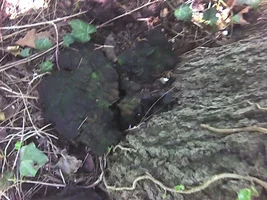
The tree appears to be in pretty good condition at first sight. Upon further inspection I found some shelf (conk mushrooms) protruding from the root collar. The trunk appears to be solid aside from this. Recomended removal due to location. What would you do?
 

Attachments

  • 176585-Photo_051409_002.webp
    176585-Photo_051409_002.webp
    83.5 KB · Views: 155
[ QUOTE ]
H The trunk appears to be solid aside from this. Recomended removal due to location. What would you do?

[/ QUOTE ]did you tap test the whole trunk? or drill? how many " has conks; what is total circ"?

what data did you use to support a recommendation?

species of oak? did you find the flare?

expose the entire infected area and assess--No Rx without an RCX! see pecan story; it has a similar start to it.
 

Attachments

I'll look for the pecan story but I had a recent experience with a similar, but smaller dry (old, dessicated) formation in the root flare. The trunk sounded solid all the way around and the tree appeared perfectly healthy except for a large, nicely calloused tear out from two years ago.

I recommended keeping the tree even though it was in range of two houses. We mulched it and I planned to come back in a month for another look. That was two weeks ago.

Big wind event last Saturday, the pecan went down... fortunately missing every target. I'll post a picture later. The stump showed a clear fissure with black deposits and associated decay pretty much right through the center. Wood was sound on three sides but where the fruiting body had been was had advanced brown rot (I think brown... that's the blocky, chunky type right?)

Anyway, I don't know How I could've predicted or detected that fissure of decay. Nor do I have much luck running down black, dried out fungal formations in my references. I suppose I should have sent you those pictures sooner Guy.
 
Whoa, so glad no damage from that brown cubical butt rot, where cellulose and flexibility are gone.

Black crusty...may be Inonotus, which can indeed get into pecans. Fruiting bodies are not dramatic or long-lasting. I left some growing in the heart of one that I reduced--this is a check to revisit that one this summer!

I just reduced a huge pecan in FL; construction damage. Taking back the sprawl on those things is SOP, even healthy ones IMO.

Pulleez take pics of the stump etc.
 
[ QUOTE ]
[ QUOTE ]
H The trunk appears to be solid aside from this. Recomended removal due to location. What would you do?

[/ QUOTE ]did you tap test the whole trunk? or drill? how many " has conks; what is total circ"?

what data did you use to support a recommendation?

species of oak? did you find the flare?

expose the entire infected area and assess--No Rx without an RCX! see pecan story; it has a similar start to it.

[/ QUOTE ]

Yes i did "Tap Test" the trunk with a rubber mallet which produced minimal "Thud" it does not sound hollow. However I am concerned with the potential of root decay which may not be exhibited by this method or by drilling. Further excavation around the trunk did exhibit a lack of flare. I am not a big advocate of "drilling" (Resistagraph or Increment borers) in an area where obvious infection is present. Though this option was discussed with the client. The "conks" surrounded 3/4s of the trunk base. There is also another stem or lead which could almost be considered a Co-dominant that is severely declining. It is a northern red oak Quercus rubra approximately 30" DBH. 90 percent of the Bio-Mass leans over the house.
I support this recomendation based upon prior experience and potential liability! Not sure What "an RCX" pertains to but you seem a bit hostile.
Thanks for your input.
 
I'm not hostile, just cutting to the chase. Your assessment sounds good by the book. ;)

"Further excavation around the trunk did exhibit a lack of flare. I am not a big advocate of "drilling" (Resistagraph or Increment borers) in an area where obvious infection is present. Though this option was discussed with the client. The "conks" surrounded 3/4s of the trunk base. There is also another stem or lead which could almost be considered a Co-dominant that is severely declining. It is a northern red oak Quercus rubra approximately 30" DBH. 90 percent of the Bio-Mass leans over the house."

Root Crown Examination showed 3/4 circ decaying, very bad, seals the deal with that target. I agree drilling would have been pointless--that tool is at the bottom of my bag too.

Careful rigging that thing--just ask Blinky aobut climbing leaners with crusty butts. Kinda like Slim pickens in Dr. Strangelove, rodeoriding that A-Bomb!
 

New threads New posts

Back
Top Bottom