islandedge
Participating member
- Location
- downriver
Make sure u don't hit the saw function.Dude I’m totally doing that on Monday!
Follow along with the video below to see how to install our site as a web app on your home screen.
Note: This feature may not be available in some browsers.
Make sure u don't hit the saw function.Dude I’m totally doing that on Monday!
That’s hilarious!!! Put two in the grapple and spin it like a disco ball. Haha!Now I don't even have to climb on roofs to blow the mess off, just put the blower in the grapple and Away you go
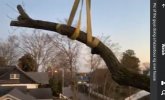
It looks to me like it would work, but it’s not something I would do. I don’t see it rolling out of the stings, or falling, as it is “choked” in a way, but it’s probably not an approved attachment method and there’s definitely better options out there!This is on a stick crane, not a treemek, but I saw this in a video put out by a local company and thought I'd get your guys opinion. Didn't seem worthy of its own thread for a single crane pick and I didn't want to clutter up someone else's thread.
Looks pretty sketchy to me, but I'm ok with being wrong on that. From what I can see, it's two eye to eye slings, each wrapped 540° around the limb then clipped back to the hook. No actual cinching connection. The video was of the cut only, so I did not see it setup.
I'm not thinking of doing it this way, and I don't think the crane op that I hire would ever let that fly, just being nosy/curious. This company has a few things going on that I've noticed. Zero PPE and shock loading rigging ropes as well as leaving trunk wood loaded on their crane deck to increase their load chart.It looks to me like it would work, but it’s not something I would do. I don’t see it rolling out of the stings, or falling, as it is “choked” in a way, but it’s probably not an approved attachment method and there’s definitely better options out there!
Definitely notThis is on a stick crane, not a treemek, but I saw this in a video put out by a local company and thought I'd get your guys opinion. Didn't seem worthy of its own thread for a single crane pick and I didn't want to clutter up someone else's thread.
Looks pretty sketchy to me, but I'm ok with being wrong on that. From what I can see, it's two eye to eye slings, each wrapped 540° around the limb then clipped back to the hook. No actual cinching connection. The video was of the cut only, so I did not see it setup.

I just reread this post. If you are only using 1 sling you want it to be on the side that would be where you saw is as you finish the cut. So it sounds like you should have cut 90 degrees from the direction you did and the crane operator rotate to make the pick. with only 1 sling having it on the wire side sound right most likely. 2 slings are definitely preferred. Snap cuts/by pass cuts do not shock load if made properly. I use them daily the problem comes with leaving too much wood. depending on species 1/4 to1/2" is all that is needed to be effective.As I'm typing I remembered that he asked me to set the sling on the side towards the powerlines to help prevent the wood from moving that way, which was 90° from the direction that I cut (towards the crane) should I have made my cuts perpendicular to the sling's anchor point instead of the booms position?

I've repeatedly seen guys refer that doing that shock loads the crane. We do it all the time and there's no bounce of the picks. We try to orient them where you just boom up a bit to break it out. I think it's less shock load vs a climber not quite getting everything cut through and telling you to pull up on it. When that 1/2" of fiber that was holding it breaks there's a lot more shock load than you would ever possibly get with a bypass.I just reread this post. If you are only using 1 sling you want it to be on the side that would be where you saw is as you finish the cut. So it sounds like you should have cut 90 degrees from the direction you did and the crane operator rotate to make the pick. with only 1 sling having it on the wire side sound right most likely. 2 slings are definitely preferred. Snap cuts/by pass cuts do not shock load if made properly. I use them daily the problem comes with leaving too much wood. depending on species 1/4 to1/2" is all that is needed to be effective.
Whats the exact breaking force for a 48" southern red oak with a bypass cut and 2" of hinge? ???? The answer is exactly why bypass cuts are a less than optimal cut with crane work. Meet your cuts and read the kerfs. A skilled cutter and operator working together can work this over and over. Boom deflection plays into it a lot. Knuckle Booms have much more boom deflection than sticks. If you over pre-tension and the log jumps off the cut, its going to come back down with a vengance. If meeting the cut isn't an option, V-cut and Shelf cut are a solid option. Proper sling placement and an accurate balance in the orientation it's in while still attached to the tree will keep the cutter from having to fight the pinch. Bypass cuts aren't necessary and considering cranes are designed to pick up static loads and put them beck down, breaking cuts, pushing, pulling, dragging, and leaning aren't what cranes are designed to do. I don't let the cutters do snap cuts with my crane. I teach them a better way and its much gentler and safer on my equipment. Just my 2 cents and the sentiment of basically everyone who teaches at The Crane School.I've repeatedly seen guys refer that doing that shock loads the crane. We do it all the time and there's no bounce of the picks. We try to orient them where you just boom up a bit to break it out. I think it's less shock load vs a climber not quite getting everything cut through and telling you to pull up on it. When that 1/2" of fiber that was holding it breaks there's a lot more shock load than you would ever possibly get with a bypass.