red oaks in decline

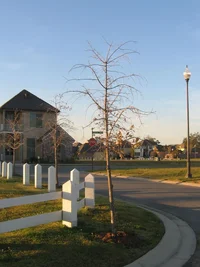
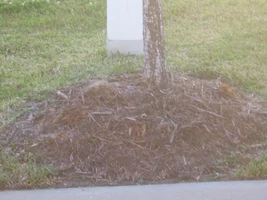
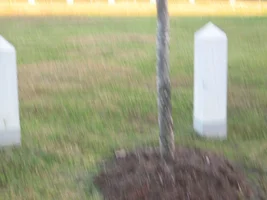
A subdivision I am working for has 20 red oaks in decline. They were planted about a year ago, have a 3" dbh and planted about 10 yards apart (street trees). Most of the trees have lost about 90% of their leaves, the others are about 50%. I have not done any soil test yet. One thing I did notice was that all the trees were mulched like a volcano, with the mulch about 5" up on the trunk and goes out about 2 feet from the trunk. Could this be the problem?
 
If it's not the main problem, it's certainly not helping them any either. Any decline issues on any trees in the area, other than those oaks? Mulch shouldn't be against the trunks of the trees. Have you pulled it back on any of them and excavated to check the condition of the roots? They might be planted too deep, in addition to being mulched too close.

Are there any other trees in decline in the area, or just the red oak saplings?

Before doing a soil test, it's probably a good idea to see if perhaps there's a cultural issue. How are mature red oaks in the area faring?
 
There are some bradford pears planted across the street with the same mulch mound but they are in good shape. They are also a couple of years older. I was think that since they were established maybe the mulch mound did not stress them out whereas the newly planted trees could not handle it.

I did dig some of the mulch away but did not expose any roots. I really didn't look close enough to see if they were planted too deep.
 
Transplant shock, drought stress, heat stress, girdling roots, deep planting, over mulching, bacterial leaf scorch, two lined chestnut borer, neglect.

I'm sure I missed something.

Got any pictures?
 
Treegazer has it right, could be any of his list, alone or in combination. I'd bet on them having been planted too deeply *or* having root injury (dessication and death of fine roots, usually) from the transplant process. I That will bring on borers, some root rots, etc. I guess that falls into transplant shock. The volcano mulching alone, although hideous and to be avoided, probably wouldn't show up so fast...but I don't know Louisiana!
 
Lets not forget that often times landscrapers don't remove the burlap, twine or wire baskets the trees were balled in.

Sounds like since most of them are in tough shape it is probably a common cultural problem.

Time to dig one or two up to see what the root ball looks like and find the root flare.
 
Hello Kt Smith! Had the great pleasure of meeting and learning from Alex and you at the sugar shack.there was a group of us from New jersey,the day we left was a blizzard!!! I will never forget that weekend!!
Great to see you on the buzz!!!!
Sorry for going off topic!!!
 
Lots steamier in LA than NH, Kevin--funky fungus down south!

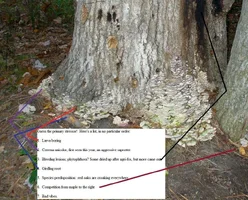
Just looked at a red oak in decline today; pic
 

Attachments

  • 200391-redoakcerrenaleblang.webp
    200391-redoakcerrenaleblang.webp
    243.4 KB · Views: 113
[ QUOTE ]
Lots steamier in LA than NH, Kevin--funky fungus down south!

Just looked at a red oak in decline today; pic

[/ QUOTE ]

Mine don't look that bad yet. I will try for picts tomorrow. Thanks for all the input.
 
Thanks Taitree for the shoutout and thanks Guy for the photo of the oak. At least making the decision as to what to do with the pictured tree shouldn't be too hard! As you know better than I do, the tough calls are the intermediate ones!
 
Is it just me, or do they seem to be planted awfully close to the street? It also appears that they're having fencing installed on the inboard side of the trees. Post hole excavations and equipment could be compacting the soil.
 
that close to the street the soil is no doubt utter trash.

the first soil test you need is done with a shovel--dig a hole outside the rootball and fill it with water. if the hole does not empty that is the first problem--no air!

if the trees survive they will be busting those curbs well before maturity. the planner should be shot.
 
I agree, these trees should not have been planted there. Since they were planted about 1 year ago, would soil compaction still be an issue? The fence and all construction was done before the trees were planted. The soil outside the rootball would be compacted, but the rootball itself would not be. Does this make a difference?
 
[ QUOTE ]
The soil outside the rootball would be compacted, but the rootball itself would not be. Does this make a difference?

[/ QUOTE ]a HUGE difference; until the soil problem is fixed any other treatment is a waste of money.
 
I am thinking that my best bet to alleivate the soil compaction is to get an air spade and clear all the dirt away from the roots. Can I replace the dirt with compost and mulch?
 
I'm thinking you still ought to excavate a couple trees to see what the roots look like, and follow Guys advice to dig a hole outside the root ball to see if the soil is too compacted for water to drain. No sense in discussing cures until you know what the problem is. Diagnosis without examination is malpractice. Get to digging and let us know what you observe.
 

New threads New posts

Back
Top Bottom