Quercus pedoncule deformation

IMG_20141218_100652526.webp IMG_20141218_103939884.webp IMG_20141218_104015535.webp Dear Colleagues,

Is there somebody out there that can help me understand what is going on with an once fabulous Oak tree growing in a garden close to the sea in the south west of france ?

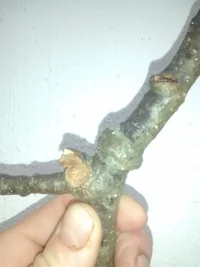
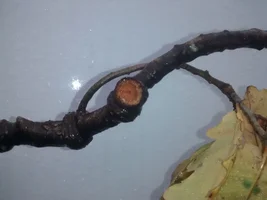
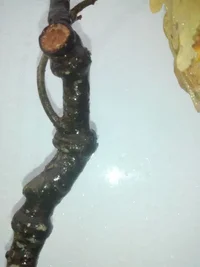
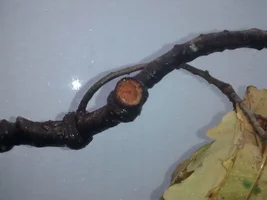
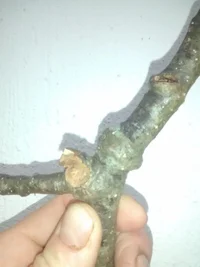
Please have a look at the pictures, where you can see a typical branch with strong swollen internodes. It seems that these swellings cause the end of the branch to brake off. The alive side of the bumps show a vital cambium and wood structure however very few buds and leaves.

While dead wooding i had the curious experience of finding dead branches in the 15 to 35 cm range without a sign of a leave, bud or twigs however after cutting i found the wood and cambium in perfect condition.

Also the leaves seem odd. Now in autumn not as obvious however in spring and summer i find the leaves to be out of proportionally lobbed and somehow more leather like then normal.

On the base of the tree i have observed Fistulina hepatica, other then that i have not spotted other fungi.

If you would like to see some other details let me know.

Cheers,
Maarten
 

Attachments
  • IMG_20141218_100652526.webp
    IMG_20141218_100652526.webp
    83.8 KB · Views: 5
  • IMG_20141218_103939884.webp
    IMG_20141218_103939884.webp
    97.6 KB · Views: 5
Last edited:
Small galls on oak branchlets can be caused both by small parasitic wasps (the cynipids and allies) and by fungi (a bunch of ascomycetes including Phomopsis and the one I learned as Dichaena quercina but which now seems to go by genus Polymorphum). Some longitudinal (axial) slices through the gall might show a larva if the former and nothing from the latter, except vigorous tree tissue! In the northeastern US, they are not usually a big problem on oak. I don't have any immediate suggestions for the other symptoms except that they are likely unrelated to the beefsteak fungus. Others' views may be more insightful!
 
Hi Kt,
I made some axial cuts thru the swollen internodes and did not find larva inside. Imagine that this swelling occurs on every twig on every internode all over the tree.
By internode i mean to say the beginning and ending of one grow spurt, we have about 3 or 4 of suchs growths on oak each season. The odd thing with these swellings is that there is a line running thru the middle making it really easy to snap of the outer end of a twig. Such a snapped off internode you can admire on the image ending with 84.

I will try to take some pictures of the cuts i made when there is better light tomorrow.
 
Last edited:
OK, now that I've thought about it a bit, I'm thinking more along the lines of simple branch shedding, technically known as cladoptosis. This s a known thing for oak and has been described for Q. robur, which I think is another name for Q. pedunculata...or at least is closely related. Of course, I don't see either tree species that much outside of arboretum collections. What it is, is the formation of an abscission layer, similar for leaf shedding, for trees under stress. It's a means to reduce crown size, particularly in times of hydraulic stress. The description of the effects on foliage may fit also.

The main reference in my files is Klugmann and Roloff from 1999, in the German language. I could send that to you, I expect. The Pallardy and Kozlowski physiology texts speak of it as well. I don't see it in the Sinclair and Lyons pathology text. I suggested you do an internet search on cladoptosis and see if pictures match up.
 
Spot on ! it is Cladoptosis. Thank you
My first guess would be the tree is suffering from a change in the water table, considering it's age and placement on an elevated area.. however by now the base of the thee is suffering from so many issues it is hard to say. Somewhere between 20 and 30 years ago the trunk got severely cracked in a storm, ever since it has been a week spot. All tho the tree did manage to cover the crack with new tissue...by know a third of the trunk has lost its bark. I have been visiting this tree yearly over the last 8 years, the initial years the tree still had its full splendor with some die back left and right, in the last four it has abandoned the outer canopy. It responded well to a vertical mulching with some really fine organic fertilizer by developing a nice foliage layer on a lower level. Sadley now in the last two years that layer is seriously starting to thin out. Some parts of the tree are still some what vigorous other just show decline..
 
Last edited:
Maarten, that is an odd phenomenon. Cladoptosis I've seen in Q alba et al and that Nev Fay describes in Q robur usually involves a flattening around the attachment, so it peels off when it is shed. That bulging in your pics looks like the tree is in a hurry! That's consistent with the timetable you relate about the inner canopy declining.
Is the tree separating into segments?
What treatments are you contemplating?
What does the owner want?
 
Guy,
The big crack in the base of the tree was bolted together by my friend Bernard who owned the business about 15 years ago. There was also a dynamic cabling system that i moved for there is no more weight on it. I placed it now on the biggest horizontal branches lower in the tree. Separation is not an issue.

The owner would really like to conserve the tree, he even has a name for it 'Mars', however the decline has been going so fast recently that we have been talking about removal. He is open for any treatment that could help the tree extend it's life.

Four summers ago after the horizontal mulching i was quite positive for the tree seemed to have responded well by establishing a nice and full lower canopy but seeing now in the last two years at what rate it is letting go of that i have doubt repeating the process will make a significant difference.

Then there is also the issue of the stem losing more and more bark and so contact to and fro the root system is getting more restricted each year..

I will try to upload a video so you get an impression of the tree.

Suggestions are most welcome.
 
Good, please do! Soil improvement (vertical mulching?) in a new area may be worthwhile. Contact with roots is a big deal yes; can you show what's affecting the flare to make the bark fall off?

Mars, I like that--is Venus nearby?
 
Good vids thanks. You look familiar...anyway that was a whole lot pruned out, and some cuts >10 cm? I see guys in London manage Q robur that hard too; I suppose it's not an uncommon approach. But those were healthier trees.

If a lowering of water table is part of the problem, what will the drying effect of those wounds have on a moisture-stressed tree? Personally I tend to keep every green leaf with room to grow on a declining vet. Would you consider sealant on any cut >5 cm, to lessen the ingress of air into the vascular system?

It'll be interesting to see the bark shedding place--did it smell like old beer?
 

New threads New posts

Back
Top Bottom