Pulling with Snatch rings vs. X-Rings vs. Blocks

Nicely done. And I thank you for the mention. One thing to consider using the rings is all the force is compression when used as a snatch block. There is no tension force trying to pull the ring apart. The rope going around the ring is compressing against the soft shackle going through the center with a chunk of aluminum in between.
I have dropped large stems onto these rings and had to dig them out of the dirt on several occasions. I have not broken one, and the soft shackles don't care. Can save some expensive equipment.
Again, nice work, Patrick.
 
Thanks for taking the time to test out these different setups, it certainly answered some of my own questions on the subject.

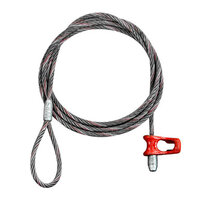
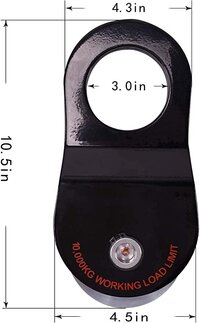
So with regards to using them in a high abuse situation, I've got something for that as well, but I go about it a different way. I've put a logging choker, like a 12', on the load, then connected a cheap but burley Amazon pulley to it. The long choker basically gets the block a few good feet away from the load so it won't get smashed, and for under $30 you can get blocks that claim 10,000kg working loads and fits a 3/4" rope.

wrs-3-4-x-30ft-cat-style-logging-choker-48__87364.jpg

61r6n9BtJYL._AC_SY879_.jpg
 
One thing to consider using the rings is all the force is compression when used as a snatch block. There is no tension force trying to pull the ring apart. The rope going around the ring is compressing against the soft shackle going through the center with a chunk of aluminum in between.
I have dropped large stems onto these rings and had to dig them out of the dirt on several occasions. I have not broken one, and the soft shackles don't care. Can save some expensive equipment.
That's a good point Dave, used in this way they are strong as hell. I would expect the friction to increase as the load increases, for the same reason. If anyone has thoughts on testing the efficiency of stuff like this while it's rotating under load, I am all ears.

I forgot to mention in the video that these rings I picked up from Amazon are on the low end of price and probably quality. But again for me, that's the point.
 
I've got something for that as well, but I go about it a different way. I've put a logging choker, like a 12', on the load, then connected a cheap but burley Amazon pulley to it. The long choker basically gets the block a few good feet away from the load so it won't get smashed, and for under $30 you can get blocks that claim 10,000kg working loads and fits a 3/4" rope.
I was thinking about that last night, I kept finding cheap blocks for sale when looking for snatch rings...
 
I was told, many years ago that a Spanish Burton set up came from rigging canons on ship decks to pull them back into position after they were fired. Don't know if that is true, but it sounds like something I would like to think is true. Never looked it up because if I found out it did not, I would be disappointed. It's the romantic in me.
 
I was thinking about that last night, I kept finding cheap blocks for sale when looking for snatch rings...
I use some of those cheap blocks from time to time, and I use cable from time to time. If you go that route, just remember to clearly label the blocks (I spray paint mine orange) that have been used with a cable. Once you use one with a cable you will find that it will tear up a rope if you try and use it with that as the cable gouges up the sheeves.
 
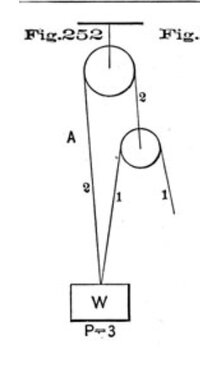
I was told, many years ago that a Spanish Burton set up came from rigging canons on ship decks to pull them back into position after they were fired. Don't know if that is true, but it sounds like something I would like to think is true. Never looked it up because if I found out it did not, I would be disappointed. It's the romantic in me.
Screenshot_20230320-082010_DuckDuckGo.jpg
The Historic Naval Ships Association hnsa.org shows the Spanish Burton like this and says it's a 3:1. I rigged mine backwards, making it a 4:1. I think.
 
Thanks for taking the time to test out these different setups, it certainly answered some of my own questions on the subject.

So with regards to using them in a high abuse situation, I've got something for that as well, but I go about it a different way. I've put a logging choker, like a 12', on the load, then connected a cheap but burley Amazon pulley to it. The long choker basically gets the block a few good feet away from the load so it won't get smashed, and for under $30 you can get blocks that claim 10,000kg working loads and fits a 3/4" rope.

View attachment 87079

View attachment 87078
The mere sight of a choker makes me curl up in the fetal position and uncontrollable weep like a baby.
 
km3 is parallel lay core might help improve the results. (less losses)
8:30 km3 in 5/8 cmi pulley 2.04/1.86 = 1.1
next two look like on polyester or nylon cover of soft shackle:
9:10 km3 amazon red ring 2.1/1.58 = 1.33
9:50 km3 beast x ring 2.24/1.78 = 1.26
11:00 km3 rigging shackle body U 2.08/1.30 = 1.6

note: 1.6 is about the same as rough tree bark
edit - bad memory - it's 2.6 not 1.6 apologies for that.

11:40 km3 DMM steel carabiner (dia?) 2.14/1.28 = 1.7

my data for comparison (tachyon rope):
W40 0.471 dia big steel biner 1/2 wrap tension ratio 1.86 mu 0.197
W41 0.375 dia half cylinder small blue Metolius biner 1/2 wrap tension ratio 2.07 mu 0.23
W42 big heavy yoke N-261 0.49" wide with edge rounds matching 1/4" diameters, flattish face, 1/2 wrap tension ratio 2.4 mu 0.28

12:52 CMI block you can predict the result:
cmi block (1+1/1.1.) x 2.04 = 3.9, meas 4.09 (?) settled?


13:37 directly on shackle fiber, not on cover, red ring, ring spinning (1+1/TR) x 2.0 = 3.43
calc TR tension ratio = 1.4
meas TR was 1.33 this run did a bit worse.
I went through the backwards math to figure out Donzeli's block tension ratios.

14:16 beast x ring spinning on soft shackle cover (not directly on fibers)
(1+1/TR) x 2.04 = 3.8
calc TR tension ratio = 1.16 seems quite good. Maybe too good?
meas TR was 1.26. Something happened to get "too good" data. settled?

It would be worth trying different soft shackles i.e. your shackle(edit - ring!) on fibers, your shackle(edit - ring!) on cover, on slippery dyneema direct. Best to do the direct tension ratio first setup you used. Then that TR can be used to predict all your various configurations.

When I have doubt about a data set I try it twice. Catches the odd error and gives confidence.

Great finding a kindred nerd! Good stuff! :)


The whole concept of tension ratio came about because I used a whole bunch of points from the graph of tension vs time in my recording as I raised the tension and they all worked out to a constant ratio. The ratio reversed as I lowered the tension. Somewhat expected.

 
Last edited:
What I like about this snatch block idea is the midline attachability options for it. Which is why I have never gotten too into ring usage, because I have to thread it.
 
One could make an integrated soft shackle sling for use with a snatch ring- would be very compact and tidy.

I believe I discuss that splice in a thread on the treehouse forum, but it's been a min since I've actually made one-

Treestuff makes them called "soft claw", and you can figure it from their pictures too
 
I picked up some cheap synthetic winch line 3/8" on Amazon (Ucreative - about $70 / 100 ft) to experiment making some diy soft shackles from. Along with a cheap ring or two, might make a nice little rigging kit. Thanks for making video Muggs - I had been planning to make some rigging rings using offroad rings (the Amazon RENO ones) but was going to do it the other way where the sling is spliced around the outside of the ring and the rigging rope goes thru the hole. I like this offroad / pulley / soft shackle method over doing that.

Bleeping Jeep has a product called the Freedom line that replaces all the metal in an offroad system that might be interesting to look at as well. There's a video or two on YT about how it works...
https://bleepinjeep.com/product/freedomline/
 
Anyone know of making soft shackle in something like tenex-tec or similar? I've never seen one in anything but the class 2 ropes (probably for good reason - size to weight / strength?)
 
Anyone know of making soft shackle in something like tenex-tec or similar? I've never seen one in anything but the class 2 ropes (probably for good reason - size to weight / strength?)
I have made some 3/4" Tenex Tec soft shackles. 2' diameter ones. Used them to pull a road grader out of a ditch that was buried deep in mud. Have no idea what the breaking strength is however. Most reports I have read on breaking soft shackles turn out to be about 150% of the breaking strength of the rope used. Remember, you have two legs of rope in the soft shackle. I also have made some 1/2" Tenex Tec ones, but again no data on strength for you. They have held up fine for what I have used them for, which is mostly snatch rings and winching trees out that are hung up.
 

New threads New posts

Back
Top Bottom