Preaching to the choir.

evo

Been here much more than a while
Location
My Island, WA
As I’m sure most of you know the PNW is roasting. Shattering all time temps, and even more so for the month of june.
now I’ve lived in Tucson for a record high heat event (sure it’s now broken), so I know how to function in extremes. But this was the hottest with the highest humidity I think I’ve experienced, when working in the garden sweating though my double front char hart cut offs I got bouts of the ‘chills’. my skin would nearly instantly go dry and it took me half the morning to realize that was from a warm dry breeze. Go evaporation cooling. In Tucson the air was so dry there was hardly an opportunity to sweat visibly.

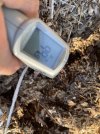
I played around with my infrared thermometer. I was very happy to see the ground moisture in a area I haven’t watered at all.
first pic is concrete
Second is the surface of deep mulch
Third is just below the mulch.
below grade 2” was in the low 80’s 59D58EBE-E7BA-4259-B3D2-3D4747D98EC8.jpeg16533CA9-713D-4E89-90B4-8D122AB19F41.jpegB46E436D-D938-49B0-802F-966B66985097.jpeg
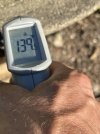
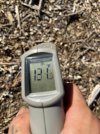
the temp differential between the surface of the mulch and 1-1.5 below grade was 43 fucken degrees. About 3” of heavily settled fine arbor chips
 
Last edited:
It's10pm, 82 degrees and we lost power about 20 minutes ago, probably due to increased loads from people trying to stay cool in these high temps.
 
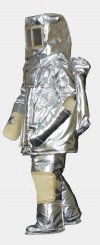
I'm having trouble getting some of my gear to fit over my new summertime outfit. Any advice?View attachment 76515
Nice, try coming home from Mars so you can take that space suit off. Haha

it amazes me how many landscapers, gardeners, homeowners, etc ignore the benefits of a good layer of organic matter. I had a boss that would rather try every new age water retaining device on the market instead of just using good old fashioned mulch. Drove me nuts
 
What’s the outlook for fires out west this summer and autumn? Looked like something out of a nightmare the last few years.
 
Kiln entry suit, thank you very much.

(And I wonder how much they have to pay to get someone to go into an operating kiln, furnace, etc. and perform repairs.)
I have no idea, but I’ve been in a coal firebox on a steam traction engine while it was hot - the fire was pulled, but it was 200+ degrees in there. That’s too hot for me!
 
In case you haven't notice we have reached the point of no return folks, so as lovely as mulch is, it certainly isn't gonna save us from this inevitable disaster of our own making.. Despite all the evidence, we as a species, and we as a nation are carrying on business as usual. We had our chance to respond, but in typical human fashion, we thought we knew better. That door is now swinging shut and now we must pay the price..

I think that we as an industry really need to have an honest talk with ourselves as to how much we are helping or hurting the situation..Since removals dominate this industry, and we use massive amounts of fossil fuels in the process, I have come to my own conclusions..Do I have the conviction to hang up my spurs?
 
Not as bad as in CA, but fire risk is a big and quickly growing risk in my area. Unnatural and extremely overstocked forest, combined with 100 years of fuel buildup and drying conditions are making for a perfect storm for catastrophic fire potential. As both a tree guy and a volunteer fire fighter this is ALWAYS on my mind.

All we can do about it is reduce fuel loads and the ability for fire to start and spread, but the scale is so large in reality there isn't a lot of hope if I'm honest. People can thin stands around their own homes/property and local governments and power companies can work around power lines, but the work is hard, time consuming and expensive. The terrain is so difficult in my area much of it can't be mechanized. It's hard enough to find a single guy to hold a rope and feed a chipper around here, getting a crew to thin acres of land is almost impossible. Living in the woods is risky and as more people move into these areas the problem grows when people expect their property to be somehow protected in the event of a fire.... That said, I'm not about to move to the city to avoid potential fire. No easy answers.

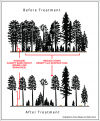
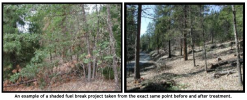
(example photos from quick google)

Schematic-showing-the-principles-of-thinning-to-reduce-stand-level-hazard.png

shaded-fuel-break-before-and-after.png
 
Fire is simple a symptom of the disease that we have created. I'm just a dumbass old logger and tree-man, but I'm pretty certain that more deforestation and more fossil fuel consumption ain't gonna cure what ails us. Same old same old, really...
 
For sure. Fire is a natural part of an ecosystem and low-intensity fires were the the norm here for thousands of years, a system which has been disrupted by people. The options here with regards to fire risk are do nothing, reduce risk where possible or leave. And for better or worse, more people are coming into these kinds of areas, and reducing risk does take fossil fuels.

In the modern era, probably the most ecofriendly way to live is in a single bedroom apartment in a city, where you can get by without a car, utilize the efficiencies of existing infrastructure and so on, but a lot of people don't want that life. I'm guilty of that myself.
 
Rural life didn't cause this mess. Humans insatiable hunger for comfort, convenience, and so-called progress did...
 
I blame the agricultural revolution.
Exploded human population beyond what the earth could sustain. Homo sapiens worked less and had less back injuries back in the pre-agricultural days. Also lived longer (aside from the past hundred years or so)

(I’m paraphrasing lazily from the book Sapiens by Yuval Noah Harari)
 
Back
Top Bottom