Pollarding

I am looking for some info about why a tree can take pollarding!
I know there is a great difference between topping and pollarding: You only remove small sprouts and not big branches - small wounds etc. BUT: Why can a tree cope with having all its foliage removed every 1, 2 or 3rd year?
And why is over-pruning harmfull to the tree, when pollarding isnt?

I am avare, that pollarding is way better than topping and over-pruning - but I often have problems explaining that to the customer.
Hope you get my question? :-)
 
One part of the answer, I think, is that the knobs, or "pollard heads" store a lot of starch, maybe more than is usually stored in the average stem tissue. This stored energy must help compensate for the annual loss of foliage.

I'm no pollarding expert. I've just done my fair share of it. I don't know a whole lot more than that. All I do know is the trees that I've pollarded in California appeared to be way more healthy than the topped trees all over here in East Tennessee. The pollard heads did not show the same signes of decay and general wreckage that a topped internode usually does.
 
The base for understanding pollarding is that the parts that are removed are branches and what remains are stem. Be setting up a proper pollard head the tree sets up branch collars with all of their chemical defenses. When the cuts are made each time they're made at a branch collar so there is less decay than whacking away at topping where stem wood is cut leading to more decay.
 
Its time to push the boundaries of accepted arboricultural practice.

There must be a place for Topparding, a hybrid form of pruning, a cross between pollarding and topping. Given a specific set of circumstances it may be possible to leave a badly storm damaged tree alone after broken limbs have been pruned out. Or create a mature tree with a smaller crown artificially through a combination of pollarding and topping techniques.

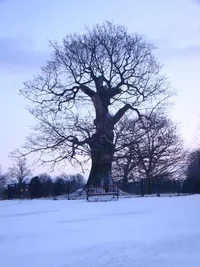
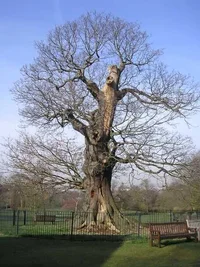
This Oak had the entire crown ripped out in 1987, look at how its has re-created a crown and picture if you will, this tree on a summer's day with a full compliment of leaves, you wouldn't even know it had been damaged over 20 years ago.

284907-DSC04498.JPG
 

Attachments

  • 284907-DSC04498.webp
    284907-DSC04498.webp
    52 KB · Views: 44
Good explanation by Tom, the tree builds new branch protection zones, and "collars", at nodes along the branch.

"Given a specific set of circumstances it may be possible to leave a badly storm damaged tree alone after broken limbs have been pruned out. Or create a mature tree with a smaller crown artificially through a combination of pollarding and topping techniques."

Grover, restoration pruning is commonly done, for a number of reasons. There are 4 articles, written from England, Canada, and east and west US, in the June Arborist News that describe this work.

Take a read--one shows a linden that has been maintained this way for 900 years. also the attached describes work done over 10 years ago. After the Storm, "Head" for Better Form--bad title but it fit the times. Now, "heading" is recognized as an obsolete term, since it can describe both nodal and internodal cuts. As Tom and thumb haha both note, nodes are where BPZs are at.

Nice picture--where's the tree?
 

Attachments

[ QUOTE ]
The base for understanding pollarding is that the parts that are removed are branches and what remains are stem. Be setting up a proper pollard head the tree sets up branch collars with all of their chemical defenses. When the cuts are made each time they're made at a branch collar so there is less decay than whacking away at topping where stem wood is cut leading to more decay.

[/ QUOTE ]

Nice, concise explination, Tom.

applaudit.gif
 
What is an accepted practice or not always opens room for lively debate. I have seen many fine results from pollard cutting that took years to come to fruit, and in the meantime the person who did the cutting be blackballed as a hack.

The results of our work and understanding of tree physiology do not always shine until years after the fact.

The old school that the Brits have long come to learn and teach certainly do shine in arborculture.

Time that some of Western theology come to accept the ways of old school. In more ways than one.
 
This could probably be compared to fruit pruning too, because fruit trees like apple tend to get a lot removed each year, but come back just fine, decade after decade.

With pollarding, there is already a big chunk of compartmentalization existing each year from the years before, too.

And pollarding can be done after leaves have fallen, whereas some topping is done with leaves on. I don't pollard because it looks outstandingly weird, but I'd do it after the leaves fell off anyway, for better visibility.

For all practical purposes, pollarding is topping.

Topping is said to be the "indiscriminate" act of topping trees. But "discriminate" is defined as making decisions. In simple terms, 80% of the climbers I've met who top, made decisions that resulted in them making topping cuts where they did, whether they crew-cut the tree or just stubbed the trunk off.

So on the basic level, topping is "discriminate" almost as often as other professional pruning.

The important part is the thought process that goes into the discrimination.
 
[ QUOTE ]
Topping is said to be the "indiscriminate" act of topping trees.

[/ QUOTE ]

Where does it say this, Mario?? ANSI used to say predetermined, now says internodal and without regard for health and structure. check the 2008 version--let's stay on the same page as it were.

regard = discriminate so i largely agree with you btw.
grin.gif
 
[ QUOTE ]
[ QUOTE ]
Topping is said to be the "indiscriminate" act of topping trees.

[/ QUOTE ]

Where does it say this, Mario?? ANSI used to say predetermined, now says internodal and without regard for health and structure. check the 2008 version--let's stay on the same page as it were.

regard = discriminate so i largely agree with you btw.
grin.gif


[/ QUOTE ]

Trees are Good on Topping

Virginia Coop Extension

Vancouver Get the Facts with quote "indiscriminate"

ISA PDF - see page 122 for "indiscriminately"

It's a term of description I read or find several times per year in various pamplets, websites, etc..
 
[ QUOTE ]
What is an accepted practice or not always opens room for lively debate. I have seen many fine results from pollard cutting that took years to come to fruit, and in the meantime the person who did the cutting be blackballed as a hack.

The results of our work and understanding of tree physiology do not always shine until years after the fact.

The old school that the Brits have long come to learn and teach certainly do shine in arborculture.

Time that some of Western theology come to accept the ways of old school. In more ways than one.

[/ QUOTE ]

Nice post Mr Beranek

Guy, the tree is in a public park in Hampstead Heath, London.

If this tree had been removed in 1987 due to excessive crown damage caused by the Great Storm, people would never have got to see the tree reborn in all it's gnarled glory - a survivor

284983-old.JPG


284983-leaf.JPG


284983-snow.JPG


284983-night.JPG
 

Attachments

  • 284983-night.webp
    284983-night.webp
    24.4 KB · Views: 33
Nice debate, for what its worth. In the UK we have two quite separate lines in tree care, Sylvaculture and Arboriculture. The first care, of the woodland environment as a whole, the second the care, of the individual tree.
Traditionally pollarding was practiced by estate woodsman and farmers with perhaps no knowledge of dormant buds, nodes or any such such things. they did what they did because it worked. Perhaps coppice cutting proved unreliable in sum circumstances as browsing animals munched on the new growth so the cut was raised to the point where it was out of reach for said animals. In those days life was probably quite hard trying to balance all the jobs to be don around the land and chopping a few branches of a tree for fodder or fire wood could wait after all unlike corn it will still be there in a few month/years time. Maybe they did it when time permitted and as time went by they found they got better regrowth results if cut at such and such time of year.
There are many ancient pollards in existence and sadly many have collapsed. Culturally they can be quite significant like old buildings. There is a distinction that should be drawn between ancient trees and pollards, pallards are culturally modified trees. Quirky offensive even to the modern arborist, but they did a job, served a purpose. Working trees if you will. Tree architecture like any other form is subject to the eye.
 
Thanks grover; gorgeous. The only part of that tree's story that seems wrong is the fencing--the tree could be monitored and pruned per need to keep failure reasonably low.

[ QUOTE ]
...offensive even to the modern arborist...

[/ QUOTE ]

Then re-modernization is needed for arborists, to get these rigid ideas of "right" adjusted for cultural and social and biological realities.

Kill the 1/3 Rule. Rules are too absolute for Mother Nature. A. Shigo
 
Topping is the act of abbreviating a tree's structure for no good reason. If a storm decapitates a tree it is within good reason to abbreviate all the other branches often for form (afterall trees exist in one's yard for beauty don't they?) and protection of the rest of the canopy now exposed to breakage. If your tree has developed extensive decay and this can be mitigated by cut backs and targets are protected, then by all means....why not?

In doing this my choice regardless of (perfect) form or shape would be to cut back to laterals (even a cut between 2 or 3 laterals if poss.) and not pollarding (internodal cuts....young tree..."Glossary of Arb. Terms, pg 78). This is not topping but reduction for a purpose or out of necessity.

But do this pruning while dormant and esp. not while leaves are forming.

As for pollarding, beauty is in the eye of the beholder and all those European pollards are attractive to them, but would they have lived just as long if not intervened upon? If so my inclination would be not to give them such an affected appearance but leave then looking "natural". To me that swollen pollard head in dormancy is contrived and ugly.
 
To me that swollen pollard head in dormancy is a fist from which fingers will grow in the spring, and wave at the sky and say Hi! The fist is formed by tree/human interaction, a product of trees and humans understanding each other. Beautiful sculptures, to my eye.

Unfortunate choice of words in the Glossary; thought that changed--ANSI says headed but not internodal, and I really doubt that internodes are aimed at when pollards are started--anyone know?

Re longevity, look at that linden in Schouenbrun (sp?) planted in the 1100's and reduced every couple of decades. Would it be standing now if unpruned? Seems doubtful.
 
[ QUOTE ]


To me that swollen pollard head in dormancy is a fist from which fingers will grow in the spring, and wave at the sky and say Hi! The fist is formed by tree/human interaction, a product of trees and humans understanding each other. Beautiful sculptures, to my eye.


[/ QUOTE ]

C'mon Guy...."the trees understand us...we understand them" in other words the trees are complicit in this whole deal?

Not feelin it.

In my opinyawn...it kinda like dressin up Stevie Wonder in a clown suit and puttin him out on stage without sayin anything.
smirk.gif
 
[ QUOTE ]
Thanks grover, The only part of that tree's story that seems wrong is the fencing--the tree could be monitored and pruned per need to keep failure reasonably low.


[/ QUOTE ]

The major problem with trees like that Oak, is that the newly formed lower canopy epicormics are inherently weaker than original branches, due to the way they are attached. As such, they're prone to failure in highwinds, quite often just popping off from relatively weak attachments(hence the need for the fence).

Always worth baring that in mind in management of this type of tree, so reduction of these epis before they get too heavy/elongated is prudent.

285116-old.JPG
 

Attachments

  • 285116-old.webp
    285116-old.webp
    69.4 KB · Views: 26
In the last few years I have seen some good advancement in the viewpoints and discussions in the Buzz forums towards the topic of this thread.

Pollarding is brutal in the eyes of many and yet preserving of trees in the eyes of others.

The exact definitions of the practice are more clearly understood in the old world and school of arborculture.
 
[ QUOTE ]
In the last few years I have seen some good advancement in the viewpoints and discussions in the Buzz forums towards the topic of this thread.

Pollarding is brutal in the eyes of many and yet preserving of trees in the eyes of others.

The exact definitions of the practice are more clearly understood in the old world and school of arborculture.

[/ QUOTE ]

I am not sure how "old" school you are talking about but I go back to the late '60's. If you are talking way back prior to that you are in the realm of a lack of knowledge of tree biology.

I just cannot understand how you can have preserving trees in mind when you take a perfectly healthy tree and pollard it (or top it). You have to be looking way into the future for benefits at the longtime expense of aesthetics I think.

I know there is a big advocacy for it on the "House" but that does not make it right or necessarily convince arbs. to have to agree with it.
 

New threads New posts

Back
Top Bottom