Marie Muma
New member
- Location
- Port Townsend
Great design.
Follow along with the video below to see how to install our site as a web app on your home screen.
Note: This feature may not be available in some browsers.

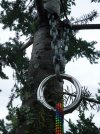

I am not sure what you mean by your statement. We do climb with SRT using RADS/YoYo technique. The ”Permanent Friction Saver” is there so we can raise our single rope. We chose the basal anchor (vs Canopy Anchor) due to our ability to include a Belay Device (Petzl ID) that can be used if one of us needed to be lowered in the event of an emergency. I hope this clarifies our situation. We are having a blast!!!Go SRT and forget the friction saver...Just a thought
Understood.I am not sure what you mean by your statement. We do climb with SRT using RADS/YoYo technique. The ”Permanent Friction Saver” is there so we can raise our single rope. We chose the basal anchor (vs Canopy Anchor) due to our ability to include a Belay Device (Petzl ID) that can be used if one of us needed to be lowered in the event of an emergency. I hope this clarifies our situation. We are having a blast!!!
Since we climb this tree usually every other day, there will be less wear and tear on our nice climbing rope sliding over the stainless steel ring vs a branch. Also less wear and tear on the branch. We did put a nice rubber hose around the part of the chain that hugs the tree, which should minimize damage to the tree. The only time that there is weight on this is when we are climbing, so this seems NOT to be a lot of pressure on our tree. Throwing a line up 70 feet each time we climb is certainly not even an option. This is a Douglas Fir tree and we do not venture beyond the single rope. The ultimate goals are: physical fitness, spiritual connectivity to nature, and psychological confidence that we are actually doing this. I am 70 years old and really enjoy watching people’s reaction when I explain that we have embarked on this Recreational Tree Climbing Sport. This probably would not have happened if it had not been for this pandemic, which is crazy!!! Climbing never fails to put a smile on my face just at the thought of it. The real pipe dream is having our Barred Owl someday respond to my bluetooth speaker owl calls while I am up in the tree. Take care and stay safe.Understood.
I've only used a friction saver in DRT since the rope is constantly moving, yet still new to the ropes - so my ignorance.
Just trying to see the big picture of what the goal is?
Reduced wear on the rope?
Reduced wear on the crotch/tree?
I believe throwing a line up each time and going up initially on SRT isn't going to cause much wear to either.
If moving around the tree for an extended period of time or by multiple climbers throughout the day, go up and install a friction saver on that initial ascent.
Personally, it's a better option than installing something "fixed/permanent" that will cause damage to the crotch/tree over time.

Happy birthday, and congratulations!I celebrated my seventy-fifth birthday recently with a seventy-five foot climb. It's reassuring to see others my age enjoying the sport. Being able to make three high climbs in one day gives me the same good feelings as being able to run fifteen miles did when I was younger.
X2Happy birthday, and congratulations!