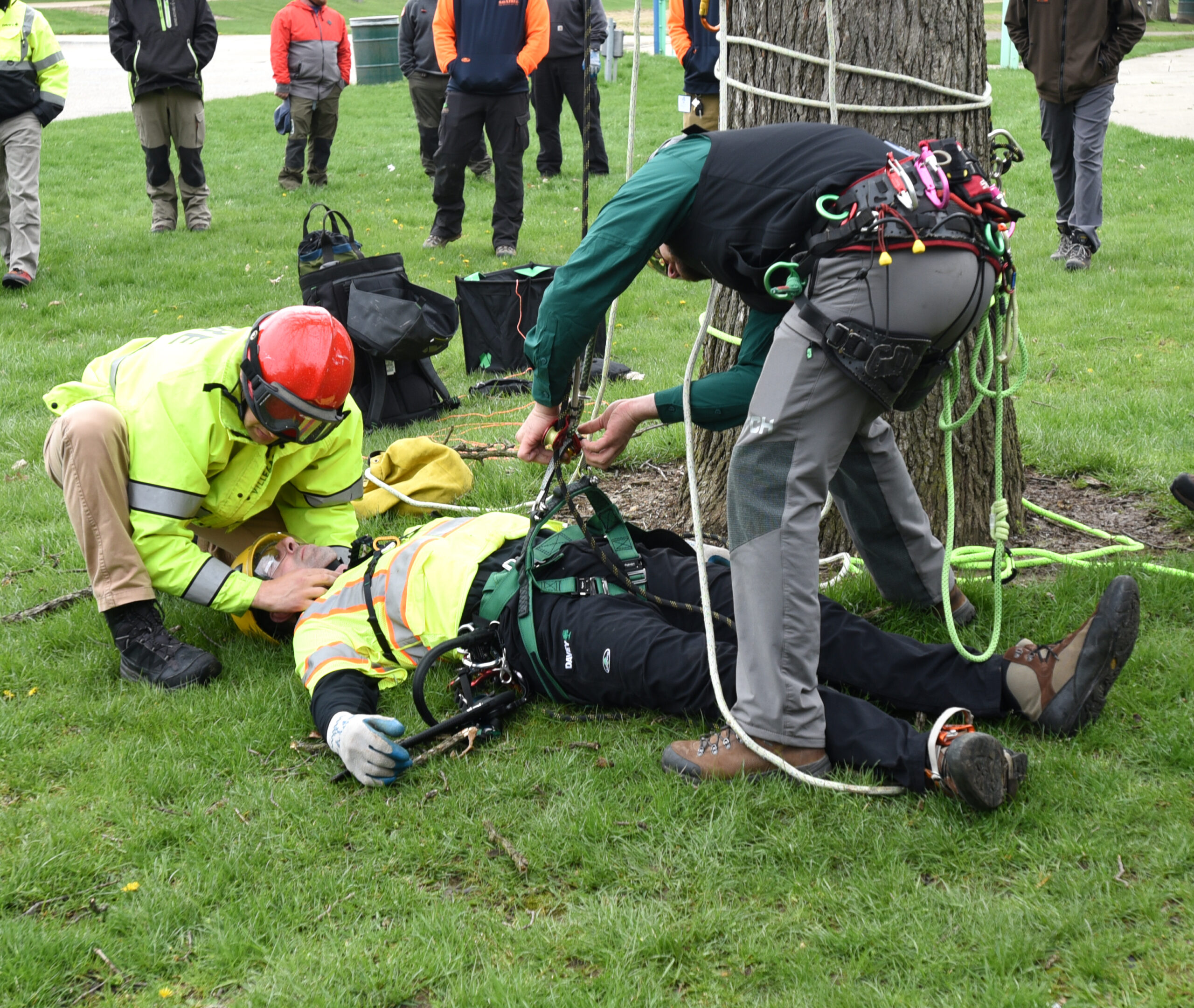
New Article Up: Patient Assessment for Tree Crews

Before I retired, I had many years of involvement with an annual rescue training event. We did not run it as a competition, as that can hinder information sharing. We'd have teams of 6-8 people from 16-20 work locations doing rescue scenarios for 2-1/2 days. Early on, the focus tended to be on the technical rescue aspects, but over time, evolved to be patient centered.

In the early days, an evaluator often had to describe the patient's injuries. Eventually, a coworker and I went to special effects makeup school to learn how to make realistic simulated injuries (moulage) on our patients. Being able to treat what you see adds a lot of realism. We made some gory injuries, but also did things like airbrush patients for shock, heat stroke, etc. Sometimes a gnarly looking injury was an attempt to misdirect rescuers' efforts from a more serious medical issue.

Those skills also come in handy for Halloween.
 
Yes they do. I had been to a similar school. Now they make computerized manakins with real looking wounds that interact with you during medical training. Progress is interesting. I agree with your assessment of how a comp changes the information changing. On all the independent comp ARs I've done, I always take a few minutes to debrief and slam home the takeaway for the scenario. There always has to be a lesson.
 
I've had industrial courses like this and I always found attempts to break down into groups and each group make a presentation to the whole about what was learned came up kinda short. Best debriefs were big tables in the pub after or even sometimes in the loo (a bunch drunk Pfizer Vets overheard comparing notes on new drug efficacy in a Stoke on Trent University pub loo were actually quite brilliant). Or around a campfire over suds. Whod'a figured - science and suds . . . .
 

New threads New posts

Kask Stihl NORTHEASTERN Arborists Wesspur TreeStuff.com Teufelberger Westminster X-Rigging Teufelberger
Back
Top Bottom