Mysterious crud

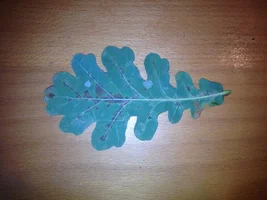
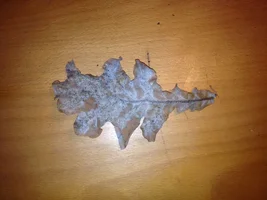
My client reports that the leaves on his tree have had this curious ailment for the past six years - getting worse this year. I thought it might be anthracnose but I can't find other photos of infected leaves that look similar. It's brownish along the larger veins and whitish on the fringe of the brown area

It's a quercus lobata - valley oak

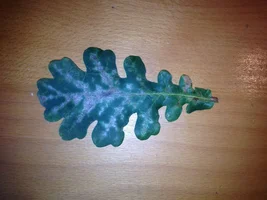
The first photo is the top of a living, infected leaf. The second is the under side of that same leaf. The third is a typical dead leaf.

Any thoughts?
 

Attachments

  • vo1.webp
    vo1.webp
    118.6 KB · Views: 30
  • vo2.webp
    vo2.webp
    108.5 KB · Views: 26
  • vo3.webp
    vo3.webp
    115 KB · Views: 25
The images suggest powdery mildew. I say suggest, because the image breaks up too much for me to tell if the little black/brown dots are killed leaf cells *or* little black/brown balls. I do mean little, smaller than a salt grain. Take a simple handlens and look. If the latter, those are the cleistothecia or ascospore-bearing fruiting body of one of a few powdery mildews. If it's the former and killed leaf cells...I don't have much to offer until seeing it more close up.

There's a lot online about powdery mildew on oak, lilac, and many other plants. Any plant pathology text will have a lot about them. The precise species of powdery mildew is sometimes very specific for the species of plant host, but they are all pretty much the same functionally. Yes, they do vary in obvious intensity from year-to-year. They are obligate biotrophs in nature and are hard to grow in culture in the lab. But they do quite well in nature, too well! Not usually a mortal problem for the trees.
 

New threads New posts

Back
Top Bottom