My first renesting

BurOakTom

New member
Location
NE IL
Just eager to share -- I got to do my first re-nesting yesterday. Two great horned owlets, back into the same white pine they fell out of a day earlier. Everything went well; biggest surprise was the dozen-plus audience we found on arrival :)

I'm hoping to hear that the parents returned to care for them; the homeowner is watching and I've asked the rescue org to pass on anything they learn.

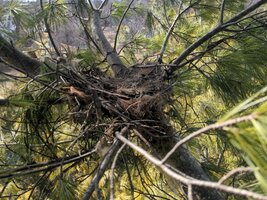
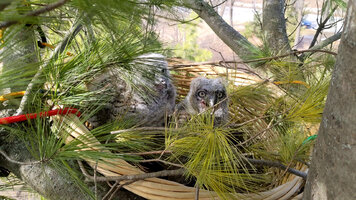
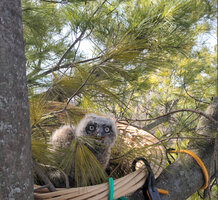
Pics: crappy old nest, first owlet, and both

CrappyOldNest.jpeg
firstone-jpeg.97837
HomeNewSweetHome.jpeg
 

Attachments

  • FirstOne.jpeg
    FirstOne.jpeg
    914.5 KB · Views: 234
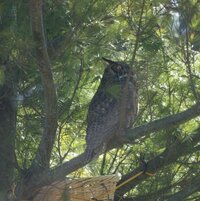
Absolutely. Especially after yesterday when I was called back out because the parents had not been seen. We were worried we'd have to remove the owlets for the rescue org to raise and eventually release. But as soon as we arrived my friend noticed a new vantage spot and we saw this:
reunited.jpeg

Plus we saw movement in the nest. So a very happy ending.

The rescue org tells me it's early in the season and there will likely be more call-outs. Unless it's like last year when most of the young raptors they received were suffering from rodenticide poisoning :cry::mad:
 
I do this at my job sometimes. It's a pretty cool thing to get to do. This year, though, we had to be fitted for n95 masks because of bird flu!

Stay safe.
 
Interesting point. And I'm in the same area as you.

I almost said that my exposure is limited to moving a baby from the bucket to the new nest, but then I am around the first bird while the next one is being brought up.

I'm not really concerned; my exposure is still quite short, and in the [very] open air, but maybe I'll ask the rescue org about it anyway. They seem to really know their stuff; wouldn't surprise me if they test for it beforehand.
 
My organization is only concerned if there is a chick in the tree that didn't tumble out and we would have to move it to the nesting box we install. Also if we move an existing but degrading nest into the box. Our conservation center tests and birds that come in so we know that those at least don't have any diseases.
 
Owls are cool. Great job. My favorite call is the barred owl.

I won't use mouse poison for this specific reason - only snap traps if required. Then I set the mice out somewhere for an owl, hawk, or eagle to swoop down and get an easy tv dinner.
 
Absolutely. Especially after yesterday when I was called back out because the parents had not been seen. We were worried we'd have to remove the owlets for the rescue org to raise and eventually release. But as soon as we arrived my friend noticed a new vantage spot and we saw this:
View attachment 97866

Plus we saw movement in the nest. So a very happy ending.

The rescue org tells me it's early in the season and there will likely be more call-outs. Unless it's like last year when most of the young raptors they received were suffering from rodenticide poisoning :cry::mad:
Excellent! It can be a nail-biter waiting for raptor parents to return to a re-nest.

So far with GHO great horned owls we've got 100% return rate for parents, even when a new nest is built more than 100' from the original blown out nest That was my most extreme case, property lines and lawyers. Bailed on dealing with them after negotiations went south and put the owls up in a friendly neighbor's white pine. Parents jumped right in within a couple hours.

Did my first Great Horned Owl re-nest project for this year's season on Monday April 21. Despite the effects of climate change on nest timing (earlier and earlier these days) New England area had a cold winter (what used to be normal) and an extended cold spring so nesting times are... historically normal for birds of all species around here/eastern Massachusetts.

Rodenticide use (SGARs Second Generation Anticoagulant Rodenticides) cases have been way up, seems like since Covid, people were home and saw more rodents? Who knows. All I know is the rehabbers I work with are seeing 2 raptor cases per week or more right now. Death rate is high but some are saved, very hard work to save them. All predator mammals and birds in Massachusetts have SGARs in their bodies/blood according to our state wildlife agency. Typically it's a random heavier dosed rodent that tips a hawk, owl or eagle into the danger zone of bleeding out internally. They collide with a branch, prey/ground, or a vehicle light hit, normally survivable but they have no clotting, the end. Unless they're found in time and treated.

On the bright side, great horned owls favor cottontail rabbits as prey around here. The rabbits love urban and suburban lawn habitat and their populations have been exploding here. Rabbits (lagomorphs not rodents) do not get into SGARs bait boxes. Bring on the great horned owls! GHO's stil get into rats, mice, etc that are stumbling around dying from SGARs.

The two kids right after placement in new nest at 70', about 30' from a second white pine where their nest blew out from a few feet lower in a heavy wind storm. Long story why the new tree for another day.


54471175018_405c954640_h.jpg


-AJ

 
Last edited:
Excellent! It can be a nail-biter waiting for raptor parents to return to a re-nest.

So far with GHO great horned owls we've got 100% return rate for parents, even when a new nest is built more than 100' from the original blown out nest That was my most extreme case, property lines and lawyers. Bailed on dealing with them after negotiations went south and put the owls up in a friendly neighbor's white pine. Parents jumped right in within a couple hours.

Did my first Great Horned Owl re-nest project for this year's season on Monday April 21. Despite the effects of climate change on nest timing (earlier and earlier these days) New England area had a cold winter (what used to be normal) and an extended cold spring so nesting times are... historically normal for birds of all species around here/eastern Massachusetts.

Rodenticide use (SGARs Second Generation Anticoagulant Rodenticides) cases have been way up, seems like since Covid, people were home and saw more rodents? Who knows. All I know is the rehabbers I work with are seeing 2 raptor cases per week or more right now. Death rate is high but some are saved, very hard work to save them. All predator mammals and birds in Massachusetts have SGARs in their bodies/blood according to our state wildlife agency. Typically it's a random heavier dosed rodent that tips a hawk, owl or eagle into the danger zone of bleeding out internally. They collide with a branch, prey/ground, or a vehicle light hit, normally survivable but they have no clotting, the end. Unless they're found in time and treated.

On the bright side, great horned owls favor cottontail rabbits as prey around here. The rabbits love urban and suburban lawn habitat and their populations have been exploding here. Rabbits (lagomorphs not rodents) do not get into SGARs bait boxes. Bring on the great horned owls! GHO's stil get into rats, mice, etc that are stumbling around dying from SGARs.

The two kids right after placement in new nest at 70', about 30' from a second white pine where their nest blew out from a few feet lower in a heavy wind storm. Long story why the new tree for another day.


54471175018_405c954640_h.jpg


-AJ

Those are some adorable birds. If I didn't know better, I'd say the one on the left looks like it's smiling atcha!
 

New threads New posts

Kask Stihl NORTHEASTERN Arborists Wesspur TreeStuff.com Teufelberger Westminster X-Rigging Teufelberger
Back
Top Bottom